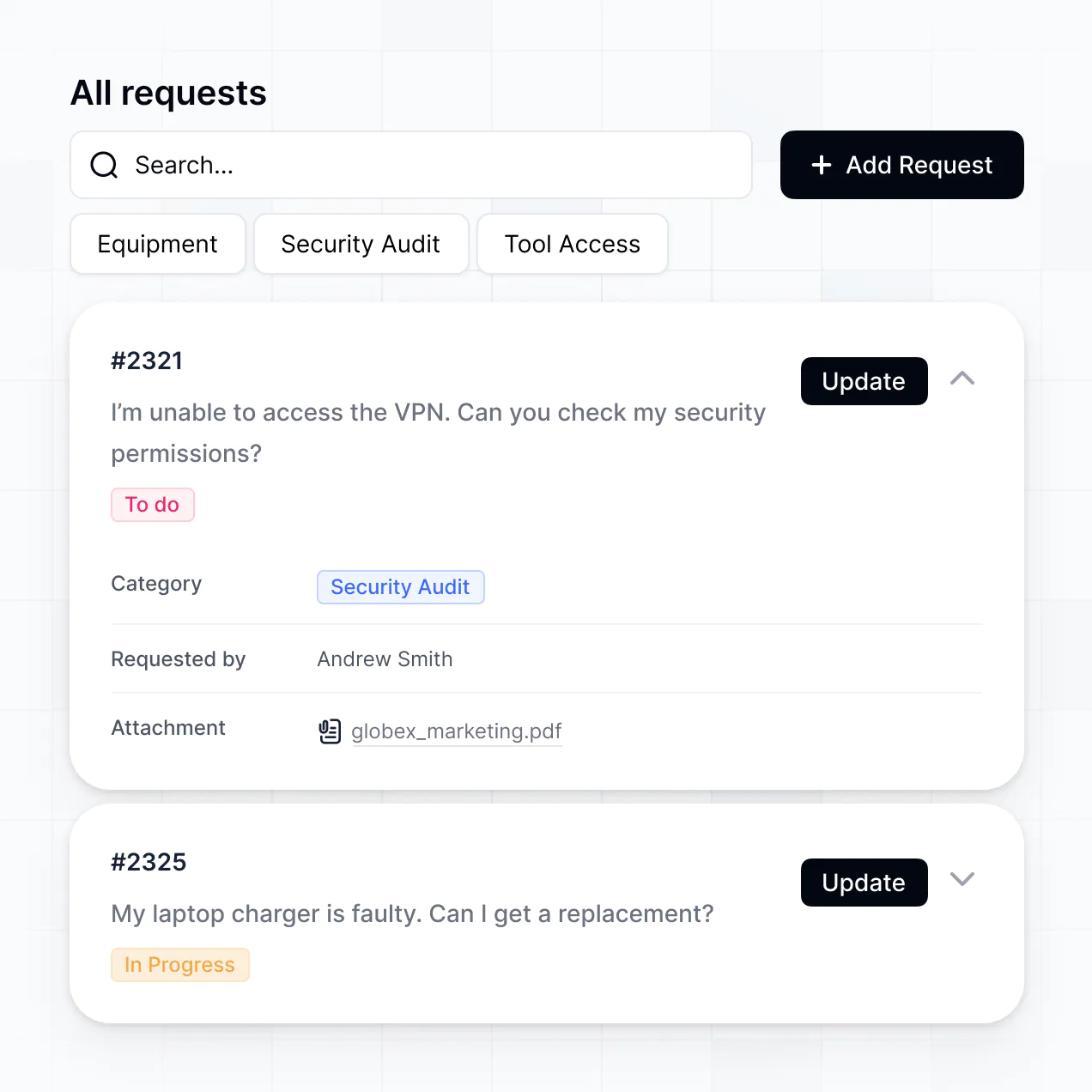
Manage tickets, track assets, and view reports in an AI-powered help desk built with AI to fit your IT support workflows.
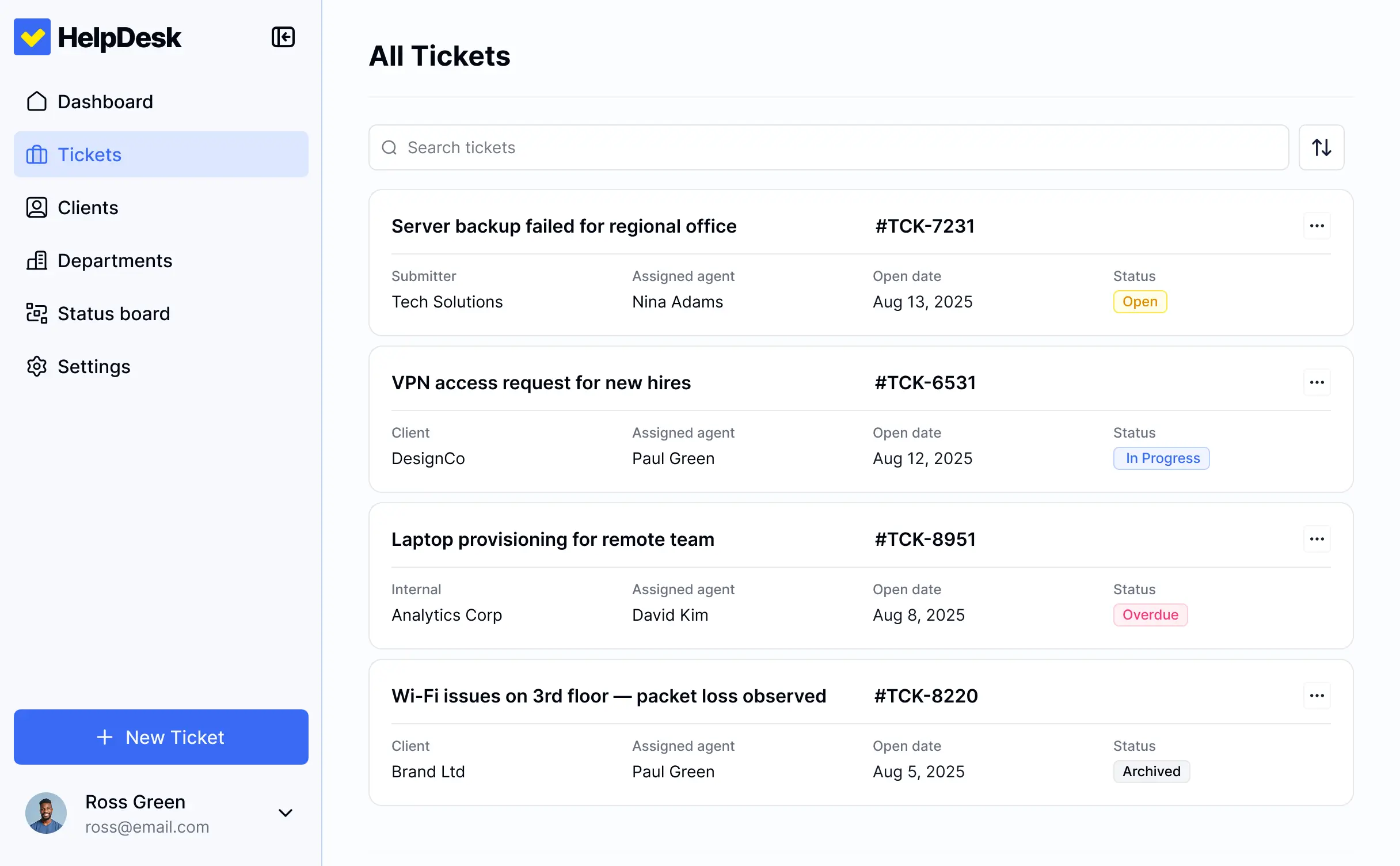
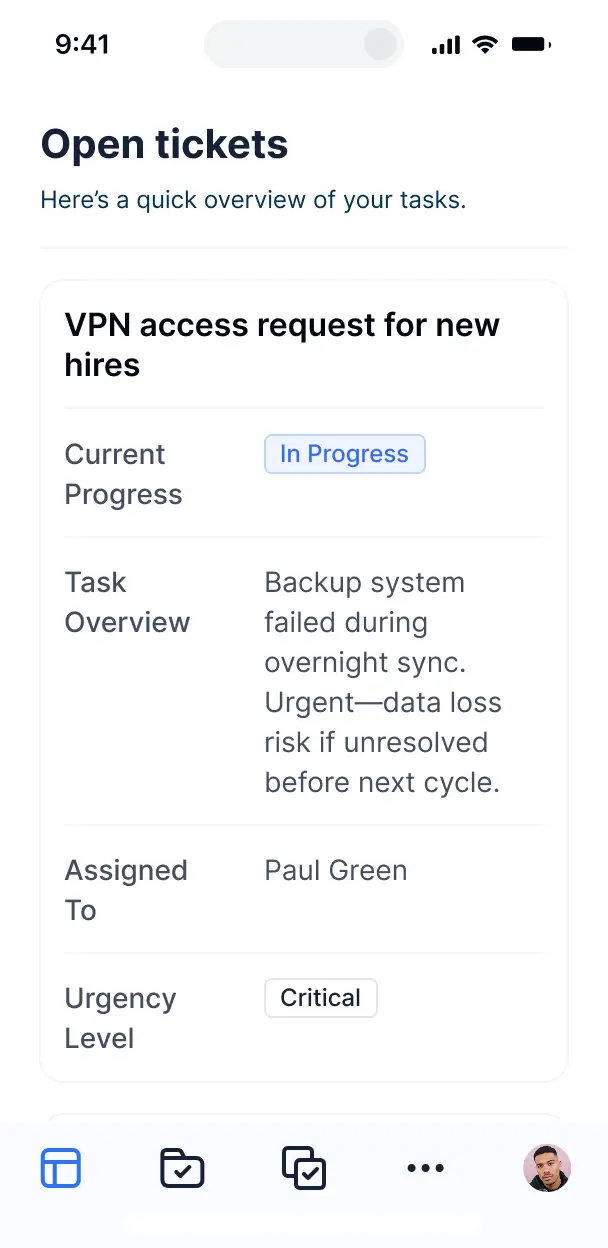



Customize an IT help desk that looks sleek and modern out of the box. Add only the features you need, and iterate as your workflows evolve.


Connect ticketing systems, asset trackers, and CRMs with real-time sync—or manage everything in Softr Databases. Create a single source of truth for your IT support team.
Give each teammate the right tools and access. Set up secure logins, user groups, and granular permissions—no IT support or dev work needed.
Give different staff members tailored help desk dashboards, so technicians and employees see just what they need.
Streamline your IT processes with Softr Workflows. Trigger automated ticket assignments or SLA status updates instantly.
Access and update service requests on the go. All apps are mobile-ready out of the box.
Use Google, email, or SSO logins to give your employees fast, secure access to submit tickets—no dev work needed.
Keep internal IT data safe with SOC2 and GDPR compliance, plus fine-tuned access control at every level.
No more one-size-fits-all tools or costly custom builds. Softr is easy to use and fully customizable, so you can launch faster, adapt as you grow, and skip the complexity of traditional software.

Build your help desk in minutes with AI. No complex IT configuration needed—just describe what your support needs.

Add features like asset tracking, SLA workflows, or approvals as your service needs evolve—no rebuild needed.

Start with a help desk, then add client portals, dashboards, or forms—all in one place, with no extra tools.
Co-build with AI
Simply describe what you need. Let Softr handle everything - Interface, database, workflows.
Iterate with AI or visually
Control most critical parts of your app yourself - roles, permissions, security.
Ship the same day
Invite team members or external clients and partners right away. No developer handover.
Use drag-and-drop blocks to build a portal that looks sleek and modern out of the box. Add only the features you need, and iterate as your workflows evolve.




An IT service request software is a centralized help desk where your employees can securely log in to submit tickets, track hardware requests, or report system issues. It keeps all IT communication, updates, and asset tracking in one unified place, so your support team doesn't have to rely on chaotic Slack threads or lost email threads. This makes it much easier to stay organized, manage ticket queues, and provide a faster, better support experience for your entire company.
Softr is the first AI-native platform for building business software. It makes it easy to build IT service request software that fits the exact way your help desk operates. You can simply describe your ticketing needs to the AI Co-Builder to instantly generate your database, user portals, and approval logic—already connected and secure.
You don't need to write code to launch your help desk. You can start by generating with AI, using a template, or building from scratch. Everything runs seamlessly on Softr Databases, or you can connect external tools like Airtable, Google Sheets, or SQL databases. You have full control to visually adjust the layout, decide whether regular employees or IT agents are viewing the data, and brand it to match your company's internal portal. It's incredibly quick to deploy, simple to update, and flexible enough to scale as your IT department grows.
You can include a wide range of features in your IT service request software, depending on what your help desk workflow looks like. A great support application usually mixes classic functional blocks with AI-powered intelligence:
- AI-Powered Intelligence – Use Ask AI to let employees query knowledge base articles conversationally, or set up Database AI Agents to automatically categorize and assign incoming support tickets based on urgency.
- Vibe Coding Blocks – Build complex, custom UI elements—like a real-time server network status widget—using the AI Code block to "vibe code" exactly what your IT team needs.
- Softr Workflows – Build native automations (like email alerts or Slack pings) that trigger notifications to on-call engineers whenever an urgent ticket is submitted or an asset status is updated.
- User Portals & Logins – Securely manage access so each employee only sees their own IT requests, while support agents see the entire department's queue.
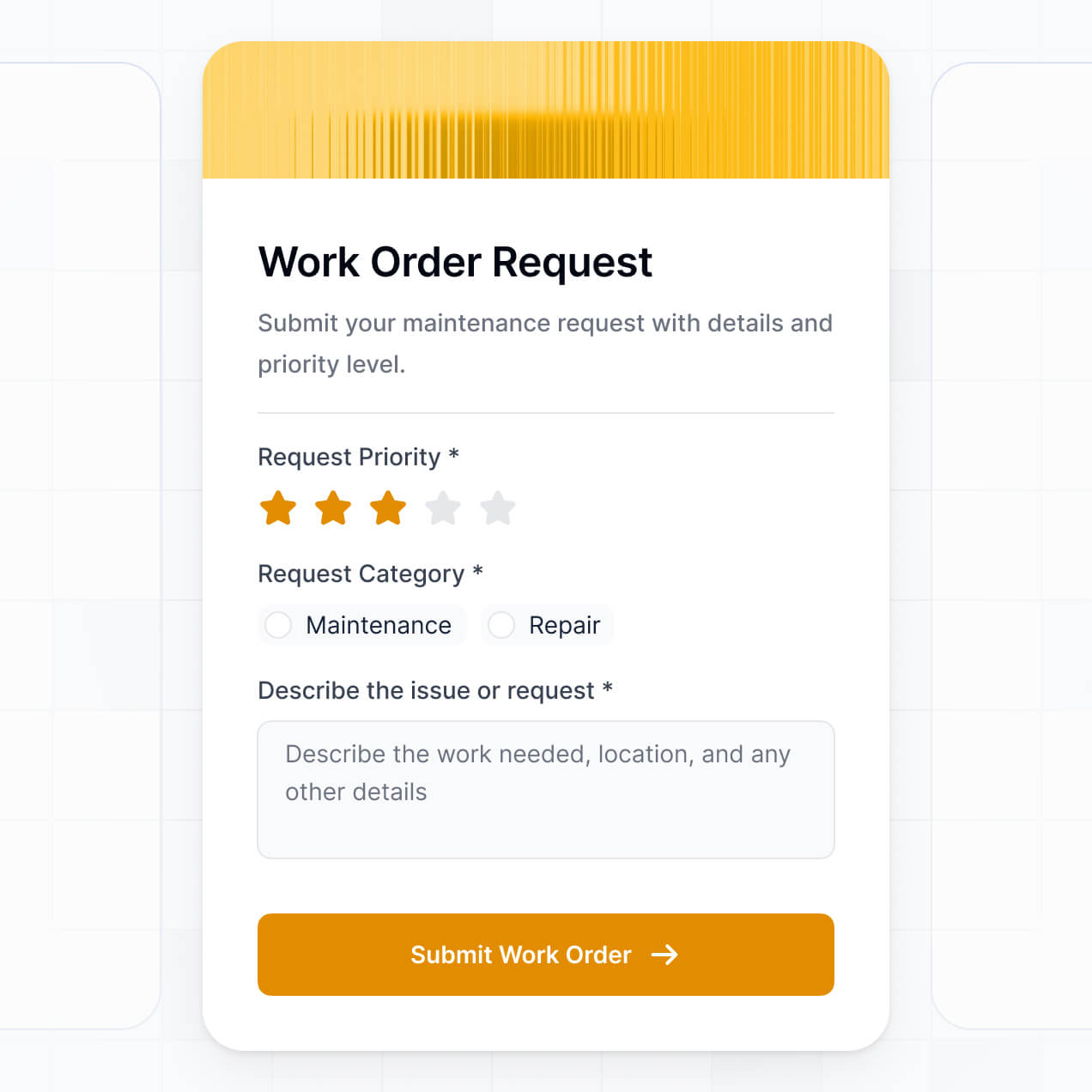
- Forms & Data Collection – Capture issues with custom forms, screenshot file uploads, dropdowns for hardware types, and conditional logic for specific software access requests.
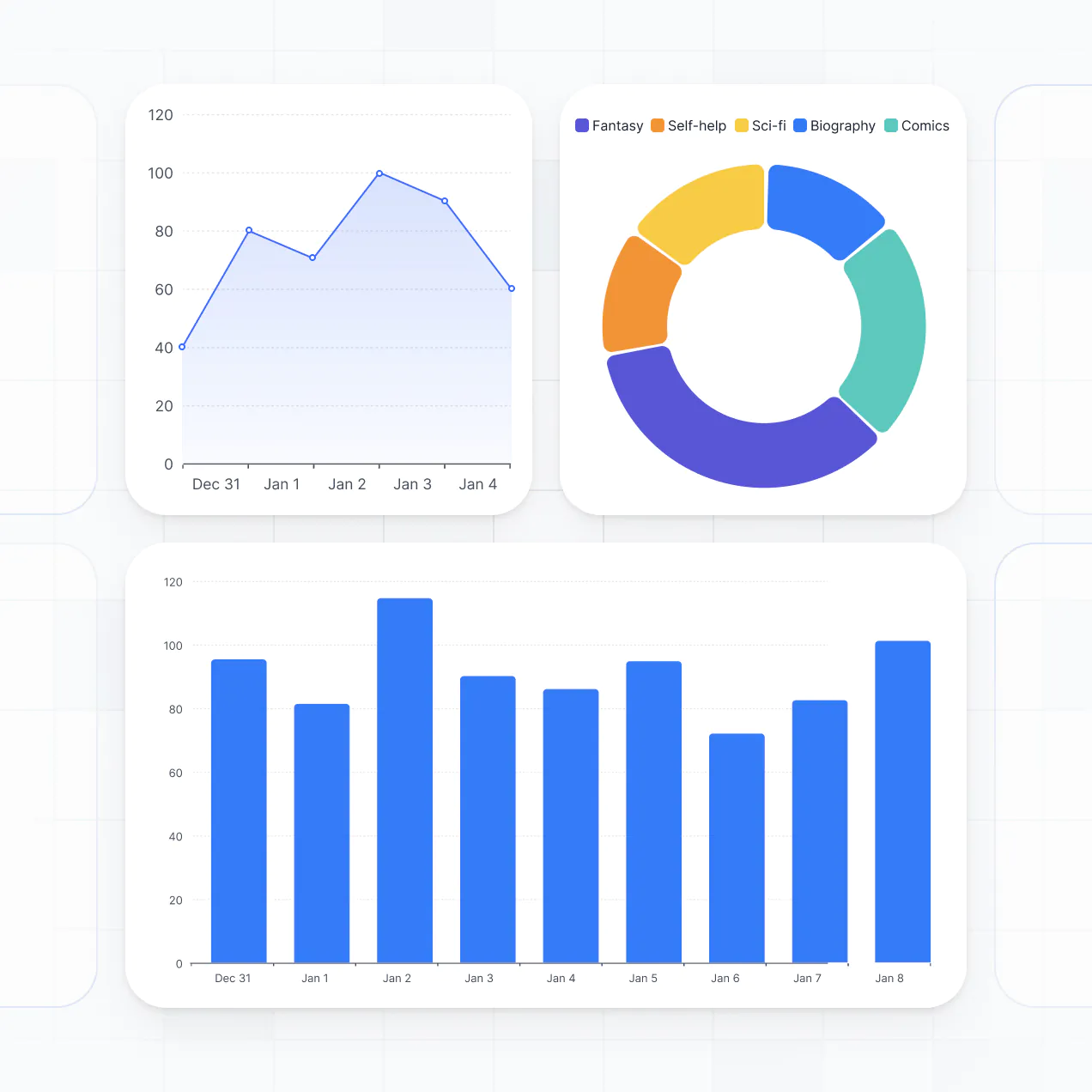
- Dashboards & Charts – Visualize your IT service request software performance with real-time charts showing SLA resolution times, open ticket counts, and agent workloads.
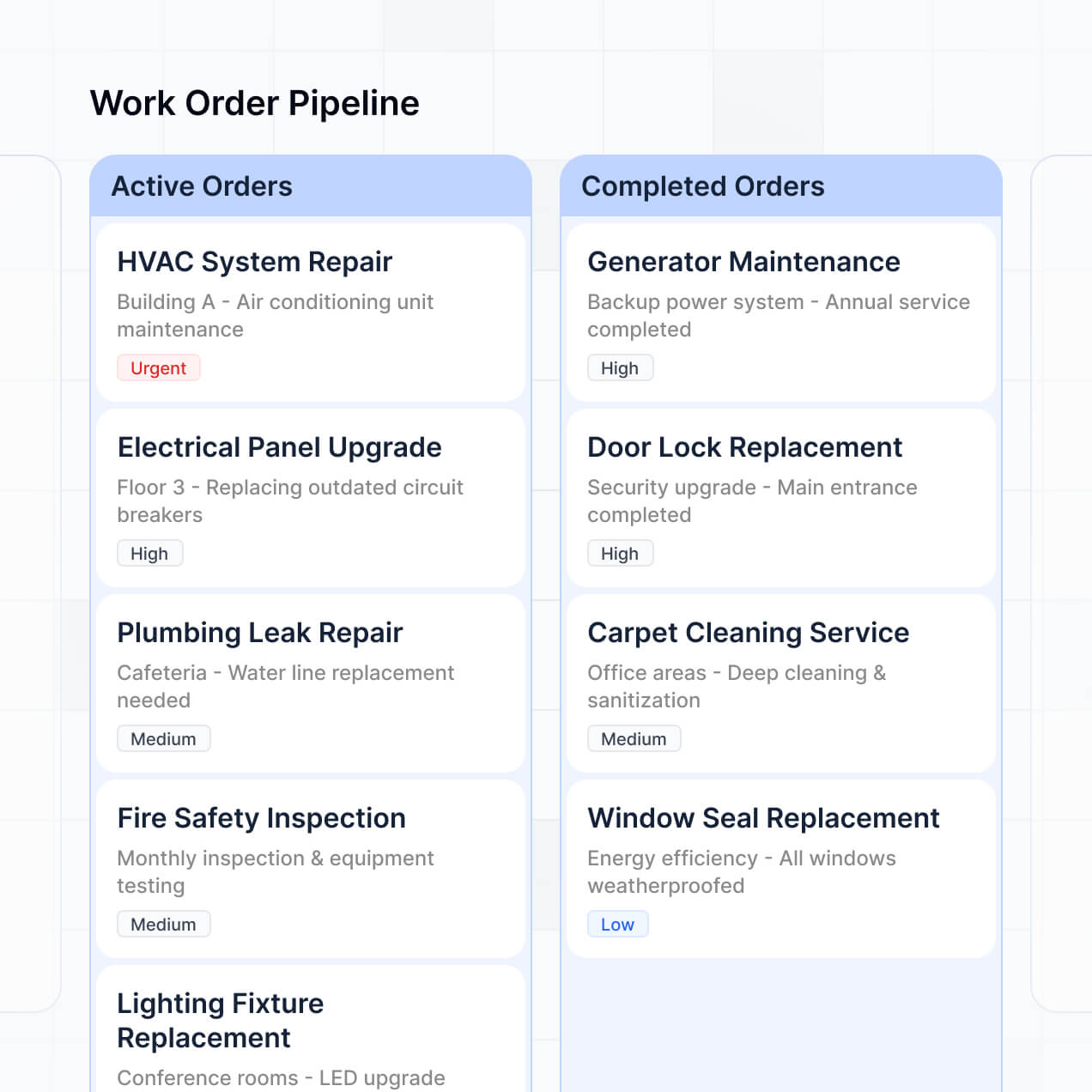
- Lists & Advanced Filtering – Display and manage your queues with searchable tables, kanban boards for active tickets, and detailed asset record views.
Everything is built using Softr's drag-and-drop blocks, so you can create these features without writing scripts. Need something more custom? Use the Vibe Coding block to generate a tailored component with AI. And if your IT policies change, it's easy to update the software later.
Vibe coding is all about moving fast and using AI to build exactly what your IT department needs. You can "vibe code" IT service request software in Softr by simply describing your help desk requirements—like tracking hardware repairs or software licenses—to the AI Co-Builder. Softr then generates a production-ready application on top of a stable, secure foundation.
Unlike other tools that just generate raw, fragile code that breaks during the next update, Softr handles the "boring 80%"—like Single Sign-On, database logic, and role permissions—natively. This means your IT team gets the speed of vibe coding without the "Day Two" headaches of managing raw scripts. You describe the help desk, Softr builds it, and it’s ready for your agents and employees instantly.
Yes. You can manage multiple departments, branch offices, or even distinct operating companies in a single help desk application. Each employee or IT agent only sees the tickets, assets, and knowledge base articles assigned to their specific location or department, governed by their login and role. This is incredibly useful for enterprise IT teams managing support across a distributed workforce.
Yes, you can. You don't need to bring your IT data from an existing legacy system to start building with Softr. If you're building a help desk from scratch, you can use Softr Databases, which is built right into the platform and integrates perfectly with the support portal you build.
But if you already track hardware assets or employee records in tools like Airtable, Google Sheets, HubSpot, monday.com, Supabase, or SQL, you can connect those too. You can also use the REST API connector to bring in alerts from network monitoring tools. Either way, you have full control over how your support data is structured and displayed for your agents.
Softr Databases is the recommended native, relational data source for Softr. It is built explicitly for internal business apps, offering the highest performance, instant escalation automation triggers, and a lightning-fast experience because the ticket data is native to the platform.
If you already have your department's asset or employee data elsewhere, Softr also connects to 17+ external data sources. You can connect to Airtable, Google Sheets, SQL, SmartSuite, BigQuery, and more. You can even integrate multiple data sources into the same help desk—so your IT service request software could pull in active support tickets from Softr Databases and the internal employee roster from SQL at the same time. Most sources support real-time, two-way sync, so any changes in your app or data source stay perfectly up to date.
Yes, Softr gives you full administrative control over how users experience your IT service request software. You can customize the layout, navigation, and ticketing forms to match your company branding and IT workflows. Each page or block can be shown or hidden based on who's logged in, so every employee sees only the hardware or software resources relevant to them.
You can also set up different user roles, such as employee, support agent, or IT manager—and define exactly what each role can view, edit, or delete. For example, regular employees can only view and update their own submitted tickets, while support agents can manage the entire department's queues. You can also create personalized dashboards by filtering metric charts based on the logged-in IT manager.
This level of customization is especially crucial when you're managing sensitive employee onboarding details, security clearance requests, or cross-departmental projects in the same app. It helps keep the help desk experience clean, compliant, and tailored to every user's specific role.
Yes, you can fully white-label your IT service request software in Softr. You can use your own company logo, internal brand colors, fonts, and a custom intranet domain (like helpdesk.yourcompany.com) to make the portal feel like a natural extension of your corporate environment. You can also remove all Softr branding, so your staff only sees your company's visual identity.
Yes, you can. Softr gives you immense flexibility to control both the design and layout of your help desk. You can adjust colors, fonts, spacing, and page structure to match your internal company guidelines. You can strategically choose how each queue is laid out, decide which widgets go where, and define exactly what employees versus IT agents see after logging in.
To display your support pipeline, you can add different types of blocks depending on what you need:
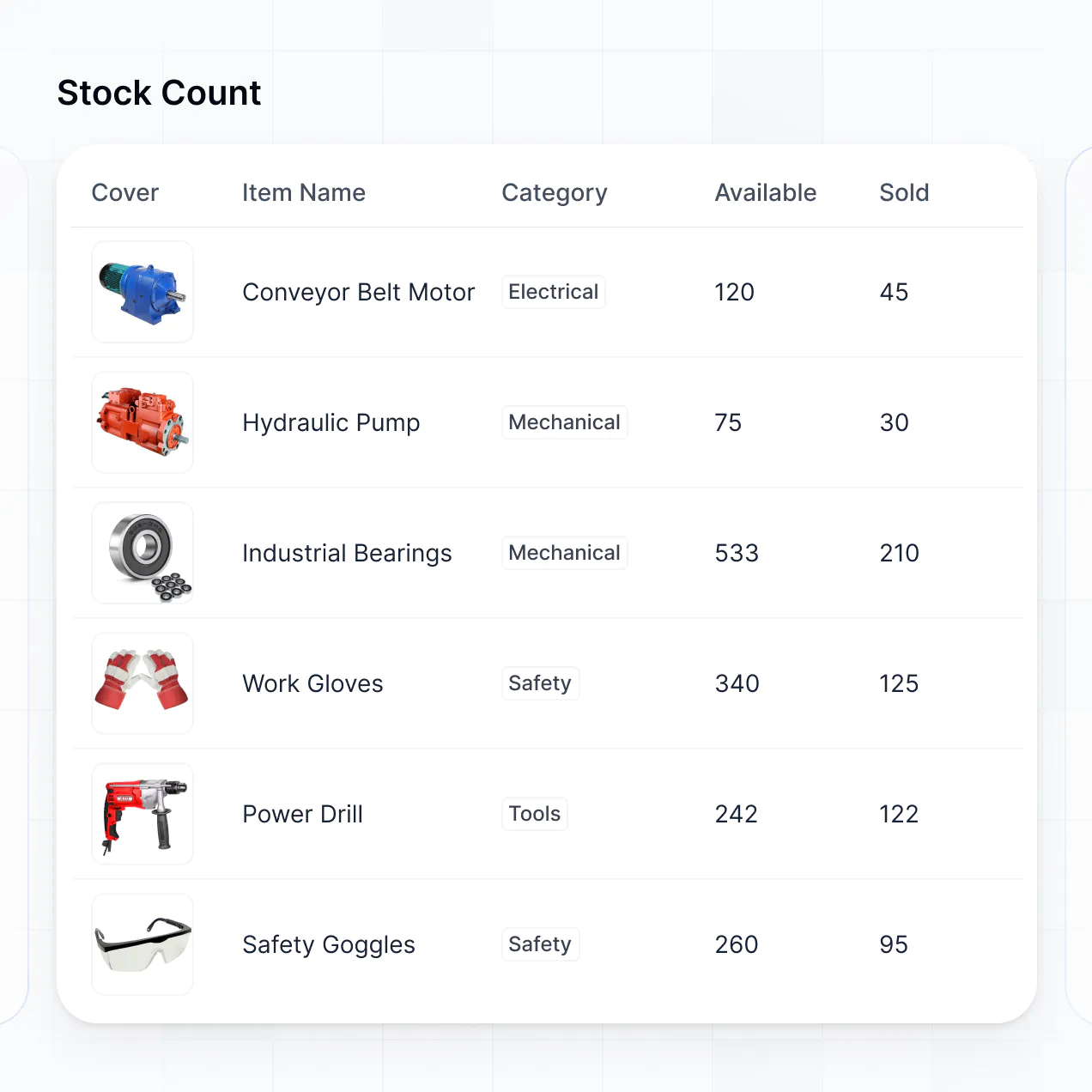
- Table blocks – to show structured data like incoming ticket queues, asset inventories, or license renewals
- List or Card blocks – to highlight things like FAQ articles, software download links, or IT team directories
- Detail View – to show one record at a time, like a deep-dive into a specific laptop repair history
- Forms – for collecting new hardware requests or bug reports
- Charts – to show SLA compliance and team velocity insights
- Calendar blocks – to display server maintenance windows or scheduled software updates
If your IT processes or design requirements change later, it's incredibly easy to go back and iterate right in the visual builder.
Softr is built with enterprise security at its core. All data is encrypted in transit (TLS) and at rest, and your help desk is hosted on secure, reliable cloud infrastructure. Softr apps also give you total administrative control over who can see and do what across your IT service request software. You can enforce strict role-based permissions, manage employee access directories, set visibility rules, and apply global restrictions to protect sensitive internal data, like HR offboarding or security audits.
For apps using Softr Databases, your data is securely stored in Softr's environment, strictly hosted in Europe (Germany) and backed by SOC 2 Type II compliance. For apps pulling from external data sources like SQL, Google Sheets, or Airtable, Softr doesn't store your core database—it securely fetches and displays it in real time based on your strict access rules. You remain entirely in control of your IT department's data governance.
Softr also strictly adheres to industry best practices for robust authentication, secure access control, and 24/7 platform monitoring to help keep your company's digital landscape absolutely safe.
It is fully production-ready for your company. Unlike many consumer AI tools that just "vibe code"—generating fragile, custom scripts that are a nightmare for IT departments to maintain or secure—Softr builds your IT service request software on top of a rock-solid, business-grade foundation.
We reliably handle the "boring 80%" (like enterprise authentication, secure hosting, and granular access control) natively, so your IT leads don't have to patch it later. This solves the "Day Two" problem of AI development: you immediately get the incredible speed of instant application generation without the massive liability of deploying untested, unreliable code in a corporate environment. Your help desk is secure, fully scalable, and ready for your agents and employees to adopt from day one.
Softr is the first truly AI-native platform for building business software. Unlike pure "vibe coding" prompt tools that generate unscalable, fragile code, or traditional legacy no-code platforms that require endless manual database configuration, Softr's AI Co-Builder creates functional help desks running on a completely secure, production-ready foundation.
What sets it apart for IT teams is the hybrid advantage: your systems administrators can use AI to instantly spin up the ticket database, portal application, and routing logic in minutes, and then seamlessly switch to visual controls for precise, pixel-perfect editing. You ultimately get the breathtaking speed of generative AI paired beautifully with the reliability of business-grade infrastructure (SSO auth, agent roles, robust permissions, and scalable hosting) already built-in. It's purpose-built for agile IT operations that need to move directly from idea to a fully functioning production help desk without writing bespoke scripts.
Yes. Softr supports powerful native workflows and a vast array of critical integrations so you can flawlessly connect your IT service request software to the rest of your company's tech stack. You can automate repetitive tasks—like automatically escalating aging critical tickets—using Softr Workflows, or sync gracefully with external platforms. Softr also fully supports REST APIs and webhooks for tying into complex monitoring, alerting, or asset lifecycle systems.
Whether you need to trigger a pager alert based on a severity label, push resolved ticket summaries to Slack, or securely pull warranty information from vendor databases, you can build it directly into your help desk, all entirely without writing code.
Describe your IT workflows. Softr's AI builds your help desk in minutes—no code required.