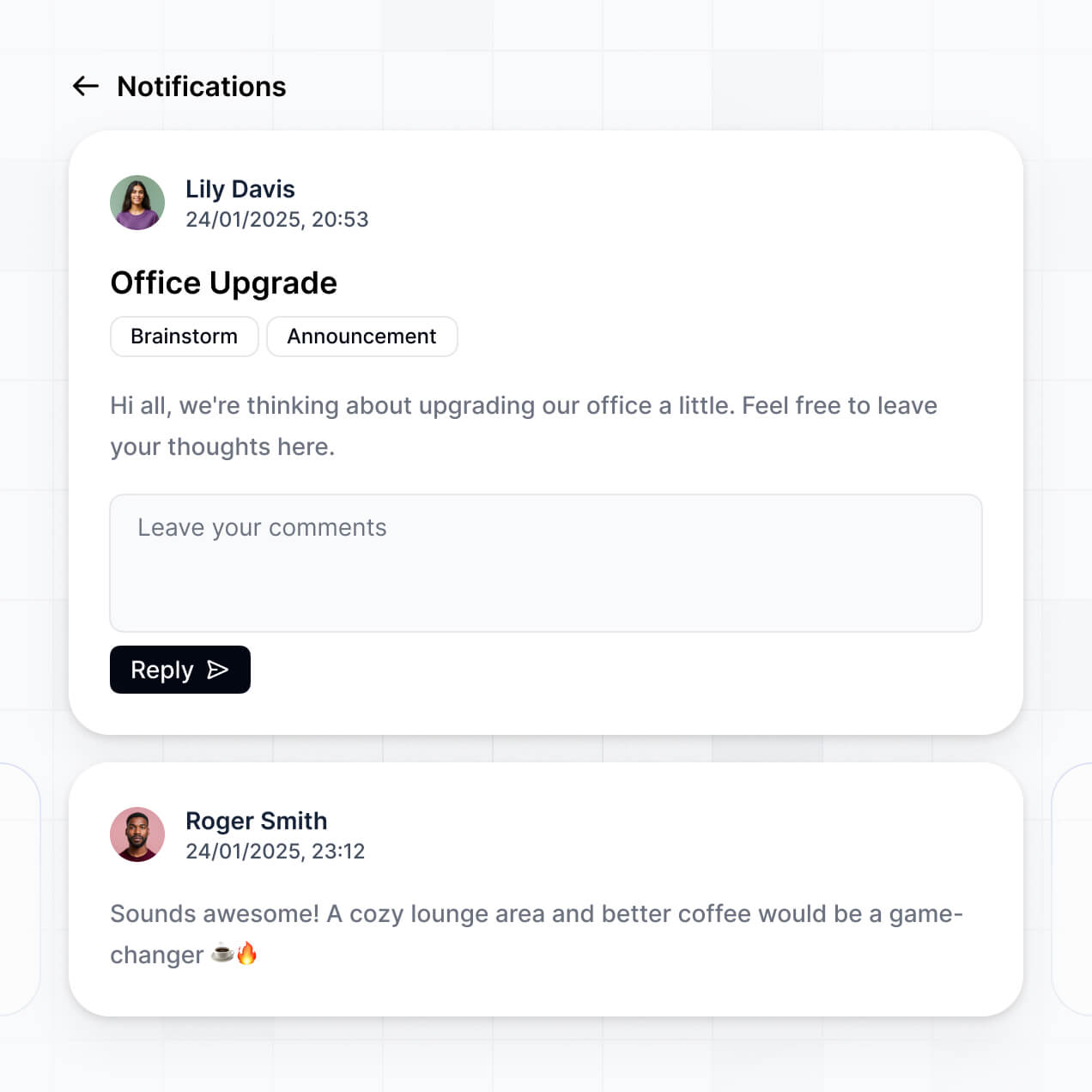
Automate invoice creation, track payments, and surface billing insights while adapting to the process and billing data you already manage.
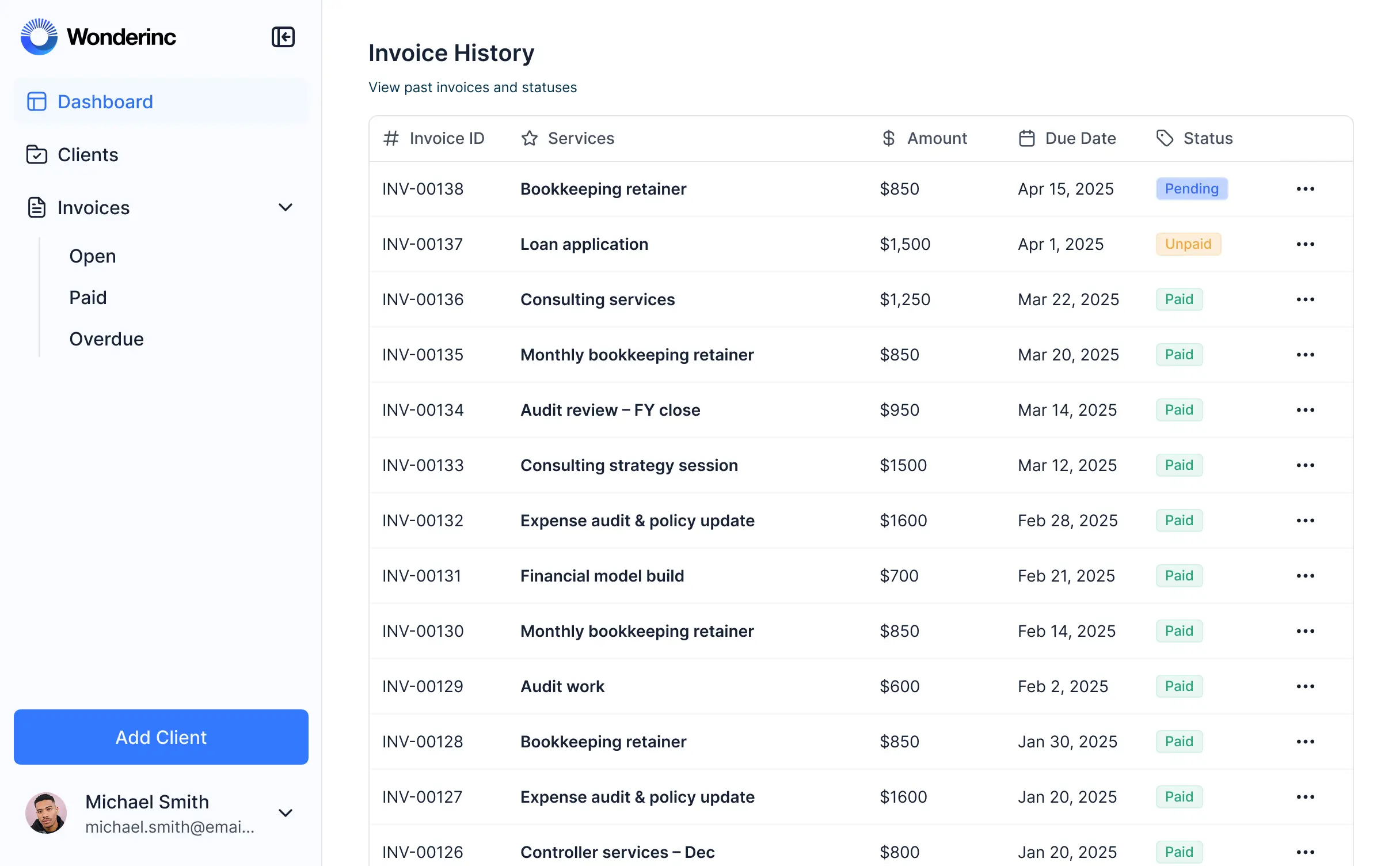
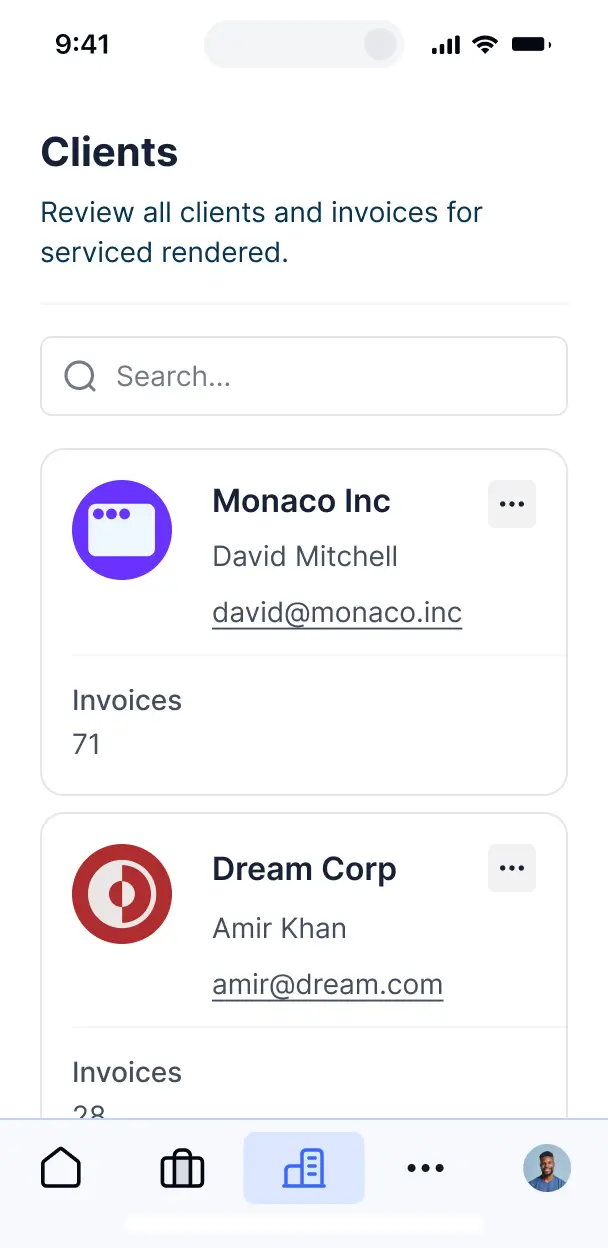



Choose only the views and workflows your billing process needs, then adapt invoice steps, payment tracking, and reminders as that process changes.


Manage invoices, payments, and billing insights in Softr Databases, or connect Airtable, Google Sheets, Notion, or REST API with real-time sync.
Give each teammate the right billing tools and access. Set up secure logins, user groups, and granular permissions for invoices and payments.
Give finance, operations, and management tailored billing views, so each role sees only the records and actions they need.
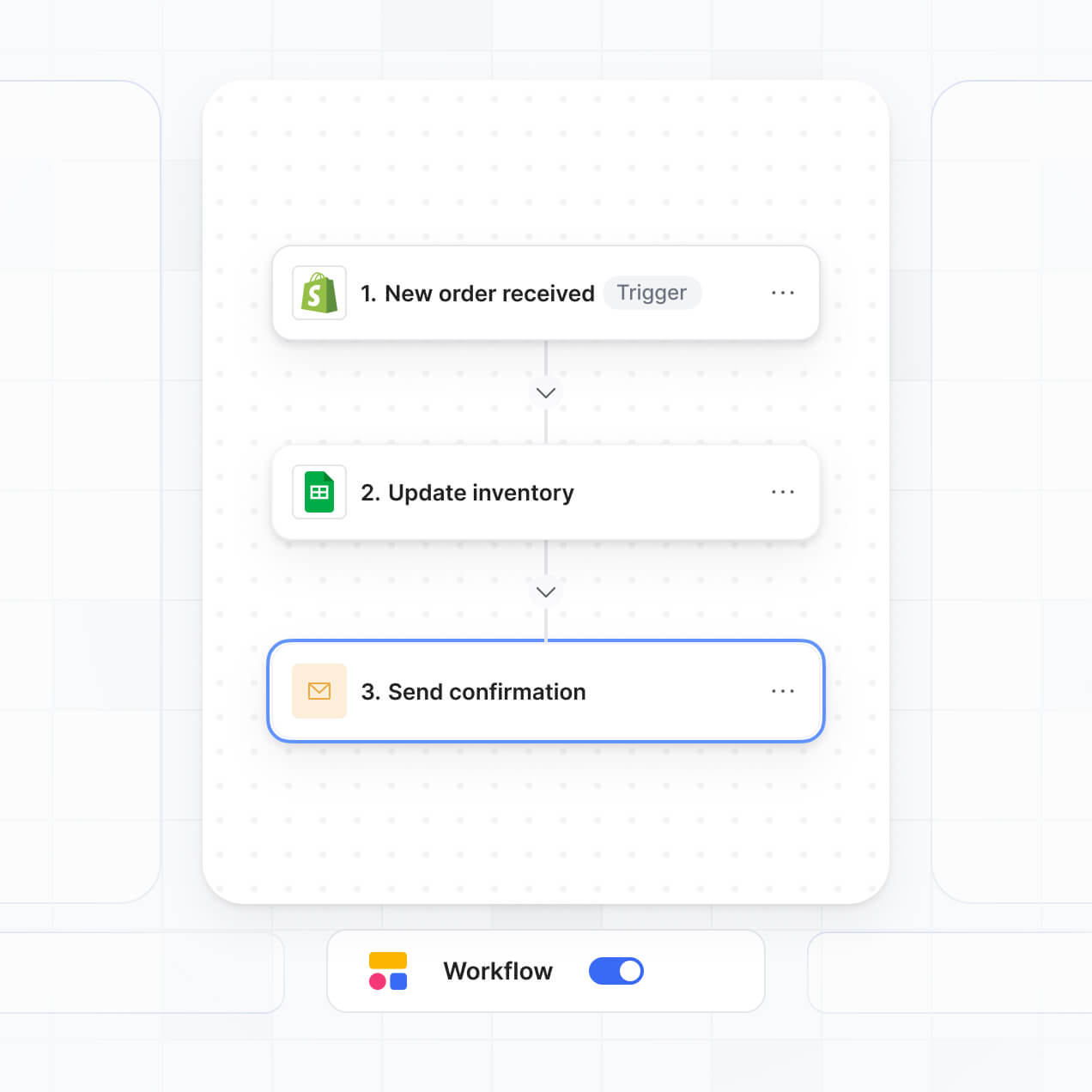
Trigger invoice updates, payment status changes, and due date reminders with Softr Workflows when records change.
Review invoices, check payment status, and respond to billing tasks from any device with mobile-ready apps.
Use Google, email, or SSO logins to give billing teams secure access to invoices, payments, and insights.
Keep invoice and payment data protected with encryption in transit and at rest, plus SOC 2 Type II compliance.
No more one-size-fits-all tools or costly custom builds. Softr is easy to use and fully customizable, so you can launch faster, adapt as you grow, and skip the complexity of traditional software.

Describe your invoice and payment workflows, then get a working billing app in minutes.

Add invoice views, payment steps, and billing insights as your process changes, without starting over.

Bring invoice creation, payment tracking, reminders, and reporting into one billing workspace.
Co-build with AI
Simply describe what you need. Let Softr handle everything - Interface, database, workflows.
Iterate with AI or visually
Control most critical parts of your app yourself - roles, permissions, security.
Ship the same day
Invite team members or external clients and partners right away. No developer handover.
Use drag-and-drop blocks to build a portal that looks sleek and modern out of the box. Add only the features you need, and iterate as your workflows evolve.




Billing software is a secure workspace where finance teams, account managers, and customers log in to manage invoices, payment statuses, subscription details, and account timelines. Instead of chasing approval emails or updating spreadsheet rows, your team can centralize invoice records, billing contacts, payment notes, and overdue balances in one place. Each person gets access to the records relevant to their role, making it easier to handle recurring charges, answer customer questions, and keep collections moving.
For finance teams, the main benefit is a billing workspace shaped around the way invoices, payment requests, and customer accounts actually move through the business. Softr is an AI app builder for business software. Describe your requirements in plain language, and it generates the database, pages, and logic, already connected and secure, with no code at any point. You can start by generating an app with AI, adapting a template, or building from scratch. Run billing records on Softr Databases, or connect tools such as Airtable, Google Sheets, or HubSpot, with plan availability applying to some sources. You still control the layout, access rules, and branding as your invoice workflow changes.
A billing workspace can include features such as:
- **AI inside the app:** Ask AI can answer questions about overdue invoices or unpaid balances, while Database AI Agents can classify payment disputes by reason and urgency.
- **Custom interface:** A Vibe Coding block could create an account balance summary for customers, with invoice totals, due dates, and payment status in one component.
- **Automations:** Softr Workflows can notify an account manager when an invoice becomes overdue or create a follow-up task when a payment button is clicked.
- **Access control:** Finance staff can see all invoices, while customers see only their own accounts and payment history.
- **Forms:** Add invoice dispute forms with file uploads and conditional logic for receipts or purchase orders.
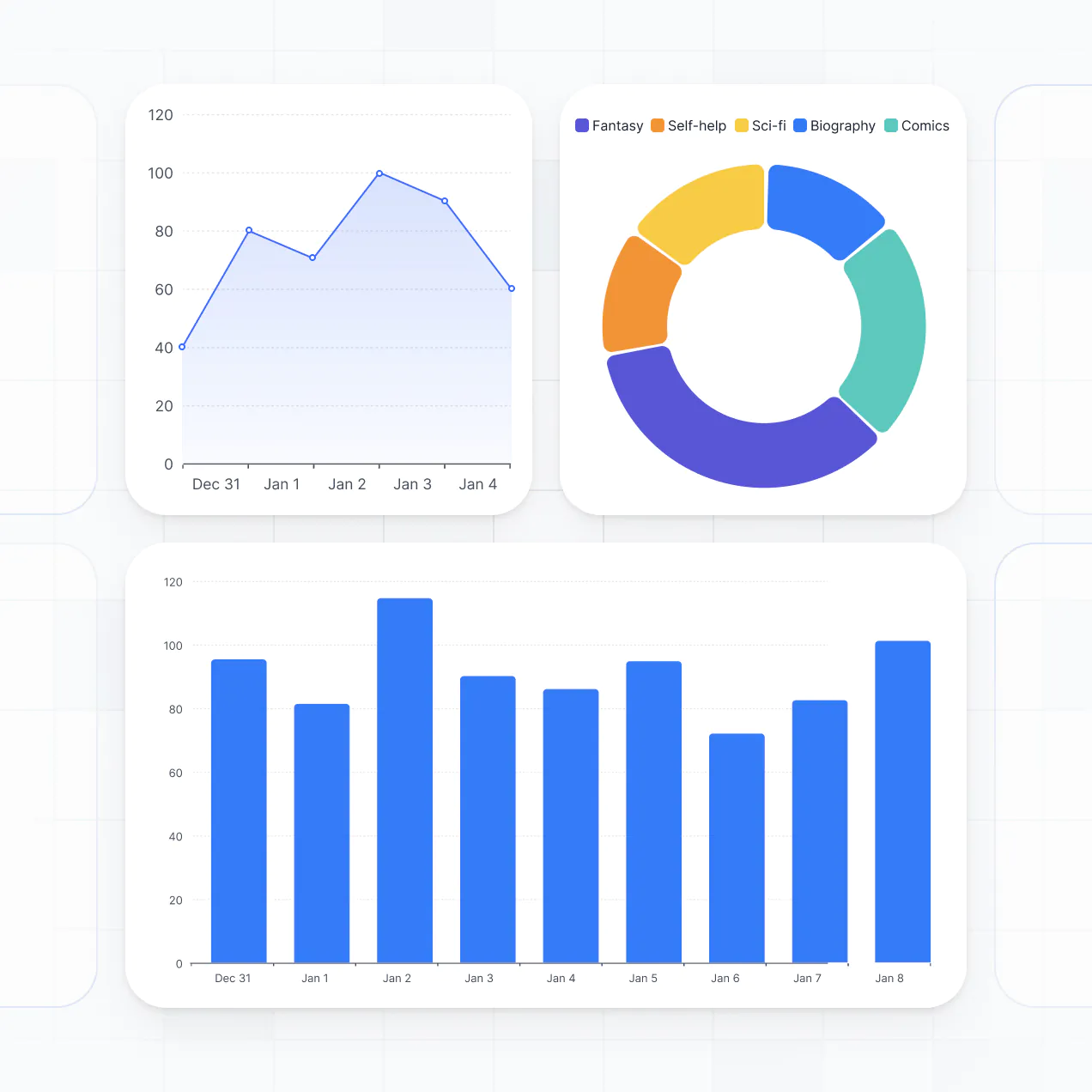
- **Reporting:** Use dashboards and charts for revenue, aging balances, and collection rates.
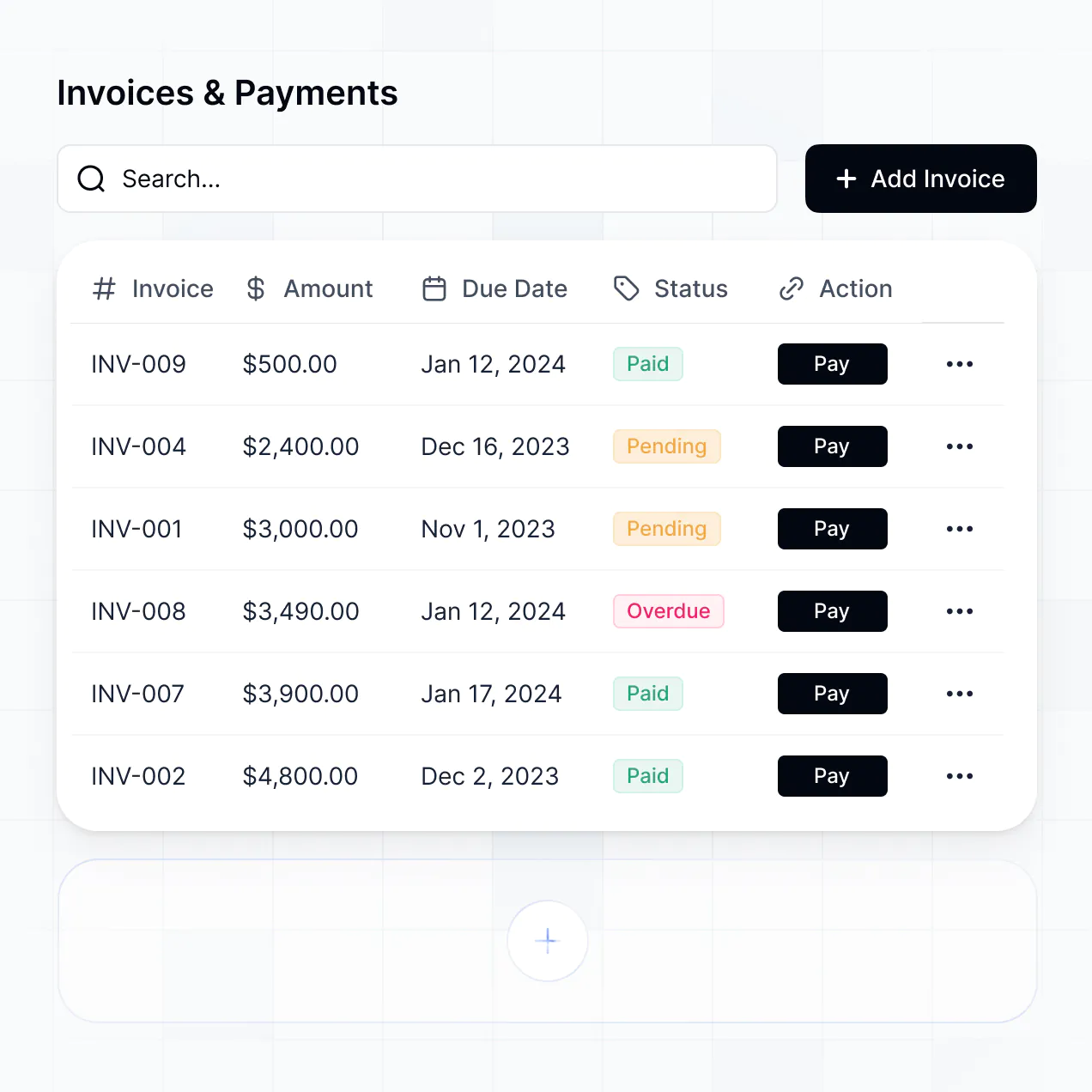
- **Record views:** Organize invoices and customers with filtered lists, tables, kanban boards, and detail views.
Everything is drag-and-drop and remains editable later.
Describe the billing workflow you need in plain language, such as a finance dashboard for invoices, payment statuses, customer accounts, and overdue follow-ups, and let AI generate the app. Softr produces it on a stable, secure foundation rather than handing you raw code to maintain. Authentication, database logic, and security are handled natively, so a change to an invoice status does not create a Day Two problem across customer access or payment records. If you use a Vibe Coding block for a custom account summary or aging chart, every prompt and edit is versioned. When a change causes trouble, you can roll it back instead of trying to re-prompt your way out.
Yes. Finance, sales, customer success, and operations teams can work in one billing app while each user sees only the invoices, customer accounts, and payment records assigned to them. Login and role-based permissions keep a sales representative focused on their accounts while finance managers retain a broader view of balances and collections.
A spreadsheet is not a requirement. You can start with Softr Databases, the native relational database built into the platform, and create tables for customers, invoices, line items, payment statuses, and disputes before importing or entering records. If your billing history already lives in another system, connect Airtable, Google Sheets, HubSpot, Notion, Coda, monday.com, Supabase, or SQL, with some sources subject to plan availability. The REST API connector covers other systems. Either way, you decide how invoice data is structured and how finance teams view it.
Softr Databases is the recommended starting point for billing software. It is a native relational source built for business apps, so invoice records and customer accounts run with high performance, trigger automations instantly, and avoid an extra API layer. Softr also connects to 21+ external sources, including Airtable, Google Sheets, HubSpot, SmartSuite, and BigQuery where the applicable plan allows it. One billing app can draw on several sources at once, such as customer details from HubSpot and invoice data from Airtable. Most supported sources provide real-time two-way sync, so payment updates and account changes stay current.
Finance managers can have access to every invoice, payment dispute, and customer account, while account managers see only the customers assigned to them. You control navigation, page content, and block visibility by logged-in user. Roles can have precise view and edit rights, and filtered views can show each account manager their own overdue balances. A built-in preview lets you open the billing app as each user group before launch, so you can confirm that customers cannot see another account's invoices and that finance staff can edit collection statuses, without creating test accounts.
Yes. Finance teams can use your logo, brand colors, fonts, and custom domain across the billing app, and you can remove Softr branding. This gives customers a consistent experience when they review invoices, payment statuses, and account details, especially when the portal is part of an established finance operation.
You can adjust colors, fonts, spacing, page structure, and the information each user sees after login. For example:
- A **Table** can show invoice numbers, customers, due dates, and payment statuses for finance staff.
- A **List** or **Card** layout can present customer accounts and current balances to account managers.
- A **Detail View** can bring together one customer's invoices, payment history, and billing contacts.
- **Forms** can collect payment disputes, purchase orders, or updated billing details.
- **Charts** can display aging balances, paid invoices, and monthly collections.
- A **Calendar** can track invoice due dates and collection follow-ups.
You choose where each block goes and can continue editing the layout visually as your billing process changes.
Billing records often contain sensitive customer accounts, invoice amounts, payment notes, and contact details, so access control matters as much as storage. Softr encrypts data in transit with TLS and at rest on secure infrastructure. Role-based permissions, users managed in your data source, visibility rules, and global restrictions help ensure that a customer sees only their invoices while finance staff can manage collection records. With Softr Databases, data sits in Softr's secure environment in Germany, which is SOC 2 Type II compliant. When you connect an external source, Softr stores nothing and displays live data according to your access settings. Authentication, access control, and monitoring follow industry best practices.
Production-ready billing software means finance staff can manage real invoices, customers can review real balances, and payment follow-ups do not depend on fragile generated code. Softr builds on a stable business-grade foundation rather than only producing custom code that is difficult to secure or maintain. Authentication, secure hosting, and granular permissions are handled natively, which addresses the Day Two problems that can appear after a billing app gains real users. You can generate the initial workspace with AI, then refine invoice views, account permissions, and collection workflows visually before putting it into everyday use.
Pure vibe coding tools generate custom code that can become fragile around customer access, invoice logic, and payment records. Traditional no-code platforms often require you to configure the database, pages, permissions, and workflows manually. Softr takes a hybrid approach: describe the billing app in plain language, generate the database, interface, and logic in minutes, then refine invoice tables, customer views, and collection rules visually. Authentication, roles, permissions, and hosting are already part of the business-grade foundation, so non-technical finance teams can move from an initial version to production without rebuilding the basics. Softr apps are also agent-ready through MCP. A logged-in user can operate the billing app through an AI assistant, but only within the same customer and invoice permissions already applied in the app.
A useful first automation is sending a collection follow-up when an invoice changes to overdue. Softr Workflows can run that task when a record changes or when someone clicks a button, helping finance teams update payment statuses and notify account managers without manual handoffs. Softr also syncs with tools such as Stripe and Intercom, while REST API connections and webhooks cover advanced cases. You can send billing data to another system, trigger an automation from a user action such as submitting a dispute form, or display customer details from an external tool. These workflows require no code.
Start with your billing process and customize it in minutes, with no dev work needed.