[.blog-callout]
TL;DR
- No-code lets sales teams build their own CRMs, pipeline dashboards, quote calculators, and partner portals, without waiting on developers.
- The people who run the sales process are the ones building the tools, so the tools actually fit the process.
- Modern platforms like Softr go beyond interfaces: native databases, Softr Workflows for follow-ups and alerts, and AI agents that enrich leads automatically.
- Start with one real workflow (like a deal tracker or lead intake form), or grab our free sales CRM template and skip the setup. [.blog-callout]
Hey there, sales ops folks! Heard of the no-code wave yet? If not, it's time to tune in. Simply put, no-code lets you build digital tools without coding. It's not magic, but it's close.
Everyday sales operations can be daunting. Scattered customer data, team handoffs, exhaustive report generation, lead management. Sound familiar? Now imagine smoothing these processes out. That's no-code for you.
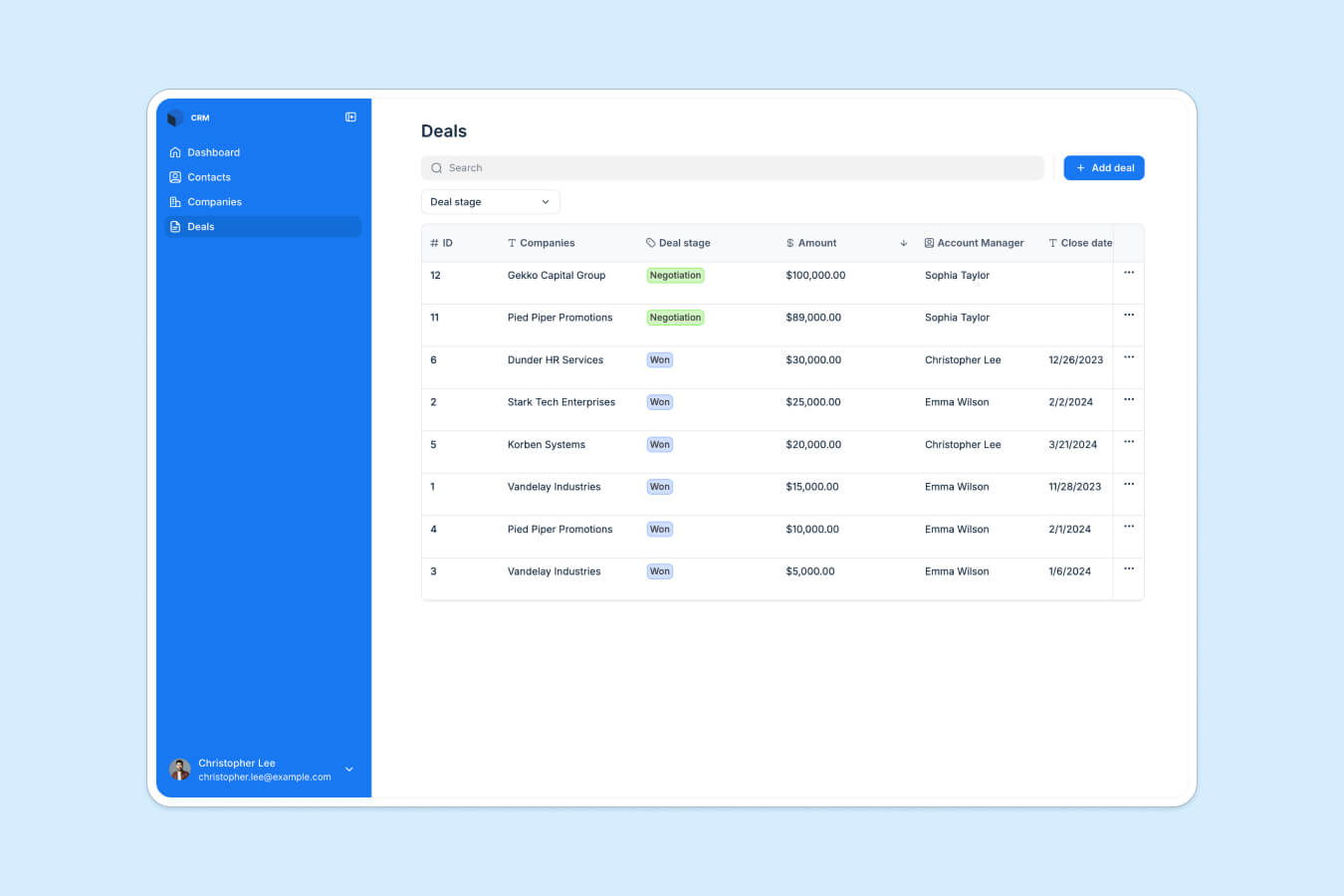
With no-code, you can build custom tools tailored to your exact needs, with no more making do with off-the-shelf solutions that "kind of" fit. Need a dashboard that shows lead status at a glance? Build it. Want a custom CRM that matches your pipeline stages, a quote calculator for your reps, or a partner portal your resellers can log into? You can build those too, and you'll be the one shaping them, because you're the one who runs the process.
Here's the crux: no-code allows you to automate, innovate, and elevate your sales operations like never before. And the best part? You don't need to be a tech whizz or have a team of developers at your beck and call. If you want a head start, our free sales CRM template gives you a working pipeline out of the box.
Ready to explore no-code? Let's dive in and see how it can supercharge your sales operations.
The sales advantages: unpacking the benefits of no-code
Let's get real about the benefits no-code brings to the table for sales operations. These aren't just superficial advantages; they're paradigm shifters that can redefine your entire sales process.
Speed and agility in building custom sales tools
When it comes to sales, speed is the name of the game. Every moment counts, and agility can be the difference between closing a deal or losing it. Traditional development of sales tools is slow and cumbersome, involving long development cycles, testing, bug-fixing, and more.
With no-code, you can create and deploy custom sales tools faster than you can say "Closed-Won." Modern platforms have gone past drag-and-drop alone: in Softr, you describe the tool you need and the AI Co-Builder generates the database, pages, and logic for you, ready to refine visually. You can also start from a template or build from scratch with pre-built blocks if you prefer. You can also build your sales app from Claude or ChatGPT through the Softr MCP.
Say goodbye to back-and-forth with developers and waiting months for a new tool. With no-code, you can identify a need today and have a tool built for it tomorrow. For example, if you spot a bottleneck in your sales pipeline, you can quickly create a Kanban view to surface stuck deals. This level of agility helps you respond to changes faster and keep your sales process running smoothly.
"In roofing, there were not many good CRM options, except for one that cost thousands of dollars a month. Instead, I used Softr to build our own CRM that rivals the expensive ones. I do not pay for features I will not use, and simply build the ones I want, exactly how I want them." - Verified G2 reviewer, Construction (Small-Business)

Cost savings from reduced reliance on IT or development teams
No-code doesn't just save time; it saves money, too. By eliminating the need for professional developers, no-code can significantly reduce the cost of creating and maintaining your sales tools.
Whether you're a startup with a tight budget or a large organization looking to cut costs, no-code offers substantial financial benefits. You don't have to hire a large development team or spend big bucks on custom software development. Instead, your existing sales ops team can build the tools they need, exactly how they need them.
And it's not just about the initial development cost. When you rely on developers, any change or update to your tools means more time and more money. But with no-code, your sales team can manage these updates themselves, reducing ongoing maintenance costs.
Imagine the cost savings, both immediate and long-term, from shifting your sales tool development to no-code. It's a no-brainer, right?
Ability to create personalized customer experiences
Personalization is the currency of today's sales landscape. Customers expect tailored experiences that resonate with their specific needs and preferences. While generic sales tools can fall short of delivering these personalized experiences, no-code can help you ace this game.
With no-code, you can easily design and implement tools that deliver highly personalized experiences to your customers. Want to build a custom onboarding portal for each customer segment? No problem. Need a workflow that sends personalized follow-ups to your leads based on their behavior? You got it. With Softr Workflows, those follow-ups can be triggered directly from your app, like a button on a deal page that fires off a tailored email sequence.
Moreover, no-code's flexibility allows for continuous optimization. As you gather feedback and data, you can rapidly iterate on your tools to improve the customer experience. It's this combination of personalization and continuous improvement that can set your sales team apart.
Enhanced data tracking and analytics capabilities
Data is the lifeblood of sales operations. Whether you're tracking lead conversion rates, monitoring sales performance, or analyzing customer behavior, access to real-time, accurate data is critical. Unfortunately, conventional tools often offer limited analytics capabilities or require complex integrations to work with your existing systems.
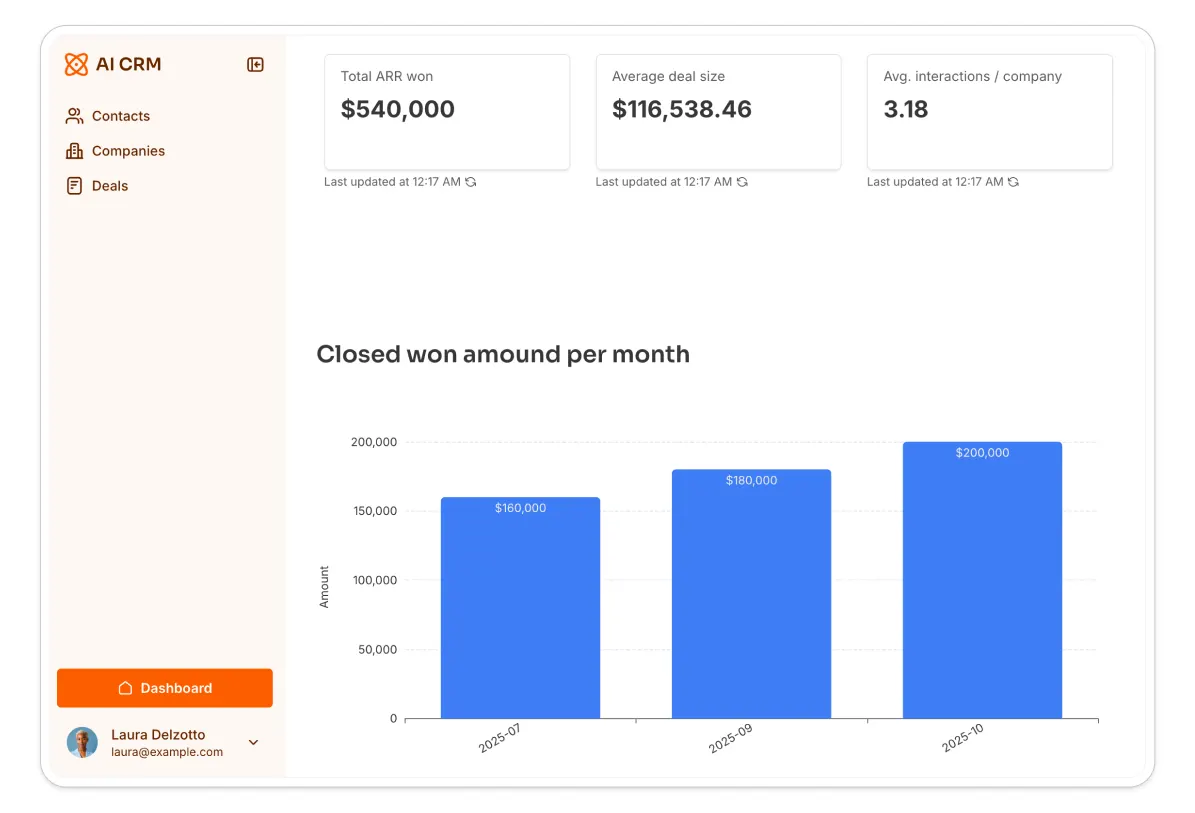
With no-code, you can create tools designed with data tracking and analytics at their core. You can build dashboards that provide real-time insights into your sales pipeline, tools that monitor the performance of your sales reps, or systems that analyze customer behavior and provide actionable insights. In Softr, you can even ask questions in plain language: Ask AI lets reps and managers query the pipeline directly ("Which deals over $10k haven't moved in two weeks?") and get instant answers from the data.
The real advantage is that these tools work with the data you already have. Store everything in native Softr Databases, or connect HubSpot, Airtable, Google Sheets, and 21+ other data sources, including a REST API connector. Your sales team spends less time wrestling with data and more time using it to drive sales.
Increased autonomy and innovation in the sales department
Perhaps one of the most exciting benefits of no-code is the autonomy and innovation it fosters within the sales team. With the ability to create their own tools, sales teams can experiment, innovate, and optimize their processes like never before. In fact, 39% of employees say they want the opportunity to build or design their own AI tools at work.
Got an idea for a tool that can improve lead follow-up? With no-code, you can build it. Think a new dashboard layout would provide better insights? Go ahead and create it. The power to innovate is in your hands.
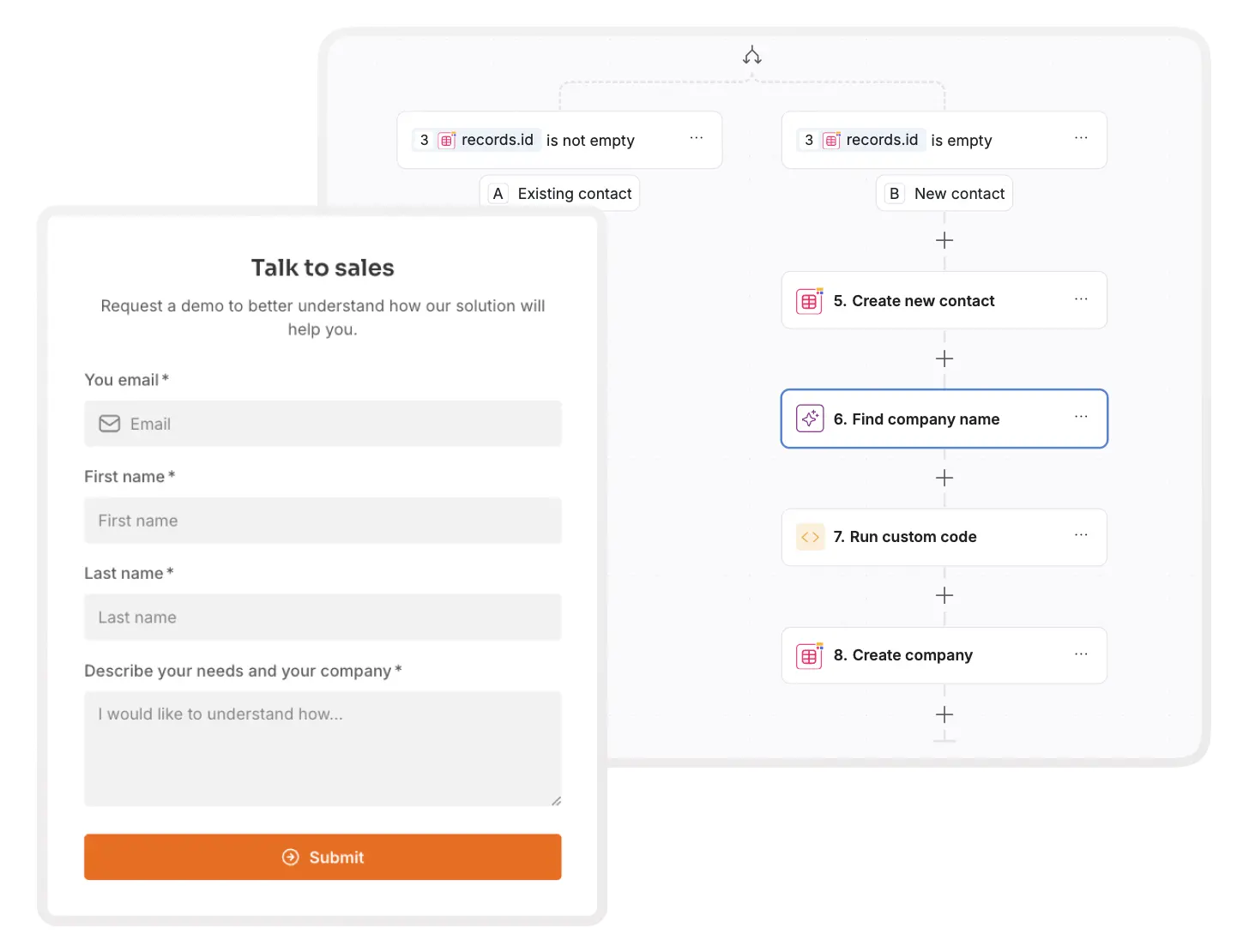
This autonomy goes beyond the interface. With database AI agents, your team can set up lead enrichment that runs itself: when a new lead lands in your database from a demo request form, an agent automatically fetches company details like industry, size, and description from the web, so reps open every conversation already informed.
This not only enhances the effectiveness of your sales operations but also leads to greater job satisfaction and empowerment within the team. And when your sales team feels empowered, they'll perform at their best.
Streamlined inter-departmental collaboration
Sales teams don't work in isolation. They are part of a larger ecosystem, interacting with other departments like marketing, customer support, and finance. This means sales tools need to seamlessly integrate with other departmental systems to ensure smooth workflow.
Here's where no-code shines. It allows you to design tools that are interoperable with various platforms. You could create a sales dashboard that pulls in marketing data to track lead generation, or a system that integrates with customer support for real-time service status. The result? Siloed operations become a thing of the past, and inter-departmental collaboration hits an all-time high.
"It started off as a simple CRM database, but then it grew into an influencer management system with a portal, and now tracking and dashboarding. It is just now an end-to-end system, and we can do the entire thing within Softr." - Shiran Brodie, Head of Marketing at Softr
Enhanced adaptability in a rapidly changing market
Markets change fast. Your sales tools need to keep pace. Customizing traditional sales tools to meet evolving needs can be a slow and expensive process. But with no-code, adaptability is built into your operations.
As you spot new trends or shifts in the market, you can quickly modify your tools to fit the changing landscape. This ability to adapt on the go means your sales operations remain agile and relevant, always ready to seize new opportunities.
Future-proofing your sales operations
The world is increasingly moving towards automation and digital transformation. Sales operations that stick to traditional methods risk falling behind. By adopting no-code, you're not just addressing current challenges, you're future-proofing your operations.
That shift is already paying off for early movers: 88% of early adopters of AI agents report positive ROI on at least one generative AI use case. As the digital landscape evolves, you'll be equipped with the tools and skills to adapt and thrive.
There you have it: the key advantages of embracing no-code in your sales operations. It's not just about building tools fast or saving a buck. It's about gaining a competitive edge, empowering your team, and paving the way for future success.
Adopting no-code: tips to get started
Ready to dive into the no-code pool? Awesome. The water's fine, but it helps to have a plan. Here's some practical advice to get you started.
Explore the landscape
There are loads of no-code platforms out there, each with unique features and benefits. Explore options, check out user reviews, and consider what matches your needs best. Some popular ones include Softr, Bubble, Glide, Zapier, and Webflow. Remember, the best no-code platform for you depends on your specific needs.
For sales teams specifically, look for a full-stack platform rather than a frontend layer: you'll want a native database to hold your contacts and deals, an interface builder for the pages your reps use, and built-in workflows for the automation.
Start with one real workflow
Don't try to rebuild your entire sales stack on day one. Pick one process that hurts (deal tracking, lead intake, quote generation) and build a production-ready tool for it. Starting small lets you learn quickly, prove value to the team, and expand from there.
The fastest way to start: describe what you need and let the AI Co-Builder generate a working app, complete with database and pages. Or start from a template like our sales CRM template, or build from scratch if you want full control from the first click.
"The initial setup was very easy for me since I used the AI assistant, which I thought was very in tune with what I was looking for. As someone less technical, I find it helpful that working with a database in Softr is similar to an Excel spreadsheet." - Joe L., Sales and Strategic Partnerships (Small-Business), G2 review
Make the case
Convincing your team and manager about the benefits of no-code might be a challenge. Show them the big picture: how no-code can save time and money, and boost efficiency. Use specific examples relevant to your team. Discuss how no-code could be used to automate lead enrichment or create a personalized onboarding experience for customers.
Collaborate and learn
Join no-code communities. They are abundant with resources and people eager to share experiences and learnings. You'll find answers to your queries, get feedback on your ideas, and stay updated on the latest trends.
Build internal tools
Start your no-code journey by building internal tools. This could be a CRM, a project tracker, or a dashboard for sales analytics. Building such tools gives you firsthand experience of the process and its benefits. If you're starting with a CRM, getting the CRM database structure right first will save you a lot of rework later (good apps are 80% data structure).
Iterate and improve
Remember, no-code makes it easy to tweak and improve your tools. As you use your new tools, you'll discover more about what works and what doesn't. Use these insights to iterate and enhance your tools. And when you need a structural change (a new chart, an extra page, a reworked form), you can make it manually or just describe it to the AI Co-Builder inside the editor.
Embracing no-code isn't a one-and-done thing. It's a journey of learning, innovating, and growing. With the right approach, you can make no-code an integral part of your sales operations and unlock a world of benefits.
Build your first sales tool this week
So, why does your sales team need no-code? Because the people closest to the process build the best tools for it: faster, cheaper, and exactly shaped to how your team actually sells.
You don't need a six-month rollout to find out. Pick the workflow that slows your team down most, then describe it to Softr's AI Co-Builder or start from our free sales CRM template. You could have a working pipeline tracker in front of your reps this week, and once you do, you'll wonder how you ever did without it.
Frequently asked questions
What can a sales team actually build with no-code?
Do I need any technical skills to build a sales CRM with no-code?
Can a no-code CRM connect to my existing sales data?
How do sales teams automate follow-ups without code?
Is a no-code CRM reliable enough for daily sales operations?