7 CEOs share the benefits of low-code and no-code development


[.blog-callout]
TL;DR
- Seven CEOs share why low-code and no-code development works for their businesses: faster delivery, better collaboration, easier integration, and significant cost savings.
- The biggest shift in 2026 is that no-code is no longer about prototypes. Teams run production software (client portals, CRMs, internal tools) on these platforms every day.
- Documented results back this up: MIT saved $100K+ replacing a custom-coded portal, and EvenUp saves around $6,000 per month on an internal tool serving 340+ people.
- Platforms like Softr now pair the no-code foundation with an AI Co-Builder that generates the database, interface, and logic from a plain-language description. [.blog-callout]
In this digital era, individuals and organizations have become heavily dependent on online applications for personal and professional uses. Back in 2020, IDC forecasted that over 500 million digital apps and services would be developed and deployed using cloud-native solutions by 2023, and Gartner predicted that about 70% of new business applications would use low-code or no-code development technologies by 2025. Those predictions have largely played out.
What has changed since is the nature of what gets built. No-code is no longer just a way to assemble simple sites. In 2026, teams use it to ship production software: client portals, CRMs, and internal tools that run real operations with real users.
It's safe to say that this development approach is a breakthrough in business. But how will it benefit your company or organization? Learn from the business executives below.
1. High Coding Efficiency
Traditional programming requires time-consuming coding that impacts project timelines. What's good about low-code and no-code development is its operational efficiency, allowing builders to save a significant amount of time. In fact, 451 Research reported that this solution can reduce app development time by 50-90%.
Jim Pendergast, Senior Vice President at altLINE Sobanco, can attest to this. "Low-code/no-code solutions have revolutionized our approach to web and app development. With high coding efficiency, we're able to save valuable time and redirect our focus towards our core competency. It's a game-changer that empowers our team to deliver results with speed and precision."
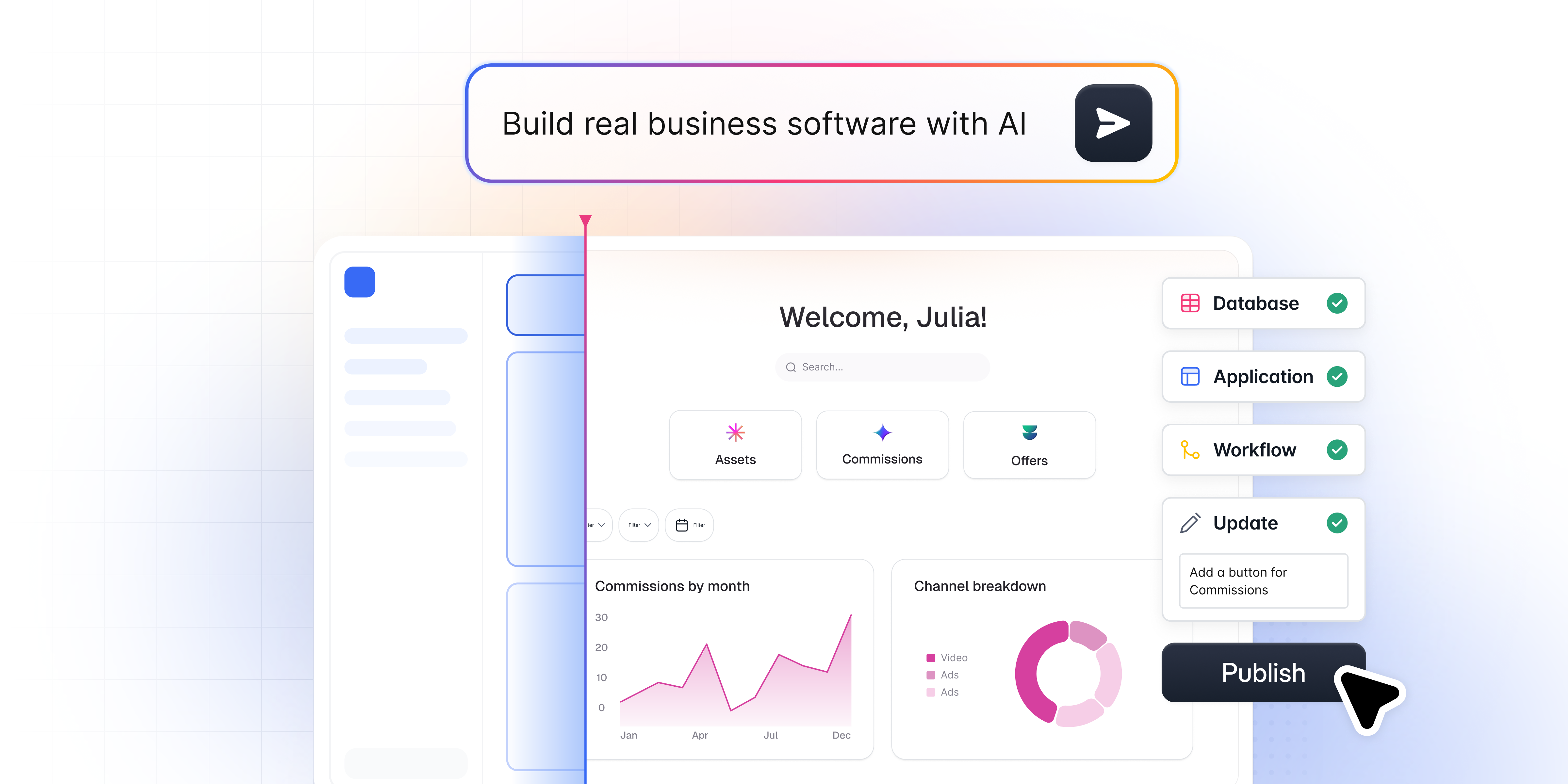
AI has pushed this efficiency even further. With Softr's AI Co-Builder, you describe the business app you need, and it generates the database, pages, blocks, and user permissions in minutes. You can then refine everything visually, or start from a template or blank canvas if you prefer.
2. Increased Coding Productivity
Operational efficiency translates to a boost in productivity. Instead of spending time writing custom code, teams can quickly build the business applications they need, and users can start working in those apps right away. Meanwhile, everyone else can stay focused on their core responsibilities instead of getting pulled into app development.
Stephan Baldwin, Founder of Assisted Living, has seen the value of low-code/no-code development for its website maintenance and app creation. “Our hired developers have achieved remarkable efficiency and productivity in the development process. They seamlessly maintain our website and successfully create a health monitoring app, all while ensuring our assisted-living operations don’t get disrupted and run smoothly.”
One Softr customer, a software consultant reviewing the platform on G2, put the productivity gain in concrete terms:
"Softr allows me to deliver business apps in a few days where a custom stack would take weeks. The visual editor is straightforward, and the native components cover most of my needs without CSS." - Verified G2 review, Computer Software (Small-Business)
3. Improved Project Collaboration
Every enterprise pursues business projects, whether launching new products, expanding to new markets, or creating apps. Achieving them depends on project collaboration, where team members work together efficiently towards common business goals. Unfortunately, traditional programming with complex coding can be complicated for your team.
Anthony Martin, Founder and CEO of Choice Mutual, has taken advantage of low-code/no-code development. "This business solution has revolutionized project collaboration within our organization. The visual interface and intuitive tools enable seamless communication and collaboration among managers, designers, and developers. It's a transformative approach that fosters teamwork and drives our company's success."

4. Enhanced Agility and Flexibility
There's no denying the evolving business landscape, changing consumer demands, and advancing technology. Companies must be agile and flexible enough to adapt to changes in business to gain a competitive advantage. This notion essentially applies to app development as well.
Mark Varnas, Principal SQL Server DBA/Consultant at Red9, has seen the potential benefits of low-code/no-code development. “ Little to no programming knowledge is required for low/no-code development, it also enables rapid prototyping and deployment. Moreover, it empowers business users to create solutions without relying on IT teams, which may be overwhelmed with other tasks. These platforms can be valuable tools for creating applications faster, testing ideas, and empowering non-technical users to contribute to the development process.”
That agility now extends well beyond early experiments. Because no-code apps are easy to change, teams can evolve production software as the business grows: add a field, adjust a permission, or update a workflow without re-engineering anything. The software grows with the business instead of becoming a system everyone is afraid to touch.
5. Easy Integration and Scalability
The digital landscape has paved the way for the rise of applications extensively used in business. However, both companies and users now demand easy app integration and business scalability. That's where low-code and no-code development comes into the picture.
Eric Mills, the owner of Lightning Card Collection, has begun incorporating the low-code/no-code solution into their app development processes. “Our contracted developers can seamlessly integrate apps into diverse data sources and services. This approach ensures smooth operations as they maintain our website and create an app for our services. Such flexibility allows us to scale our business up and down.”
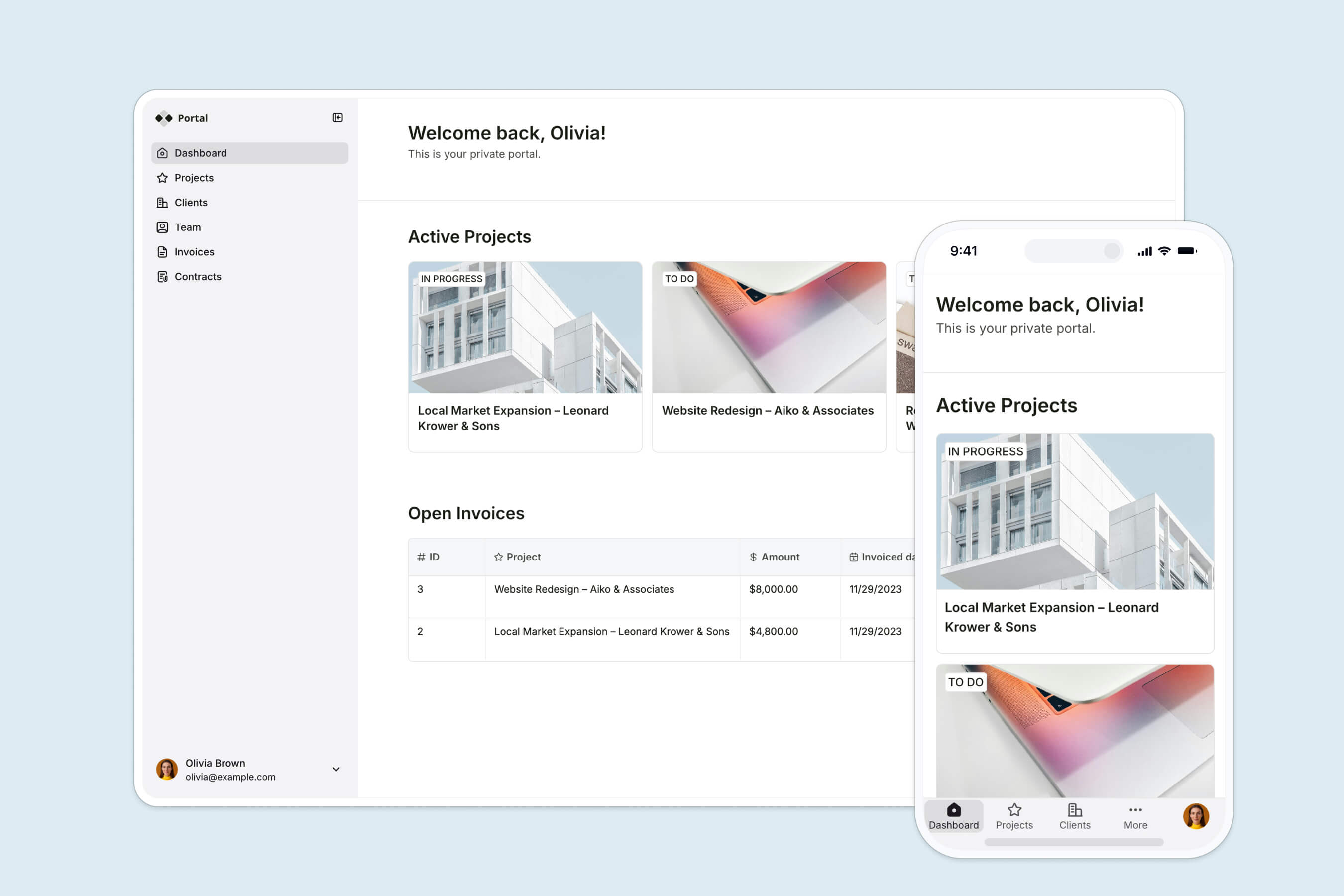
This is where the platform you choose matters. At Softr, we built a full-stack ecosystem: your app runs on native Softr Databases, and you can also connect 17+ external data sources like Airtable, Google Sheets, and HubSpot, including a REST API connector. Native Softr Workflows then automate the logic, triggered directly by buttons and forms inside your app.
6. Coding Opportunities for Non-experts
Low-code and no-code development is for almost everyone. Low-code platforms suit developers who want minimal hand coding, while no-code platforms let business users build with templates, visual tools, and AI assistance. That's the beauty of this development approach, since it caters to non-technical people. The trend is accelerating: according to Vercel, 63% of people using AI-assisted building tools are non-developers.
Linda Shaffer, Chief People Operations Officer at Checkr, has leveraged low-code/no-code development. “This solution has opened up coding opportunities to individuals without technical expertise and programming knowledge. This inclusive approach has allowed us to tap into the talents of our team members, empowering them to contribute to our app development processes.”
And when a non-technical builder does need something fully custom, they no longer hit a wall. In Softr, pre-built blocks cover the vast majority of needs, and the Vibe Coding block handles the rest: describe the custom component you want, and AI generates it inside your app, inheriting your theme, data connections, and permission rules.
7. Significant Cost Savings
Finally, a primary benefit of the low-code and no-code development approach is cost savings. App development, especially traditional programming, can be expensive as it takes time, requires money, and demands resources.
Gerald Lombardo, CEO at cauZmik, has seen how the low-code/no-code solution helps them save money on web and app development. "This approach has enabled us to improve our website and build an app without the burden of exorbitant costs. Such a solution empowers us to allocate resources more effectively and achieve our business goals efficiently.”
The numbers from real deployments are striking. MIT's Project Manus replaced a custom-coded maker portal (which cost over $100K to build and maintain) with a Softr app now serving 2,800+ users. EvenUp built an internal performance tracker for 340+ employees and contractors in 24 hours, saving around $6,000 per month compared to per-seat alternatives. And marketing agency Strupek cut operational and software costs by 58% with a client dashboard built on Softr.
Pricing models matter too, as one business owner shared in a G2 review:
"I love how you can create your own software without knowing how to code. I also love that I am not charged per-user fees like a lot of other software packages." - Laurie K., Business Owner (Small-Business), G2 review
Put these benefits to work in your business
The expert insights of these CEOs prove how beneficial low-code and no-code development is for business. This approach can help your company in several ways, from increasing efficiency to ensuring agility and flexibility to achieving meaningful cost savings.
The most important takeaway for 2026 is that no-code has moved into production. The platforms have matured into full-stack ecosystems (interface, native databases, and workflows in one place), and AI co-building has made the first version of an app a matter of minutes rather than weeks. With 88% of early AI adopters already seeing positive ROI on generative AI use cases according to Google, the teams that combine no-code foundations with AI assistance are pulling ahead.
If you're ready to see what that looks like for your team, explore these real-world examples of businesses built on no-code, or describe the app you need to Softr's AI Co-Builder and watch it take shape.
Frequently asked questions
- What is the difference between no-code and low-code development?
- Can no-code platforms handle production business apps, or just prototypes?
- How much money can no-code development save?
- What can you build with a no-code platform like Softr?
- How does AI change no-code development?