Looking to boost productivity & sales? Top 7 software real estate agents use

The real estate industry has always moved fast, and in 2026 the competition is tougher than ever. For agents and brokers, the right software makes the difference between chasing paperwork and actually closing deals. Whether you're struggling to manage multiple listings or keep track of client interactions, the right tools streamline your operations and keep you competitive.
In this article, we've curated the 7 best software solutions for real estate agents, from CRMs to marketing tools. Whether you're a solo agent or part of a large agency, these tools can help you work smarter and faster.
Best software for real estate agents at a glance
| Tool | Best for | Standout feature | Starting price |
|---|---|---|---|
| Softr | Agents and agencies wanting one custom, connected system | AI Co-Builder generates a full CRM, portal, and listings site from a description | Free plan, paid from $19/month |
| Zillow Premier Agent | Agents wanting leads from Zillow's audience | Access to Zillow and Trulia's buyer/seller traffic | Varies by zip code |
| Propertybase | Mid-size to large teams needing an all-in-one CRM | Built-in marketing automation and lead routing | From $79/user/month |
| BoomTown | Teams that want AI-driven lead nurturing | Predictive CRM that surfaces untapped opportunities | From ~$1,000/month |
| Real Geeks | Agents wanting an affordable all-in-one platform | IDX website optimized for lead gen and SEO | From $299/month + sign-up fee |
| kvCore | Teams focused on collaboration and productivity | Automation across email, SMS, and marketing campaigns | Custom quote |
| ShowingTime | Agents who mainly need scheduling | Real-time feedback from buyers and sellers after showings | From $15/month |
The role of software in the real estate industry
Rolodexes and paper trails are gone from real estate. Today's agents and brokers rely on digital tools, and for good reason: the right software turns a stack of paperwork into an organized digital record, so agents spend less time on busywork and more time closing deals.
Real estate pros juggle multiple listings while keeping clients happy, but software can turn those challenges into opportunities. Need to generate leads? There's a tool for that. Struggling to track client conversations? A CRM handles that. Buried under admin tasks? Automation takes care of it.
These tools free up agents to focus on what matters: building relationships and closing deals. Whether you're a solo agent building your book of business or part of a larger brokerage, there's a software solution that fits how you work.
What software do real estate agents use?
Real estate agents rely on several categories of software to streamline day-to-day tasks and improve productivity.
CRM (Customer Relationship Management) tools
CRM software helps agents manage client relationships, track leads, and streamline communications, with features like automated follow-ups and interaction tracking so no lead falls through the cracks.
Lead generation tools
Lead generation software helps agents attract potential buyers or sellers and convert them into clients. These tools often integrate with CRMs to make the follow-up process seamless.
Property management software
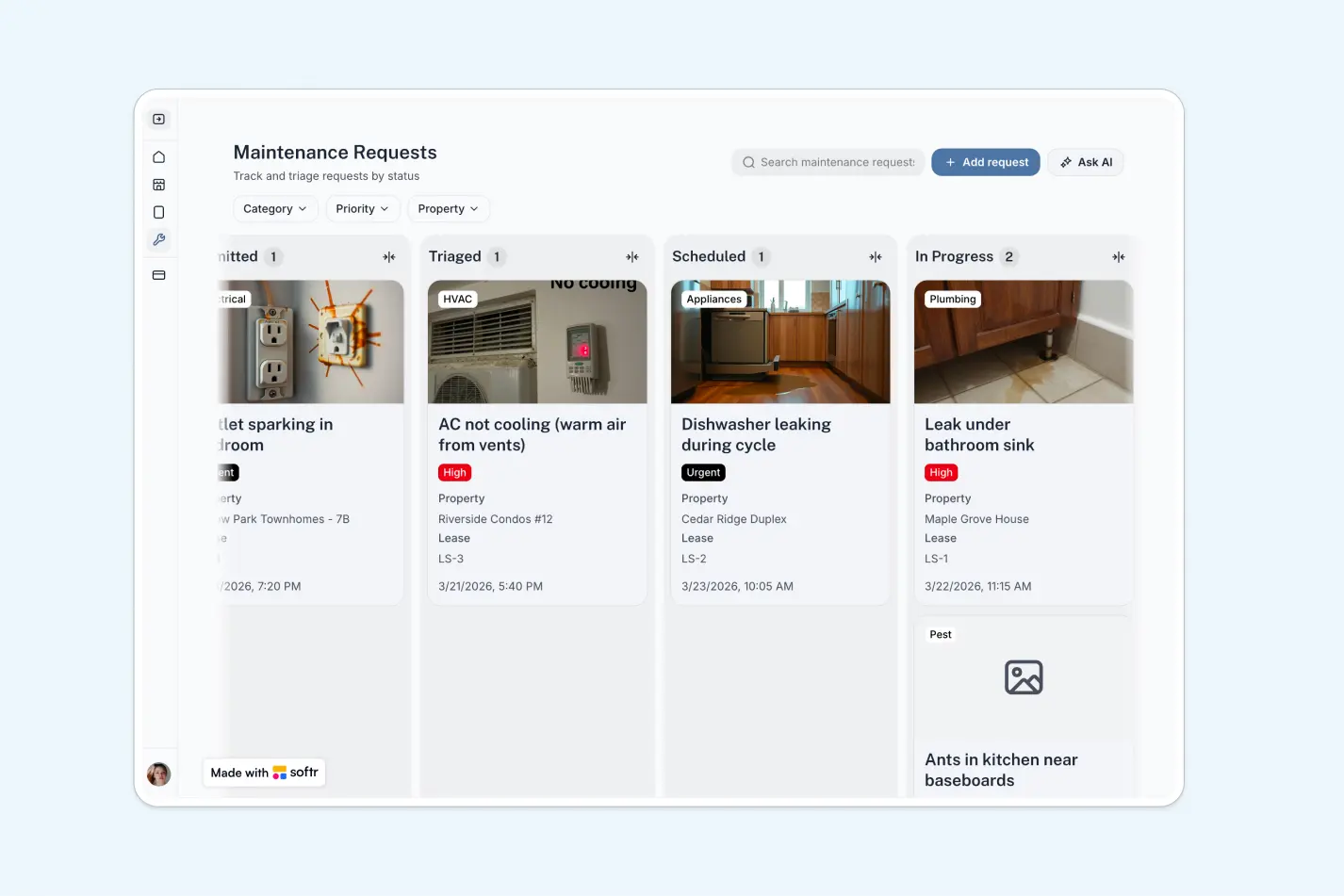
For agents managing rental properties, property management software simplifies tracking tenants, collecting rent, managing leases, and handling maintenance requests. Property insurance is worth factoring in too, since requirements vary by region. In Houston home insurance policies, for example, coverage may include risks like flooding or hurricanes. Regardless of location, insurance protects both landlords' and tenants' interests, and good property management software helps track these details alongside everything else.
Real estate marketing tools
Agents use marketing software to promote listings, from building IDX websites and landing pages to running email campaigns and social media marketing that reach more potential buyers and sellers.
Transaction management software
Transaction management software helps agents handle contracts, paperwork, and transactions efficiently. By automating document management and progress tracking, these tools simplify the closing process for everyone involved.
What do real estate agents need in software?
When choosing software, real estate agents typically look for several key features:
- Ease of use: The software should be intuitive, even for those who aren't tech-savvy.
- Mobile accessibility: Agents need their tools on the go, so mobile apps or responsive design are essential.
- Integrations: The ability to connect with other tools (like MLS listings or accounting software) keeps your workflow seamless.
- CRM functionality: Tracking client interactions and managing leads is essential when you're juggling many clients at once.
- Lead generation: Software should help you attract new business and automate follow-ups with prospects.
- Appointment scheduling: Tools that help you manage appointments and property showings.
- Communication: You need to communicate easily with clients, vendors, and team members.
7 best software for real estate agents in 2026
Before we dive into the details, here's a quick comparison of the strengths of each tool on our list:
1. Softr
Softr is an AI app builder that lets real estate agents create a custom CRM, client portal, and property listings site without writing code. Describe what you need and the AI Co-Builder generates the database, pages, and permissions already connected and ready to use, or start from a template or build manually if you'd rather have full control from the start.
Agents use Softr to give buyers, sellers, and renters their own view of the process, track leads and listings in one place, and automate the busywork that eats into selling time. Softr Databases act as the native backend for storing listings, leads, and client records, and you can also connect Airtable, Google Sheets, HubSpot, or any of 21+ other data sources if that's where your data already lives.
Key features:
- AI Co-Builder that generates a working CRM, client portal, or listings app from a plain-language description, with templates and manual building available as alternatives
- Softr Workflows to automate lead follow-ups, notifications, and status updates the moment a record changes
- Customizable templates for real estate client portals, CRMs, and property listings
- Booking and scheduling tools for property viewings, meetings, and consultations
- Users and permissions so buyers, sellers, renters, and staff each see only what's relevant to them
- Dynamic, searchable property listings with detailed specs, images, and virtual tours
- A Vibe Coding block for building fully custom UI elements (like a bespoke map search or a unique dashboard) when the pre-built blocks aren't enough
- Dashboards for tracking sales performance, lead volume, and other key metrics
Pros:
- Three ways to build: describe your app to the AI Co-Builder, start from a template, or build it manually, so you're never locked into one path
- Native database and workflow engine, so you're not stitching together a CRM, a form tool, and an automation platform
- Granular user groups so buyers, sellers, agents, and admins each get their own experience
- Affordable, transparent pricing that scales with app users rather than per-seat fees
- Excellent customer support and an active user community that keeps shaping the platform's roadmap
Cons:
- Less suited for teams that want a fully custom-coded system built by developers from day one
- Advanced customization (like the Vibe Coding block for unique UI) has a small learning curve at first
Pricing: Softr offers a range of plans:
- Free: Unlimited apps, with access to Softr Workflows and Softr Databases, 5 app users, 5,000 database records, 5 AI credits
- Basic: $19/month (Unlimited apps with 42+ integrations, Team: 5 + Client: 5 app users, 50,000 database records, 10 AI credits)
- Pro: $99/month (Unlimited apps with 45+ integrations and custom code, Team: 10 + Client: 50 app users, 500,000 database records, 50 AI credits)
- Business: $329/month (Unlimited apps with 52+ integrations, Team: 30 + Client: 100 app users, 1 million database records, 100 AI credits)
- Enterprise: Contact sales for enterprise limits, SSO, and SLAs
Customer review:
"Softr has a great support team which is quick, knowledgeable and very friendly. This helps a lot when you're building new solutions. Beyond that, Softr has a great UX and is very simple to set-up with your Airtable data. I'm mainly building internal tools for real estate agencies, private health industry, and legal." - Riccardo F., G2
A London-based property management company built a similar idea into a tenant portal: instead of tenants emailing about ticket status, they submit and track requests directly, cutting down inbound status-check emails and saving roughly 50% compared to a comparable service desk upgrade. Read the full case study.

2. Zillow Premier Agent
Zillow Premier Agent is a lead generation platform for real estate agents. It connects agents with homebuyers and sellers by giving them access to leads from Zillow's user base, alongside tools to manage client relationships and advertise listings.
Key features:
- Lead generation from Zillow and Trulia
- CRM tools
- Ad campaigns to promote property listings
- Agent profile on Zillow
Pros:
- Access to a large pool of potential buyers and sellers
- Comprehensive advertising tools
- Mobile app for on-the-go lead management
Cons:
- Can be expensive, especially in competitive markets
- Limited customization options
- CRM features are limited compared to dedicated real estate CRM tools
- Reliance on Zillow for lead generation
Pricing: Varies based on zip code and competition.
3. Propertybase
Propertybase is an all-in-one real estate platform offering CRM, marketing, and website management tools built for real estate professionals. It helps agents manage leads, track deals, and run targeted marketing campaigns from one platform.
Key features:
- Robust CRM system for tracking leads and managing deals
- IDX website builder
- Built-in marketing automation
- Lead routing and distribution
- Advanced analytics and reporting tools
Pros:
- Powerful automation features
- Feature-rich, with integrated CRM, marketing, and website tools
- Highly customizable to fit real estate teams' needs
- Scalable for both small and large agencies
Cons:
- Can be complex to set up and use
- May be overkill for individual agents or small teams
- Higher price point compared to simpler solutions
Pricing: Custom pricing based on team size and needs, starting at $79/user/month.
4. BoomTown
BoomTown is a lead generation and marketing platform for real estate agents, with tools for capturing leads, nurturing them through the sales pipeline, and closing deals.
Key features:
- Lead generation and management
- Email and SMS marketing automation
- IDX website builder
- Predictive CRM that identifies untapped opportunities
Pros:
- Comprehensive solution for lead generation and management
- User-friendly interface
- Powerful CRM with AI-driven insights
- Responsive mobile app for on-the-go use
Cons:
- May be more than individual agents need
- Pricey compared to other tools
- May require a learning curve for advanced features
Pricing: According to Capterra, pricing starts at $1,000 per month, with custom pricing for larger teams. BoomTown offers four packages: Launch, Core, Grow, and Advance, each with different feature sets. Contact the vendor for details.
5. Real Geeks
Real Geeks is an all-in-one real estate platform offering CRM, lead generation, and marketing tools for agents.
Key features:
- CRM system for lead and client management
- Lead generation tools with analytics
- Marketing automation for email and SMS campaigns
- IDX website creation with customizable websites and landing pages
- Integration with popular tools (e.g., Google Calendar, Mailchimp)
Pros:
- Comprehensive platform for managing all aspects of a real estate business
- More affordable than other all-in-one real estate software
- IDX website optimized for lead gen and SEO
- User-friendly interface
- Strong focus on agent productivity
Cons:
- May not be as powerful as some dedicated CRM systems
- Limited to 10 CRM users on the Conquer plan
Pricing:
All Real Geeks plans come with a one-time sign-up fee in addition to a monthly subscription cost.
- Establish: $299/month
- Grow: $599/month
- Expand: $999/month
- Conquer: $1,599/month
6. kvCore
kvCORE is a real estate technology platform offering CRM, lead generation, marketing, and transaction management tools, popular for its focus on team collaboration and productivity.
Key features:
- Robust CRM for managing client interactions
- Lead generation tools and custom IDX websites
- Automation for email, SMS, and marketing campaigns
- Analytics and reporting for performance tracking
- Integration with popular tools (e.g., Google Calendar, Mailchimp)
Pros:
- Strong focus on team collaboration and productivity
- Comprehensive platform for managing all aspects of a real estate business
- Powerful CRM features
- Customizable workflows
Cons:
- Can be complex to set up and learn, not as user-friendly as other options
- Limited customization options for websites
- May be overkill and expensive for smaller teams or agents with simpler needs
- Reviews often mention that customer support is lacking and slow
Pricing: Must contact the vendor for a custom quote.
7. ShowingTime
ShowingTime is a widely used scheduling platform built for real estate agents. It simplifies coordinating showings and managing appointments, with features for communicating with clients and tracking showings.
Key features:
- Scheduling system for property showings
- Real-time feedback from buyers and sellers
- Mobile app for managing appointments on the go
- Integration with MLS systems for easy access to listings
Pros:
- User-friendly interface with mobile app
- Excellent for managing showings and appointments
- Affordable pricing
Cons:
- Interface can feel dated compared to newer options
- Primarily focused on scheduling, lacking broader CRM or lead management tools
- May not be as suitable for agents who need more comprehensive tools
Pricing:
The Appointment Center by ShowingTime is $15/month for agents. Additional modules cost extra. Contact the vendor for pricing.
How to pick the best real estate software for you
Picking the right software for your real estate business can feel like house-hunting in a hot market: overwhelming and high-stakes. But the right tech is your secret weapon, turning chaos into a repeatable process that helps you close deals like a pro.
When evaluating options, consider what matters most to your business, whether that's lead generation, CRM functionality, or seamless scheduling. Each tool has its strengths, but the goal is finding a solution that fits your specific requirements (including your budget) and has room to scale as your business grows.
For agents who want one connected, affordable, and customizable platform, Softr stands out. Describe what you need to the AI Co-Builder and it builds your CRM, client portal, and listings pages already connected, or start from a template if you'd rather customize an existing setup. Plus, Softr's transparent pricing and responsive support make it a fit for solo agents, larger agencies, and everyone in between.
Ready to simplify your workflow and boost productivity? Try Softr for free today.
Frequently asked questions
What software do most real estate agents use day to day?
How much does real estate CRM software cost?
Can I build a real estate CRM without hiring a developer?
What features should I look for in real estate software?
Is Softr a good fit for real estate teams and agencies?