[.blog-callout]
TL;DR
- No-code lets your team build and run the software your business depends on (portals, CRMs, internal tools, dashboards) without waiting on developers.
- The payoff is concrete: documented customers have saved 100+ admin hours per month, avoided €50,000+ in development costs, and rolled out tools that thousands of users rely on daily.
- Common objections about security, scalability, and customization no longer hold: modern platforms handle permissions and infrastructure for you, and AI fills the customization gap.
- This article covers why operations teams adopt no-code, the misconceptions that hold businesses back, and how to get started. [.blog-callout]
The way businesses build software is changing fast. The tools we use, the strategies we implement, and the processes we streamline are all becoming smarter, quicker, and more efficient. One innovation steering this evolution is no-code, a term that has been making rounds in the business sphere and particularly among those in operations.
No-code solutions emerged as a response to the growing complexity of software development. As the name suggests, no-code means building software applications without writing any actual code. These tools let you create the business applications your company actually runs on, client portals, CRMs, and inventory trackers, automate tasks, and manage complex workflows, all without traditional coding skills.
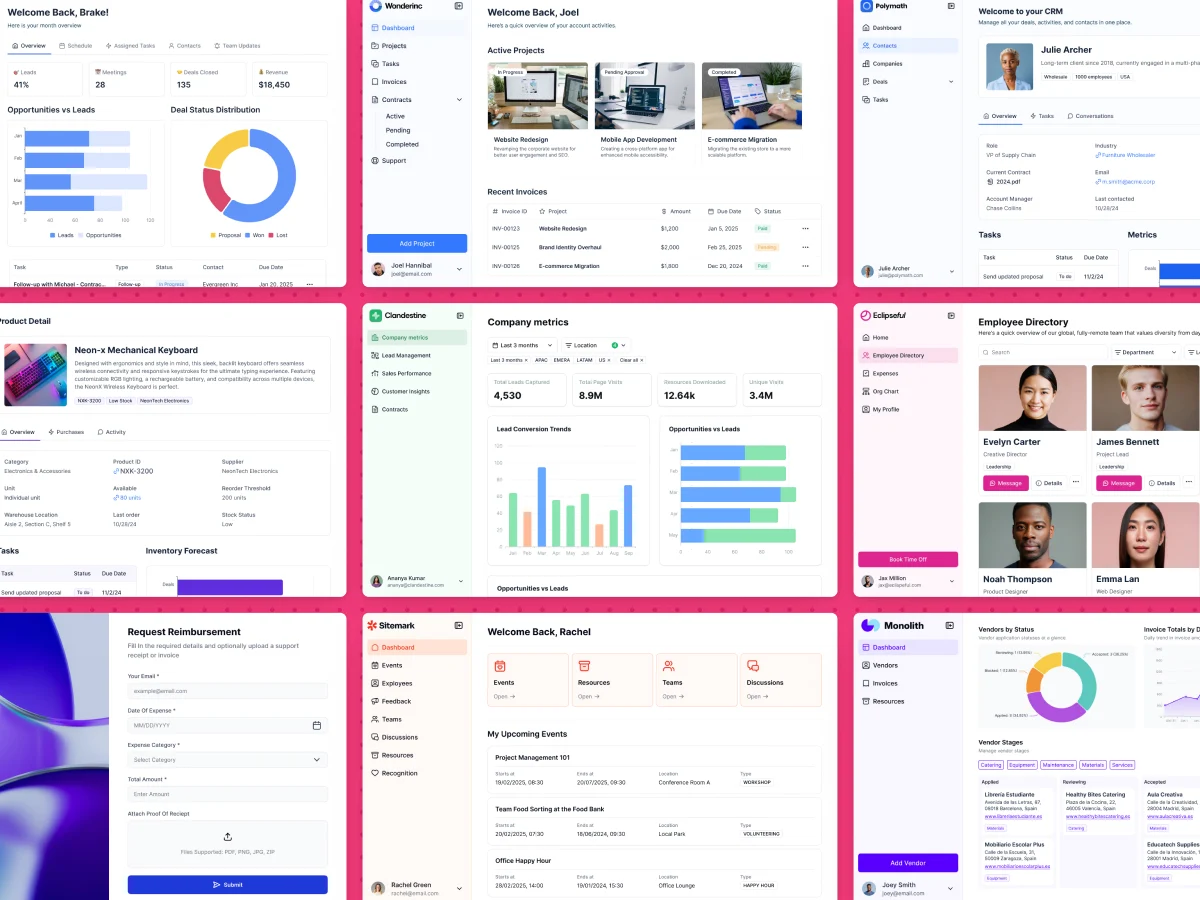
In the past, changing or implementing a new system meant a massive headache for the operations team, and usually involved hiring a developer or waiting for the IT department to handle it. Now, these systems are within everyone's reach.
Regardless of the industry, the impact is significant. Businesses use no-code tools to organize and automate their operations, tracking resources and workflows effectively. And this isn't about prototypes or side experiments. Companies run their daily operations on no-code apps, from recruitment portals serving hundreds of applicants to performance dashboards used by 340+ employees.
For businesses in 2026, no-code is less an option and more a baseline capability. Let's dig into why your operations team needs it.
Why ops teams need no-code
In contemporary business operations, the need for speed, efficiency, flexibility, and cost-effectiveness has never been greater. With the continuous demand to meet project deadlines, juggle multiple tasks, and outpace the competition, operations teams are constantly on the lookout for tools that improve their workflows.
No-code platforms deliver on four fronts: faster processes, enhanced flexibility, democratized tech, and lower costs. Let's take each in turn, with real numbers from businesses that made the switch.
Speeding up processes
Operations teams live by the mantra "time is money." They're expected to respond quickly to changes, make on-the-spot decisions, and implement new processes fast. No-code tools let teams build customized solutions in a fraction of the time traditional coding would take.
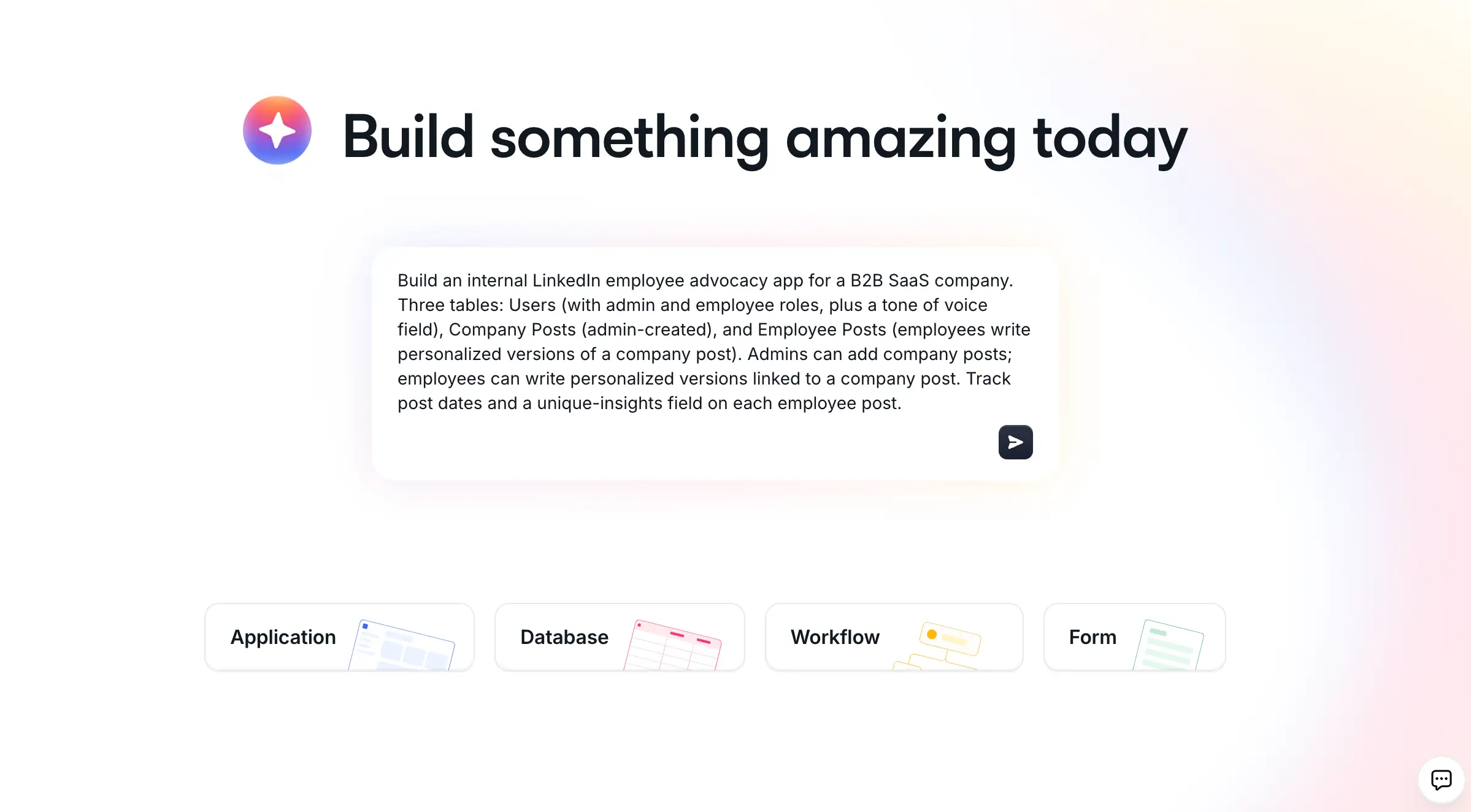
Modern platforms go beyond drag and drop. With Softr, for example, you describe what you need and the AI Co-Builder generates a complete app: database tables, pages, user permissions, and navigation, ready to refine visually. Legal tech company EvenUp built a performance tracker for 340+ employees and contractors in 24 hours. Speed like that changes what an ops team can take on.
"Softr allows me to deliver business apps in a few days where a custom stack would take weeks. The visual editor is straightforward, and the native components cover most of my needs without CSS." (Verified G2 reviewer, computer software, small business)
Enhanced flexibility
Being able to modify workflows without depending on the IT department changes how operations teams work. No-code platforms offer this flexibility through an easy-to-use interface that lets teams tailor solutions to their specific needs.
Need to add a new feature to your project management tool, or modify an existing workflow? You adjust it yourself, visually or by describing the change to an AI assistant, and ship it the same day. MIT's Project Manus team replaced a custom Ruby on Rails portal (which required developers for every update) with a Softr app serving 2,800+ registered users, noting that "changes could be tried out quickly and rolled out safely if needed." The ability to adjust quickly keeps the operations team agile and responsive to the ever-evolving business landscape.
Democratization of tech
Another massive advantage of no-code is the democratization of technology. It empowers non-technical team members to take control of digital tools and contribute to building solutions. Tech is no longer confined to those with coding knowledge; anyone can create and manage internal tools and digital platforms.
This matters most when it drives adoption. Arizona State University built a curriculum hub that reached a 90% adoption rate among its core users in under a month, with 1,200+ unique users in the first month alone. When the people who understand the process build the tool, the tool fits the process, and people actually use it.
"It was intuitive to figure out. I was able to get a fully functional client portal working in a week with minimal prior coding experience. In roofing, there were not many good CRM options, except for one that cost thousands of dollars a month. Instead, I used Softr to build our own CRM that rivals the expensive ones." (Verified G2 reviewer, construction, small business)
Cost-effective solution
The financial benefits are significant and well documented. Traditional software development means hiring specialized programmers or buying expensive off-the-shelf software. No-code drastically cuts these costs.
The numbers from real deployments speak for themselves: recruitment company CareVista avoided over €50,000 in custom development costs while saving 100+ admin hours per month, marketing agency Strupek cut operational and software costs by 58%, and EvenUp saves around $6,000 per month compared to its previous tooling. Beyond hard savings, faster implementation means less time cost, which compounds across every process the team touches.
Through faster processes, increased flexibility, tech democratization, and cost savings, no-code has become a necessity for modern operations teams. Now let's address the misconceptions that still make some businesses hesitate.
Overcoming common misconceptions about no-code
As with any innovation, no-code has its share of misconceptions that may create hesitation among potential adopters. Some worry about security risks, while others question its scalability or fret over a perceived lack of customization. Let's address these concerns.
Firstly, concerns about security are natural, especially when it comes to business data. However, established no-code platforms prioritize security just as much as any traditional software. They're built with stringent security measures, role-based access controls, and regular audits. In Softr, for example, users and permissions are a core part of the platform, so a vendor sees only their records while an admin sees everything.
Next, there's the question of scalability. Can no-code platforms handle a business's growth and the increasing complexity that comes with it? The evidence says yes. The MIT and ASU portals above serve thousands of users in production. Platforms like Softr also connect to 17+ data sources, from native Softr Databases to Airtable, Google Sheets, HubSpot, and a REST API connector, so your apps grow with your data stack rather than against it.
Finally, the fear of limited customization is increasingly outdated. Pre-built blocks cover the vast majority of business app needs, and for anything custom, AI-generated components fill the gap. As Shiran Brodie, our Head of Marketing, puts it:
"Where we really see Softr is at that intersection between no-code and AI, taking the speed and freedom that comes with vibe coding and combining it with the security, reliability, and infrastructure of no-code."
These misconceptions often stem from a lack of knowledge about what modern no-code platforms can do. Teams that move past them unlock a level of efficiency that's hard to give up.
Start with one tool your team actually needs
No-code isn't a trend to watch from the sidelines. It's how a growing share of businesses build and run the portals, CRMs, and internal tools their operations depend on, with documented savings in both money and time.
You don't need a company-wide rollout to get started. Pick one painful process (a spreadsheet that breaks, a vendor request that lives in email threads) and build the tool that fixes it. With Softr, you can describe the app to the AI Co-Builder and get a working version with its database, pages, and permissions in minutes, then refine it visually. Or start from a template if you prefer.
If you need help making the case internally, our guide on convincing your manager to adopt no-code walks through the objections you'll hear and how to answer them. The teams who adopt no-code today set the pace for everyone else.
Frequently asked questions
- What is no-code, exactly?
- What can a business actually build with no-code?
- Is no-code secure enough for business data?
- Does no-code scale as the business grows?
- How much does no-code save compared to custom development?