[.blog-callout]
✨ TL;DR:
- HubSpot is built for SMBs that need a polished, scalable customer platform; GoHighLevel is built for agencies that want white-label CRMs and reusable client campaigns.
- HubSpot wins on UI, integrations, and AI; GoHighLevel wins on simplicity and agency-specific tools.
- Pricing works very differently: HubSpot has a generous free tier but gets pricey fast; GoHighLevel stays cheaper across tiers but has fewer native integrations.
- Both tools limit you to their built-in CRM and marketing features — you can’t design custom databases, build full portals, or create apps around team-specific workflows.
- Softr gives you that missing layer: build custom CRMs, client portals, dashboards, and automated workflows on top of your data — or sync HubSpot records directly into Softr to extend what HubSpot can do.
[.blog-callout]
If you’re in marketing or you run a business, you’ve probably heard of HubSpot. It’s a customer platform built for everything from marketing automation and sales pipelines to data management and customer service. GoHighLevel is like a leaner, scrappier version of HubSpot that’s built for agencies.
Both tools offer all-in-one functionality, meaning you can use them primarily as CRMs or expand to meet other needs as your business grows: email marketing, content management, workflow automation, and even website creation.
You could easily burn through a whole day researching HubSpot’s and GoHighLevel’s functionality and pricing. To save you the trouble, this guide breaks down their standout features, top use cases, and when you’d want to consider Softr as a full-stack alternative for CRM, data management, and automation.
GoHighLevel vs HubSpot at a glance
| Feature | GoHighLevel | HubSpot |
|---|---|---|
| Best for | Marketing agencies managing multiple client accounts with white label branding. | SMBs and enterprises scaling a single brand; comprehensive marketing, sales, and service features. |
| Ease of use | Somewhat steep learning curve with fewer training resources. | Cleaner, beginner-friendly interface with platform-wide AI assistant. |
| Automation | Included on all plans with basic workflows and AI for automation, chatbots, and calls. | Sophisticated automated workflows with Breeze AI agents and generative AI (Professional+ tiers only). |
| Integrations | Around 500 native integrations, plus Zapier and API access for custom connections. | 2,000+ integrations through the app marketplace, plus Zapier and API access, and a native Softr integration for building custom portals and apps. |
| Value | Flat-rate pricing: $97 to $497/month for unlimited contacts and users. | Free tier and affordable Starter plan available; $1,300 to $4,700/month for Professional and Enterprise plans with contact limits. |
What is GoHighLevel?
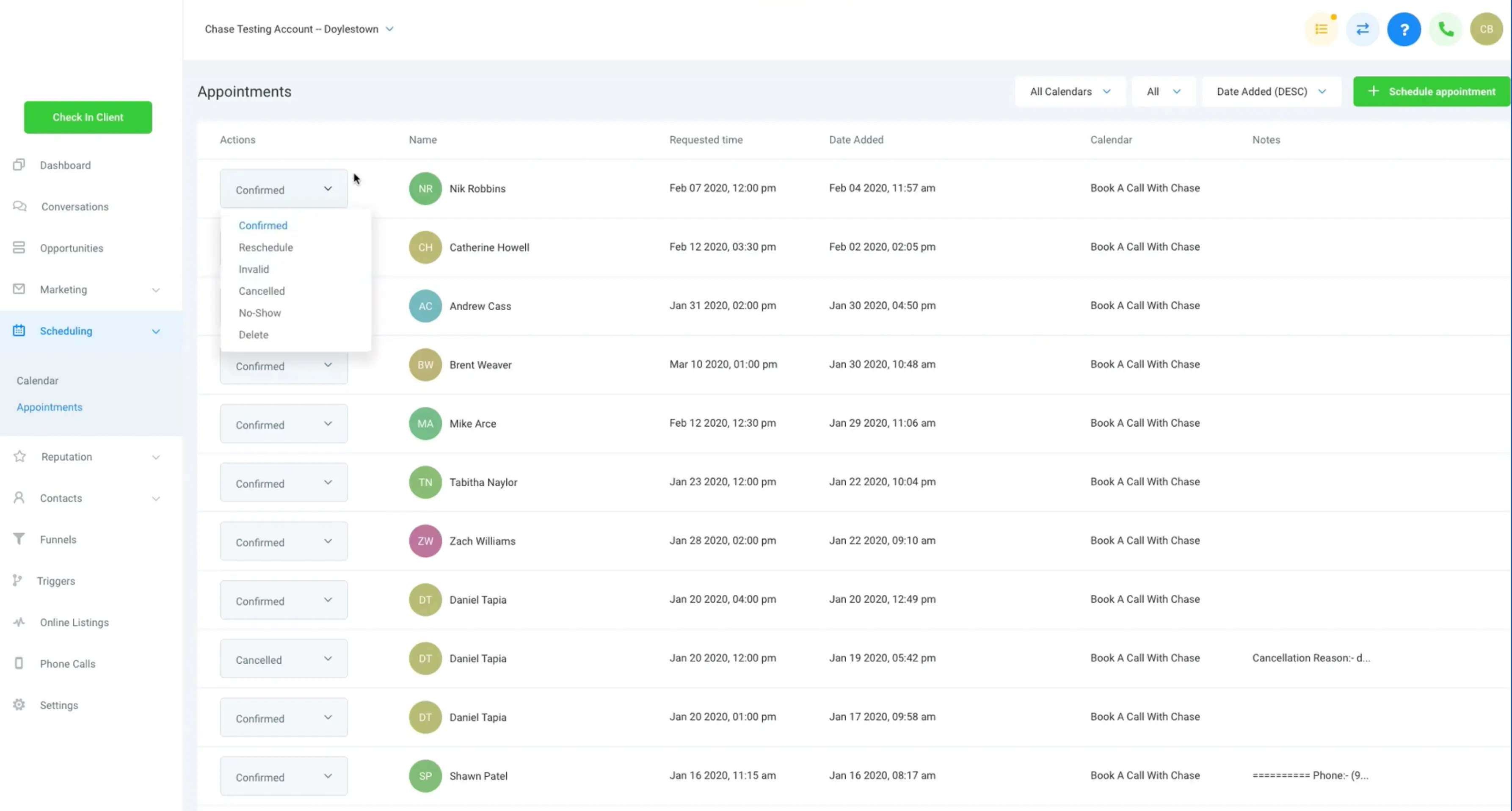
GoHighLevel is an all-in-one sales and marketing solution that helps agencies manage and automate client campaigns. It combines CRM, email marketing, SMS, funnel building, automations, and reporting into a central platform.
How it works and who it’s for
GoHighLevel is designed for agencies that need a white label marketing solution for their clients. Custom design options (logo, color, fonts, formatting) let you build fully branded CRMs, forms, or landing pages you can then share with clients.
Anything you build in GoHighLevel (CRMs, sales funnels, campaigns, etc.) can be shared with any partner, so you won’t have to start from scratch each time you onboard a new client.
GoHighLevel is best for digital marketing agencies looking to consolidate their tech stack. Unlike HubSpot, which focuses on marketing and sales for individual businesses, GoHighLevel’s white label tools are designed specifically for reselling to multiple clients.
What is HubSpot?
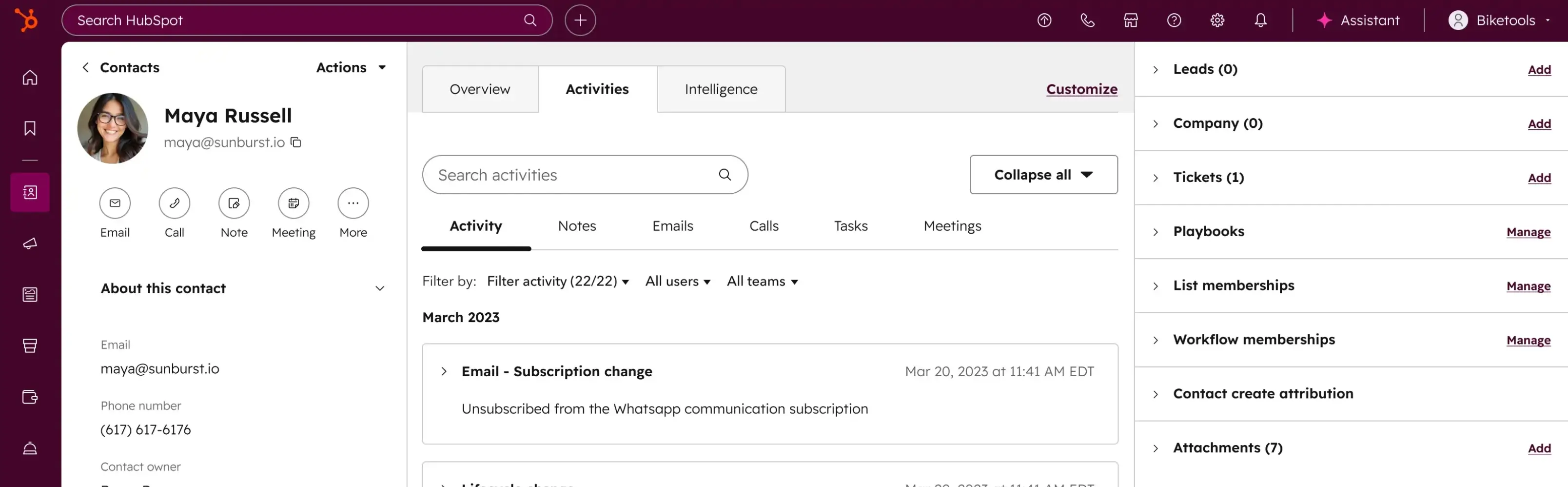
HubSpot is a complete customer platform, combining CRM, marketing automation, sales tools, customer service, and content and data management into a unified system for growing businesses.
How it works and who it’s for
HubSpot lets you pick and choose which tools (or Hubs) you want to use and pay for. Start simple with the free CRM or create end-to-end marketing, sales, and customer support workflows.
It’s flexible enough for small to mid-sized businesses, but feature-rich enough for enterprises managing complex, multi-channel campaigns across global markets. It all depends on which Hubs you bundle when you subscribe.
Unlike GoHighLevel, which focuses on agency growth, HubSpot is tailored toward companies building their own brand and customer relationships at scale.
GoHighLevel vs HubSpot: Features compared
HubSpot and GoHighlevel are marketing platforms at their cores, but which one you choose will depend on your business’s size, needs, and goals. Here’s how their top features compare.
1. Which is easier to learn?
GoHighLevel has a simpler pricing structure, but HubSpot has a cleaner, more beginner-friendly user interface. You’ll be given a guided tour upon sign up, and an AI assistant is there to help you out if you have any questions.
GoHighLevel used to be a more straightforward app, but it’s expanded its toolkit to include things like a website builder, call tracking, appointment management, and much more. There’s deep functionality to uncover, but fewer resources for training and no integrated AI assistant.
Verdict: If you’re using HubSpot at the Enterprise tier, there can be a lot of moving parts to keep track of, but it’s still easier to set up and start using; HubSpot’s AI assistant is also a plus.
2. Which has more features?
Both HubSpot and GoHighLevel have expansive toolkits that earn them their “all-in-one” status. They share strong CRM functionality, pipeline and sales funnel management, marketing automations, and a host of other features like analytics tracking, meeting scheduling, and a website builder.
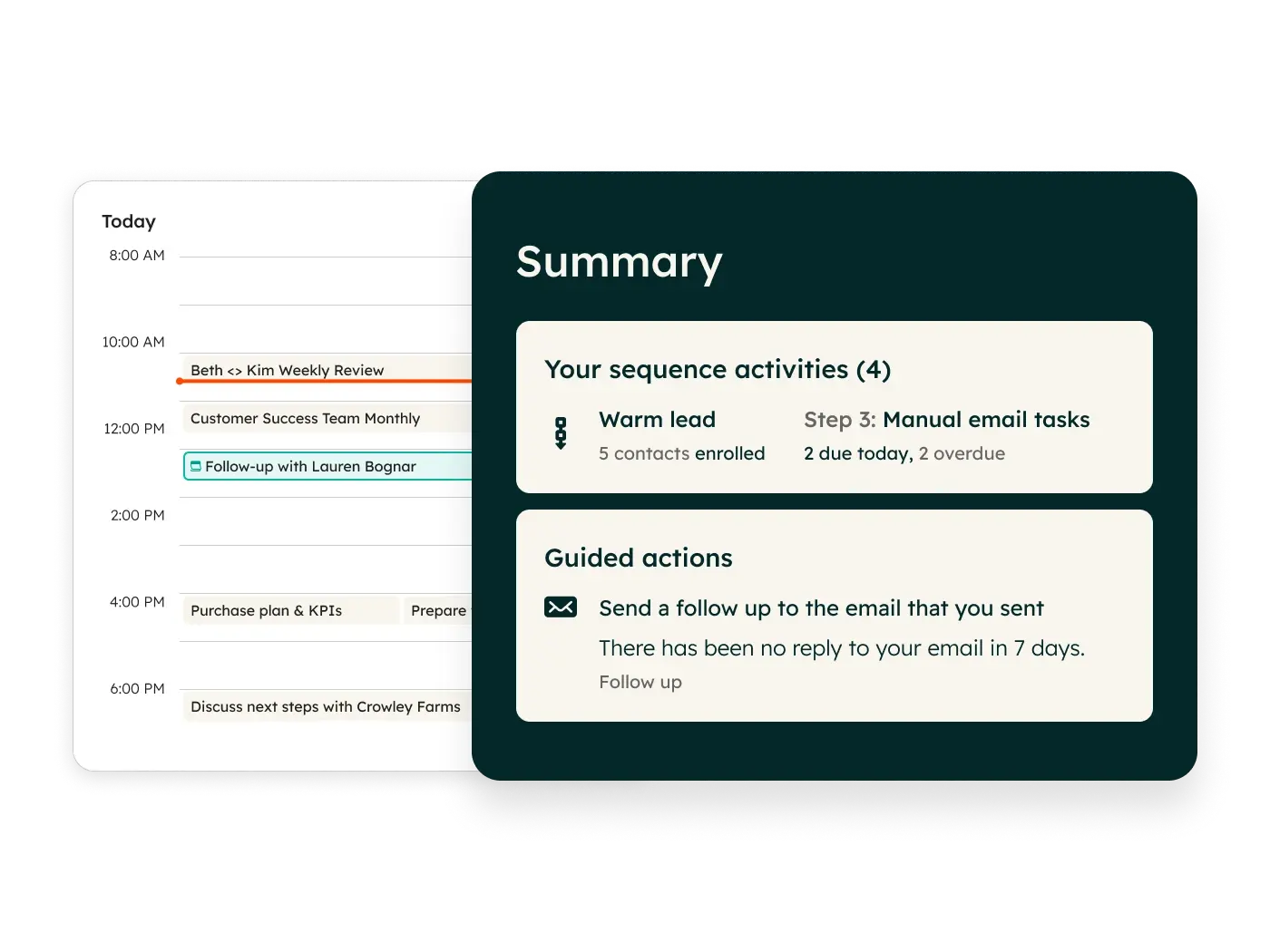
But HubSpot has several tools GoHighLevel lacks, like a full-fledged content management system, AI-powered data intelligence, and role-based access control for enterprise-grade compliance. However, GoHighLevel does have native white labeling, while HubSpot makes you join the Partner Program if you want branded services.
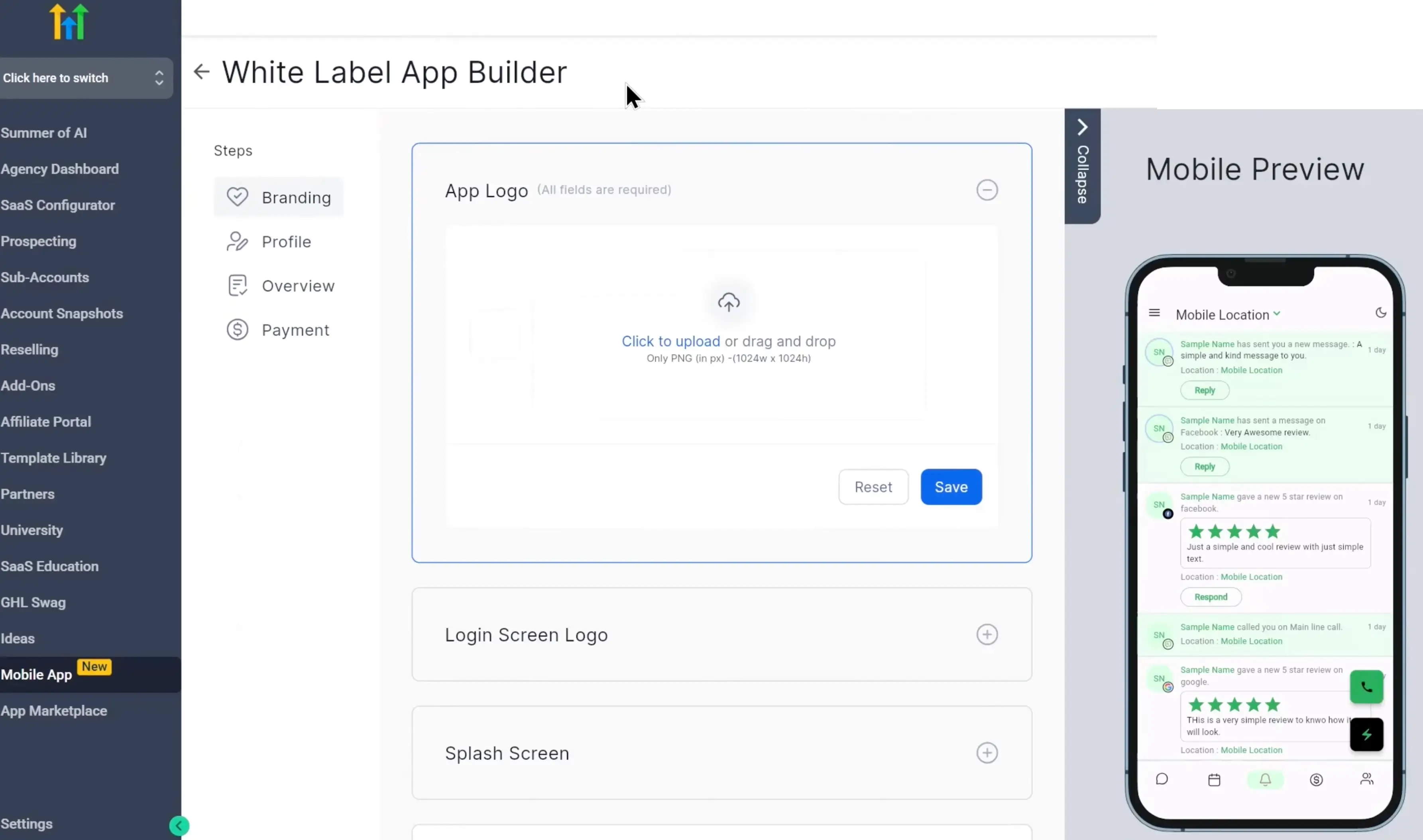
Verdict: It’s a close call, but HubSpot’s feature set runs deeper; GoHighLevel has better agency-specific tools, though.
3. Which has more integrations?
All-in-one platforms can do a lot, but they still need to connect to third-party software to fill in gaps or integrate data sources.
HubSpot connects with 2,000+ apps via its Marketplace: tools like Gmail, Google Calendar, Mailchimp, Shopify, Aircall, and many others span email, e-commerce, ads, scheduling, and communication workflows. GoHighLevel, on the other hand, lists roughly 500-plus integrations natively or via bridges, commonly covering payments (e.g., Stripe), messaging and communication channels (like WhatsApp, SMS, or calling), ad platforms and social media, and webhooks/automation tools.
Both apps let you add more integrations through Zapier or build custom connectors with an API, but not every business will need to go this route.
Verdict: With 2,000+ integrations, HubSpot is far more connected than GoHighLevel.
4. Which has stronger AI?
HubSpot is light years ahead of GoHighLevel when it comes to AI. Breeze, HubSpot’s integrated AI tool suite, gets you access to a platform-wide AI assistant, AI agents to augment CRM workflows, and generative AI for content and website creation.
GoHighLevel does offer AI for chatbots, phone calls, and content generation, but it’s not seamlessly integrated throughout the platform. And while you can add AI to GoHighLevel workflows, HubSpot’s Breeze Agents are far more customizable.
Verdict: HubSpot has stronger, more diverse AI features; GoHighLevel is still catching up.
Popular use cases for GoHighLevel vs HubSpot
GoHighLevel and HubSpot might cover a lot of the same ground, but they’re really geared toward different types of businesses.
When to use GoHighLevel
Use GoHighLevel if you’re managing marketing campaigns or sales pipelines for multiple companies simultaneously. It’s capable enough to handle thousands of leads and customer records, and you won’t have to pay extra fees every time you bring on a new client.
Top use cases include:
- White label marketing: rebrand the platform and resell it to clients under your own business name.
- Marketing consultation: create reusable campaign templates and workflows you can deploy across client accounts.
- Lead generation: Build automated funnels with built-in call tracking and missed call text-back for scalable lead capture
- Local services: manage scheduling, follow-ups, and reputation management for local businesses and contractors.
Other marketing platforms may be able to handle these same use cases, but GoHighLevel makes it especially easy for agencies to sell iterative services to clients.
💡 Keep in mind: GoHighLevel helps you manage your clients’ campaigns, but you may need a separate tool for relational databases and native data syncing.
When to use HubSpot
HubSpot is a strong pick if you’re managing a small or medium-sized business and want a customer platform that can scale all the way to the enterprise level. It’s one of the top apps in this space for a reason.
Top use cases include:
- B2B sales pipelines: manage multi-stage deals with predictive lead scoring, sales sequences, and revenue forecasting.
- Customer lifecycle management: align marketing, sales, and customer service teams around a central view of every customer interaction.
- Content-driven businesses: build and host websites, blogs, and landing pages with the CMS Hub.
- Enterprise scalability: grow from startup to enterprise without switching platforms.
HubSpot excels when you're building (or expanding) your own brand, but it’s less ideal for high-growth agencies.
[.blog-callout]
💡 Keep in mind: HubSpot’s premium features come at a premium cost, and bundles may become cost-prohibitive once you reach the Enterprise tier.
[.blog-callout]
The overlap
As I said above, GoHighLevel and HubSpot are both all-in-one sales and marketing platforms, so it’s unlikely you’d ever use them together. And despite the fact that the two apps offer similar feature sets, they’re really targeted toward different kinds of organizations: agencies for GoHighLevel and SMBs for HubSpot.
Neither platform is designed for building and connecting custom web applications, which could lead to siloed CRM records and integration bottlenecks. For that reason, you may need a full-stack platform that combines CRM functionality with relational databases, automated workflows, portals, and other apps.
GoHighLevel vs HubSpot on Reddit
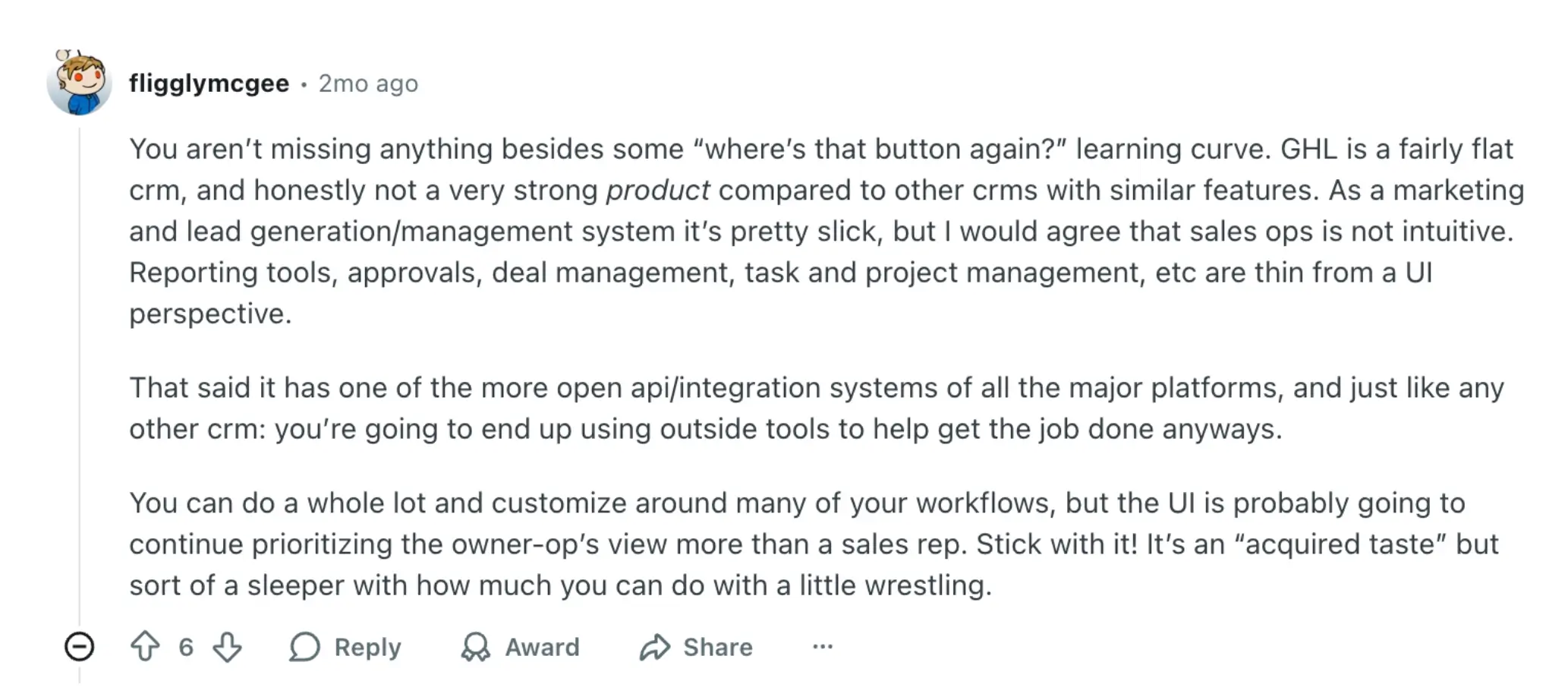
In the world of CRMs and marketing platforms, HubSpot has been a household name for more than 10 years now. But marketing professionals and business owners are starting to take note of GoHighLevel. Here’s how Redditors think the two platforms stack up:
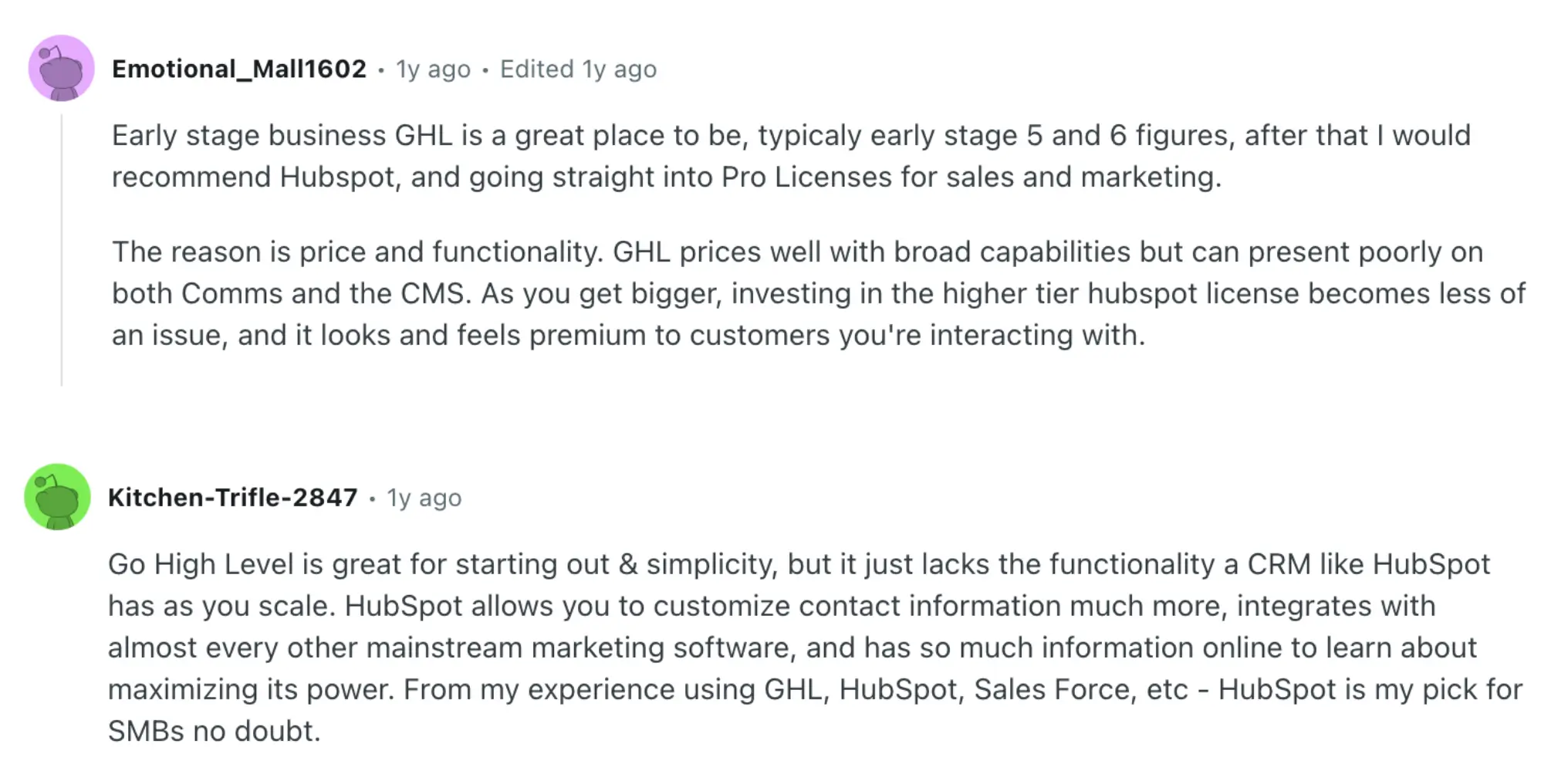
For others, GoHighLevel’s lead generation features and API connectivity make it a worthwhile choice, as long as you’re willing to deal with a slight learning curve.
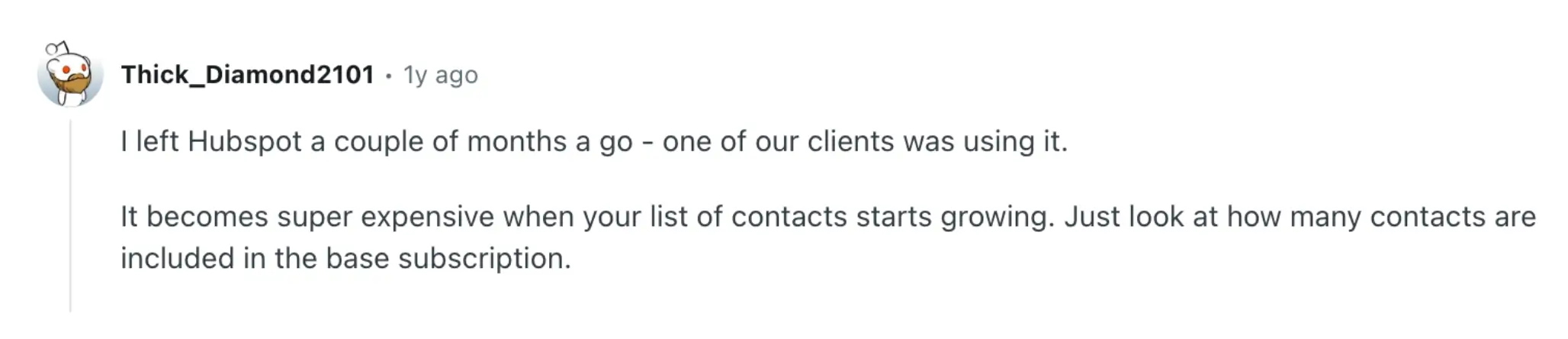
And lastly, cost remains a top consideration, with Redditors stating HubSpot’s high prices made them leave the platform.
How pricing compares between GoHighLevel vs HubSpot
I’ve talked a lot about the similarities between GoHighLevel and HubSpot, but pricing is one area where they diverge pretty sharply.
HubSpot has a free-forever tier that lets you try the CRM, email marketing kit, and a few other tools without spending a dime (or entering credit card info). GoHighLevel only gives you a 14-day free trial, but its pricing is simpler and cheaper than HubSpot’s.
| Plan | GoHighLevel | HubSpot |
|---|---|---|
| Free | No free-forever plan. 14-day trial lets you test the platform. | Free plan with CRM and other features for up to 1,000 contacts. |
| Starter | Starter: $97/month for unlimited contacts and users, up to three sub-accounts (clients), includes most features. | Customer Platform Starter: Starts at $9/month per seat (billed annually) for 1,000 contacts and 500 credits, and access to all Starter Hubs. |
| Mid-tier | Unlimited: $297/month for unlimited sub-accounts, API access, and branded desktop app. | Customer Platform Professional: $1,300/month for six Core Seats (billed annually), 2,000 contacts, 5,000 credits, access to all Professional Hubs, and enhanced AI features. |
| Advanced | SAAS Pro: $497/month for automated sub-account creation and expanded rebilling features. | Customer Platform Enterprise: $4,700/month for eight Core Seats (billed annually), 10,000 contacts, 10,000 credits, access to all Enterprise Hubs |
HubSpot is still pricier than GoHighLevel, but the way it bills contacts works differently. You pay for marketing contacts(per marketing contact)—the people you plan to email or run campaigns for. All other contacts stored as non-marketing don’t affect your bill on paid plans.
The three plans above are the only ones available for GoHighLevel, but HubSpot’s structure is more layered: its Customer Platform plans are bundles that combine the CRM with all product Hubs such as Marketing, Sales, Service, Content, Data, and Commerce, which is why their pricing looks more complex at first glance.
For businesses that don’t need every Hub, you can mix and match by creating your own bundles or subscribe to just one. One other consideration: Enterprise-level plans on HubSpot lock you into a one-time onboarding fee ranging from $7,000 to $24,000.
Verdict: GoHighLevel is much more affordable at middle and high subscription tiers, but HubSpot’s generous free plan and low-cost Starter plan mean SMBs can still use it without breaking the bank.
Softr — a full-stack alternative to GoHighLevel and HubSpot for building marketing and sales apps
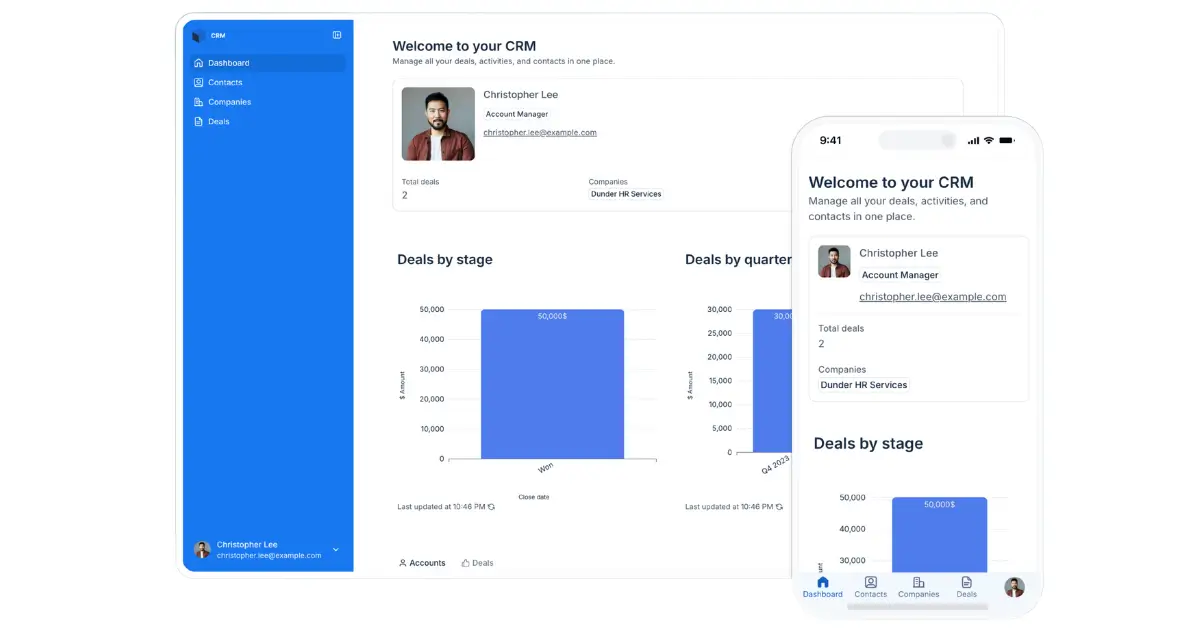
Softr is a full-stack business app creation platform for building automated, data-connected apps. It brings together the key components you need to orchestrate your business operations:
- App and interface builder to design CRMs, portals, and dashboards.
- Databases to store and manage customer records and other information.
- AI workflows to automate repetitive tasks across your tech stack.
Rather than use (and pay for) different software for each area of your business, Softr’s full-stack approach keeps your data, workflows, and automations together in one secure platform.
Why choose Softr over GoHighLevel and HubSpot
GoHighLevel and HubSpot are strong tools for CRM, sales pipelines, and marketing automation, but they cannot build complete business apps with AI and no code.
Here are the top reasons to consider Softr as a full-stack alternative to HubSpot and GoHighLevel.
1. Purpose-built app building for business operators
Softr lets business operators, ops managers, and department heads build connected, automation-ready business apps without writing a single line of code. Create everything from a fully custom CRM and marketing campaign manager to client portals, expense trackers, help desks, and more.
Unlike GoHighLevel and HubSpot, Softr allows you to build tools for every team, and not just sales and marketing.
2. Connect all your data
GoHighLevel is an all-in-one app for sales and marketing, but you may need third-party tools to integrate with certain data sources. With Softr, you can build relational databases natively without leaving the platform (including templates with sample data so you don't start from a blank canvas), and also connect to 21+ external data sources like Airtable, Google Sheets, and HubSpot.
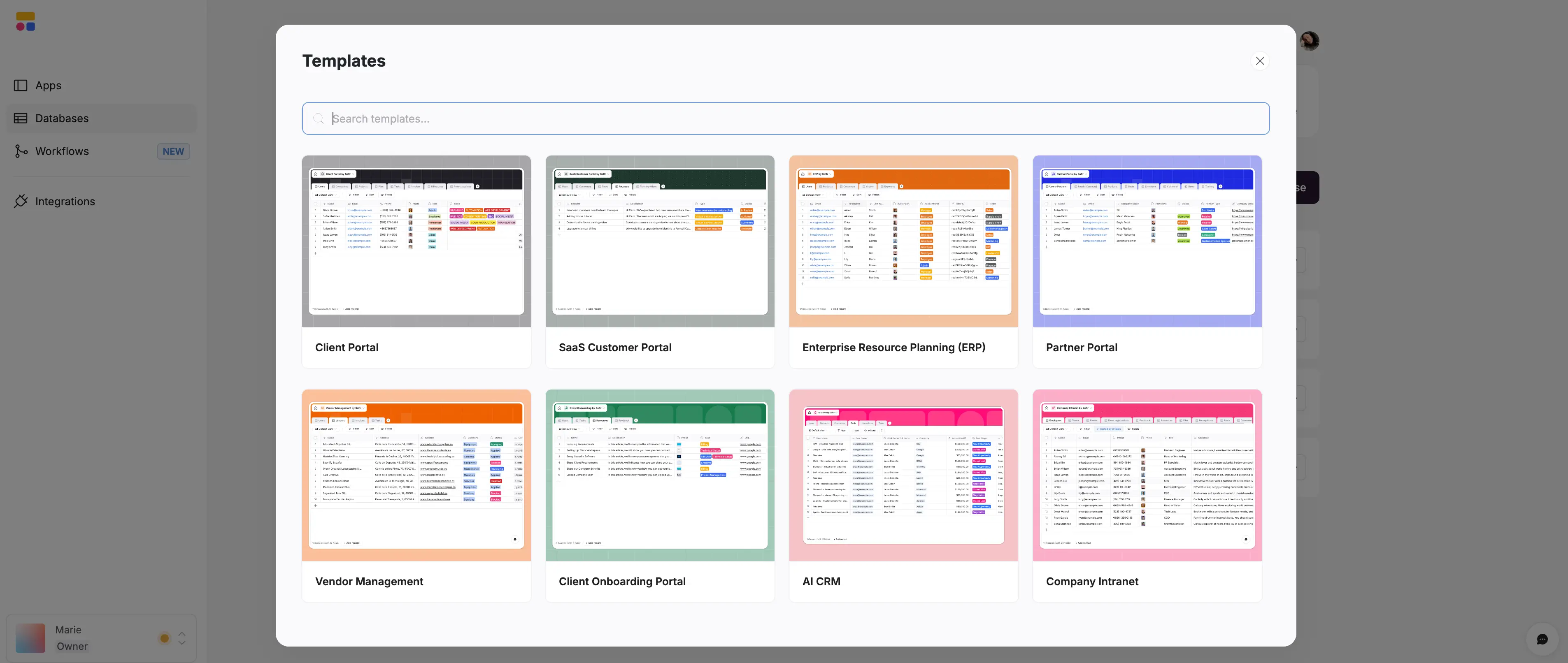
HubSpot does offer built-in data management (if you pay for the Data Hub), but you won’t be able to design and customize your own databases or invite users without paying for extra seats. Softr syncs data instantly across your tech stack and lets you manage workflows directly from databases, all while staying compliant with SOC2 and GDPR regulations.
3. Build complete HubSpot-powered portals and business apps
Softr connects to HubSpot with real-time, two-way sync. You can pull in specific HubSpot objects, such as Contacts, Companies, Deals, Tickets, Notes, Tasks, and Custom Objects, choose which properties to show, and map fields so everything displays correctly in Softr.
From there, you can turn that data into full apps: client portals, tenant or ticketing portals (like Vestal Hub), medical submission portals (used by 250+ veterinary clinics by Torigen), internal dashboards, and more.
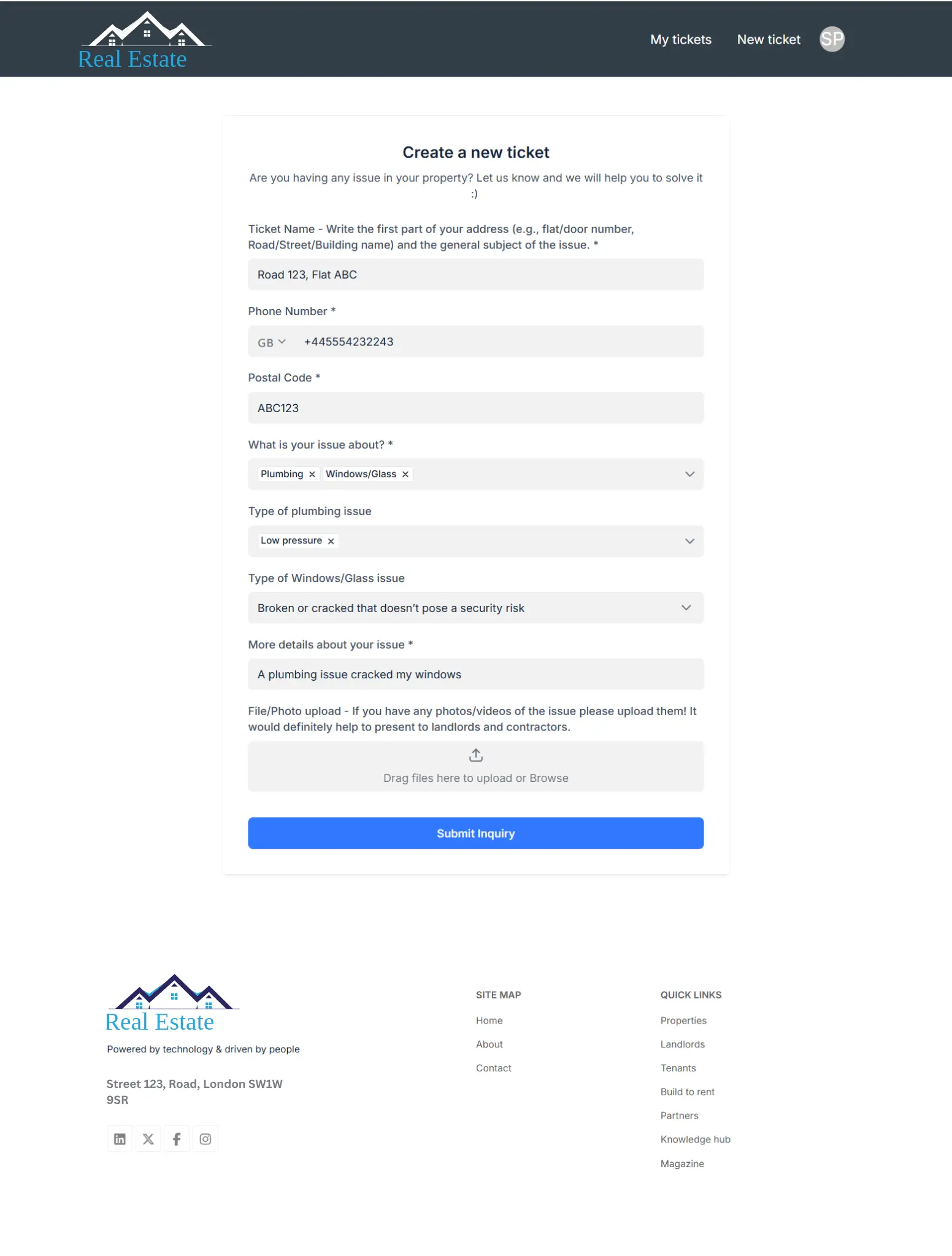
You keep HubSpot as the system of record, while Softr handles the secure, branded interface on top.
4. Automate workflows across your tech stack
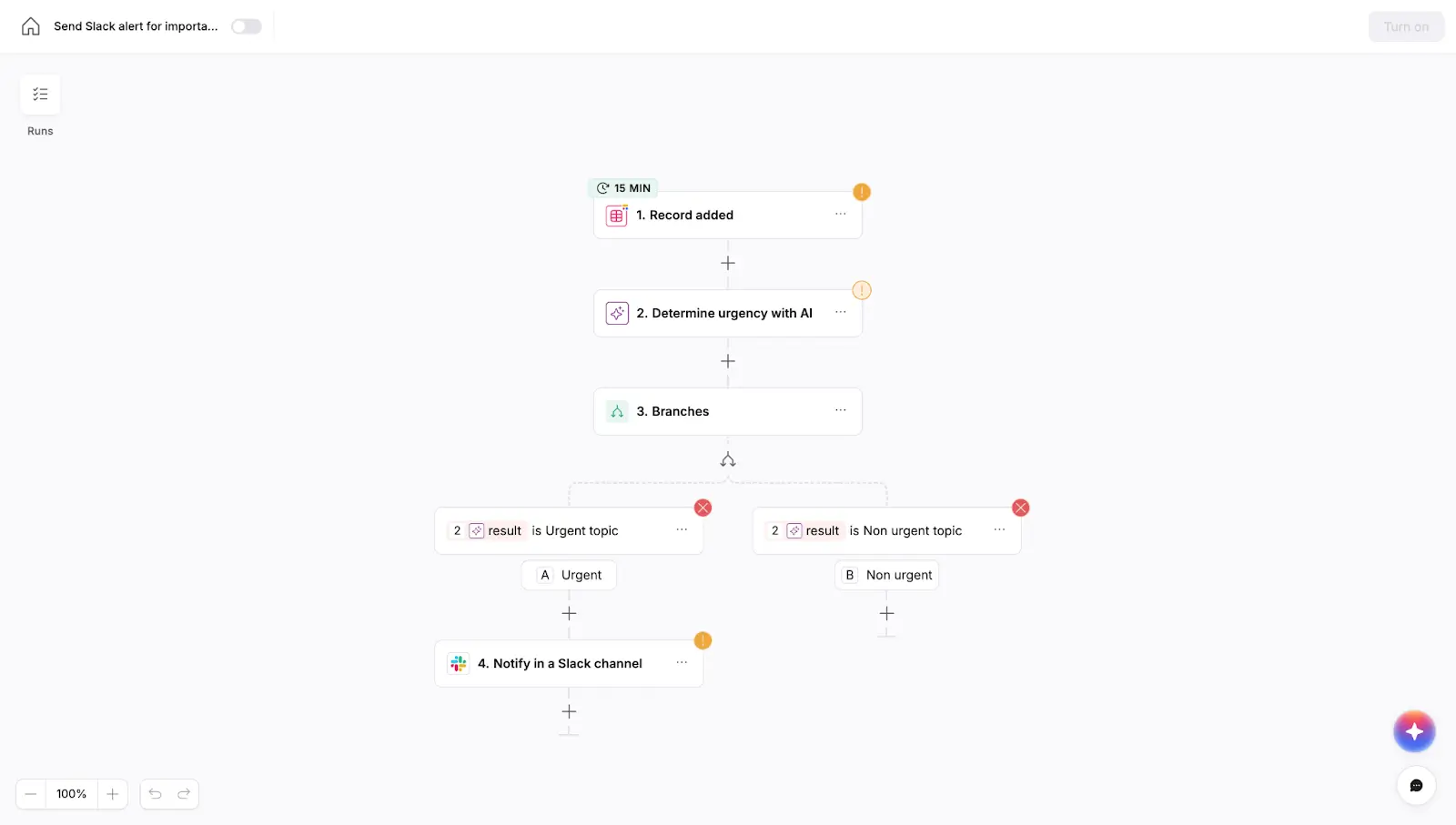
Softr Workflows make it easy for teams to automate sales and marketing tasks directly in a CRM, customer portal, or other app. Start with a template or use the visual workflow builder to build automations like email follow-ups, internal team alerts, onboarding, and project assignments across your tech stack.
Augment workflows with AI agents that take action on your data, analyze files, enrich data, and handle important tasks that would normally require manual input.
[.blog-callout]
💡 Keep in mind: HubSpot’s workflows are limited to the Professional and Enterprise tiers, while Softr gives you 500 workflow actions per month even on the Free plan. More info on Softr’s pricing →
[.blog-callout]
5. What you can build with Softr
- CRMs and sales pipeline trackers
- Websites and landing pages
- Customer and client portals
- Knowledge bases
- Real-time analytics dashboards
GoHighLevel vs HubSpot vs Softr: Which one should you choose?
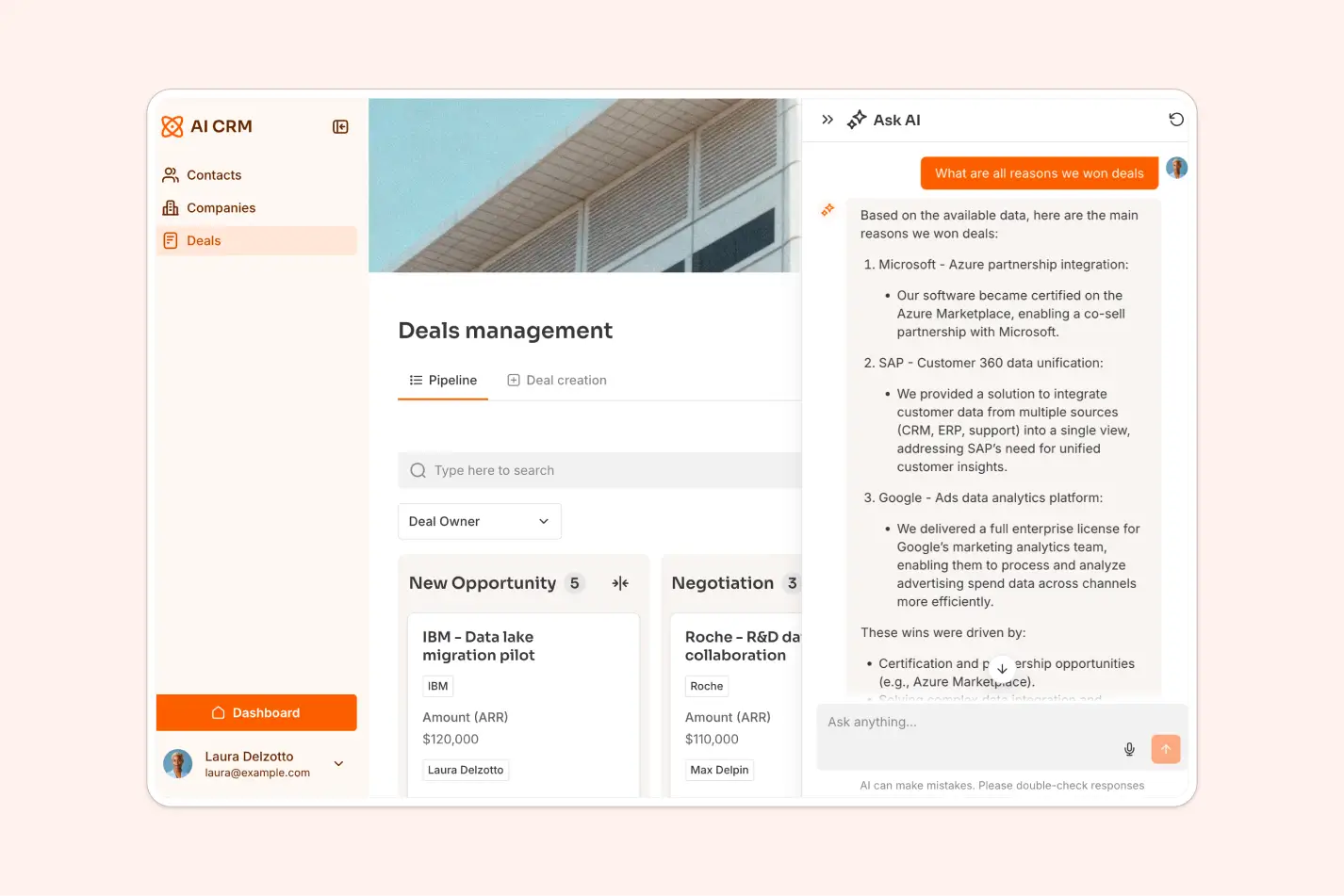
Between these three apps, the right choice comes down to how your business functions. HubSpot and GoHighLevel are dedicated sales and marketing platforms. Softr lets users build CRMs and other apps tailored to specific workflows and use cases, giving you more flexibility and control over your data and processes.
When to choose GoHighLevel
Choose GoHighLevel if you’re a growth-oriented marketing agency looking to bring on new leads quickly. It’s for businesses that need a custom, white label CRM for every one of their clients. While it’s a cost-effective platform, it does have a learning curve and limited native integrations compared to HubSpot.
When to choose HubSpot
Choose HubSpot if you need a purpose-built marketing and sales solution for your SMB or enterprise. It’s best for running campaigns and managing customer relationships for a single brand. However, costs can scale quickly as you add more features and contacts, making it a significant investment for growing teams.
When to choose Softr
Choose Softr if you want to integrate your CRM, sales, and marketing automations, and data without having to juggle multiple subscriptions. It’s for teams who want to build branded apps and systems aligned with their workflows.
With Softr, you’ll be able to create and automate your own AI-powered CRM and client portal without paying enterprise-level prices or hiring an external dev team. And if you already use HubSpot, you can connect it with Softr as a native data source and sync HubSpot CRM records with Softr portals, databases, and other apps.
Conclusion
GoHighLevel helps agencies scale with white label CRM solutions for multiple clients. HubSpot provides comprehensive marketing and sales tools for single-brand operations. But with Softr, you can create the exact CRM your business needs, plus client and vendor portals, dashboards, ERPs, and more.
Start building production-ready apps today with free Softr templates —no coding needed.
Frequently asked questions
What is the difference between HubSpot and GoHighLevel?
Is GoHighLevel only for agencies?
Which is cheaper: HubSpot or GoHighLevel?
Can I use HubSpot and GoHighLevel together?