Transcript
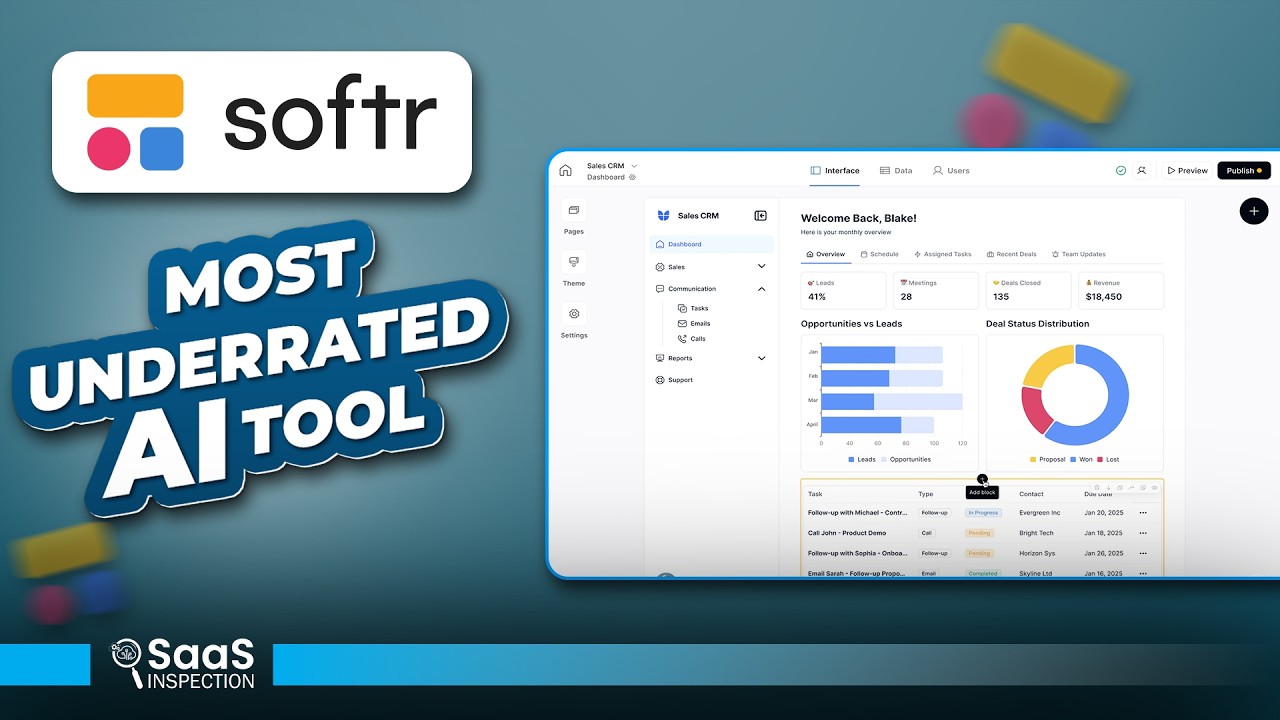
People often say that vibe coding makes building your own software with AI seem like a really easy thing to handle, but things get tough when the app you actually build turns out to be broken and a total mess to use. To stop this big problem with messy AI coding, Softr has become a great way to build apps using AI without all the stress. Everyone is talking about their new vibe coding features and their smart AI assistance, so we felt it was time to test them and see how much better the system has become.
We are checking out Softr today to see if it is still the easiest way to make an app without writing any code. If you have ever wanted to turn a few words into a real app in just a few minutes, let us show you the steps. The first time you open the tool, you'll see that the real work starts with a simple blank page and a prompt box.
Instead of spending hours clicking and dragging different parts into place, you just describe what you're looking for in plain English. You could ask for a professional CRM site with a blue-themed look that handles things like lead management and business growth tools automatically. Once you hit enter, the system actually chats with you to make sure it's on the right track before it builds anything.
[.blog-callout]
Note from Softr: When building anything from a simple tool to a complex CRM, our AI co-builder is the fastest way to generate a working version instantly. You can also kickstart your project by using our predefined AI CRM template and customize it further from there.
[.blog-callout]
After you've set the direction, the software asks a few practical questions to help shape how the app will function. It checks to see if the tool is meant for your co-workers or your customers, and then it offers up the right features for that group. To wrap things up, you get to decide how people sign in, whether that's a standard password or a one-click option like Google, making the whole experience feel smooth from the start.
With the backend logic sorted out, we move to the design phase, and this is where the latest features really shine. The system asks us to choose a navigation layout for desktop and mobile users. This is key because a sidebar works perfectly on a desktop, but a bottom bar is much more natural for a phone.
We get to decide how users will navigate before the final visuals are even on the screen. After we pick the layout, we move to the theme. We have several curated colors and fonts to choose from that match our brand's personality.
It isn't just about the look, it's about making sure the app feels solid and professional from day one. Finally, we click the create button, and this is the moment that always leaves a big impression on us. You don't have to wait on a loading bar, you can see the app coming together live.
The components start locking in, the databases are built in the background, and the screens fill with data right as you watch. Within a few minutes, the whole thing is ready. It is a complete change from a basic idea into a working multi-page tool that is already secure and mobile-friendly.
We feel this guided approach stops that blank page feeling that usually keeps people from finishing their software projects. After we finish the first draft, we should focus on where all the actual information is stored. Softr has put a lot of work into its own database lately, but the flexibility of its integrations is still the big winner.
We can hook the app up to Airtable, Google Sheets, or Notion in about a minute. One of the best parts is seeing changes happen in real time. If you edit a row in your spreadsheet, it updates in the app immediately.
[.blog-callout]
Note from Softr: While integrating directly with external data sources provides great flexibility for your client portals, utilizing Softr Databases is the powerful, native way to manage your data directly within Softr for lightning-fast loading speeds and maximum performance.
[.blog-callout]
When we update a project date in Airtable, our clients see it the moment they pull up their portal. This reliable sync is the big reason why teams choose this platform over others. It means we don't have to quit using the tools we love just to give clients a professional experience.
Beyond just looking at data, the new AI agents are honestly quite impressive. We can now set up workflow automation to automate any task. All you need is to define the logic and set the action.
It's an if this, then that approach, where a certain task is done if it meets a specific condition. While creating a workflow, you can connect it with Softr apps and databases, built-in webhooks, and integrate it with apps like Airtable, Google Sheets, Notion, and more. Then you can add nodes to build the workflow.
[.blog-callout]
Note from Softr: By managing automations directly through native Softr Workflows, you keep your tools consolidated and your data secure. Instead of relying on third-party automation platforms, you can leverage built-in workflows to easily build operational logic right where your design and database live.
[.blog-callout]
You can integrate AI tools, communications apps, and databases, and even implement different logic to make your workflow up and running. After completing the buildup, you could run and test your workflow to see if it's working well. While we let the AI take care of the initial groundwork, we almost always want to put our own finishing touches on the project.
This is where the Vibe-Coding block really changes the experience for us. Instead of fighting with the whole page, we can just speak to one specific section that needs work. We might tell it to slim down the header and throw in a search bar, and the AI adjusts that single piece of the interface while leaving everything else exactly as it was.
[.blog-callout]
Note from Softr: If a native layout doesn't quite fit your vision, the expansive AI co-builder experience means your customization options are virtually limitless. You can use the Vibe-Coding block to simply prompt the AI for the precise custom component you desire, and it will generate it dynamically to connect with your database on the fly.
[.blog-callout]
It honestly feels like working with a junior developer who's right there to take notes and make quick fixes as we go. Beyond that, the focus on teamwork makes a big difference when we are getting a project done together. The collaborative tools are much stronger now, allowing everyone to jump into the builder at the same moment.
We can leave thoughts on specific blocks or ask a coworker to handle the final copy and brand checks. It takes the pressure off the technical side and makes the work feel like a collective creative session. Even if a teammate has no background in building apps, the setup is so natural that they can find their way around and contribute something great within 10 minutes of signing in.
When we build these, we're constantly checking to see if the performance dips as more data piles up. There was a time when no-code platforms felt a little clunky once you had thousands of records, but Softr's team has definitely put some serious work into their backend. We've put some heavy-duty apps to the test, and the speed is honestly impressive, especially when you use Softr Databases.
Even jumping between your phone and desktop feels way more natural than it used to. Plus, because it's a PWA, people can just add the app to their screen and get right to work without bothering with an app store. I also want to touch on the security side, because that's a big deal for us.
With SOC 2 standards in place and better ways to manage user groups, we're a lot more at ease building tools for sensitive client stuff. We can easily organize things so a client only sees what's theirs while the person in charge keeps an eye on the big picture. All of that is handled through an access control dashboard that's actually easy to look at and understand.
It's those thoughtful, polished updates that really make the difference when we're taking a project from a rough draft to a tool that's ready for the real world. Softr has truly changed the game by making powerful app building feel accessible and straightforward for everyone involved. It is by far the easiest way to bring your vision to life without getting stuck in the weeds of technical jargon.
If you are ready to ditch the nightmare of endless spreadsheets for a sleek, personalized app, this is definitely for you.

![How to Connect a Custom Domain in Softr [2026 Full Guide]](https://cdn.prod.website-files.com/67a3700c65457964cf349cd4/69fe0f23b3f151a3e02431bb_ef21aafa-f68e-4c8c-816a-dd45caf88e97.jpeg)