Convince your manager to adopt no-code | Operations guide

[.blog-callout]
TL;DR
- Pitch no-code in your manager's language: cost, risk, and speed, backed by real numbers, not abstract promises.
- The evidence is strong. MIT saved over $100K versus custom code, CareVista avoided €50K and saves 100+ admin hours a month, and Minerva Network cut admin workload by 70%.
- Counter the two big objections (security and long-term viability) with concrete platform features like row-level permissions and SSO.
- Start with a scoped pilot on one real process, measure the hours saved, and let the results make the case for you. [.blog-callout]
Hi, operations teams. Today's challenge? Optimizing workflow efficiency while keeping things user-friendly.
As operations professionals, we know a solution that automates processes and lets you build custom apps without writing code would be invaluable. That's exactly what modern no-code platforms deliver, and in 2026 they're production-grade systems running real business operations, not side projects. The harder part is often internal: convincing your management to adopt one.
This article walks you through how to articulate your case effectively, the measurable benefits of no-code for operations (with sourced numbers you can reuse in your pitch), how to counter the most common objections, and the practical steps to get your team on board.
Preparing your pitch: show, don't just tell
We all know that adopting new technology can be a tough sell. Management typically hedges around issues of cost, security, and the good old "if it ain't broke, don't fix it" mentality. The key to cracking that code (pun intended) is not just telling, but showing how no-code can transform your operations.

The risk-reward equation
Managers are wired to weigh risks against rewards. Yes, adopting a no-code platform involves a learning curve, but once that's conquered, the rewards can be substantial. It's all about how you present this equation, and the more concrete your numbers, the easier the math becomes for them.
Decoding the manager's mindset
When it comes to convincing management, frame your argument with their priorities in mind. Emphasize the operational efficiency and cost-effectiveness of no-code solutions. Position it as more than learning a new tool: it's a strategic shift toward productivity, where your team stops waiting in the IT queue for every small change.
Starting with a scoped pilot
An effective approach is to start small: pick one real process that currently lives in a spreadsheet or scattered email threads, and rebuild it as a working internal tool. A useful heuristic from teams who've made this transition: if a spreadsheet is the weekly operational backbone for two or more people, it's worth turning into an app.
This is also where the speed argument gets concrete. With Softr's AI Co-Builder, you describe the process in plain language and it generates the database, app, and business logic for you, already connected and secure. You can also start from a template or build from scratch, but the AI path means your pilot can exist before your next ops meeting, not next quarter.
Presenting the pilot: a tangible argument
Here's where you really make your case resonate. Demonstrating no-code through a working pilot gives you a tangible, concrete example of success. The discussion is no longer hypothetical: it's a tool already driving results, with usage numbers and saved hours attached.
"It was intuitive to figure out. I was able to get a fully functional client portal working in a week with minimal prior coding experience." - Verified G2 reviewer, Construction (Small-Business)
Building your case: key benefits of no-code for operations
No-code platforms lower costs and boost productivity and efficiency, all with great flexibility. More importantly for your pitch, these no-code benefits come with documented numbers behind them. Let's go through them.
Quick setup and lower costs
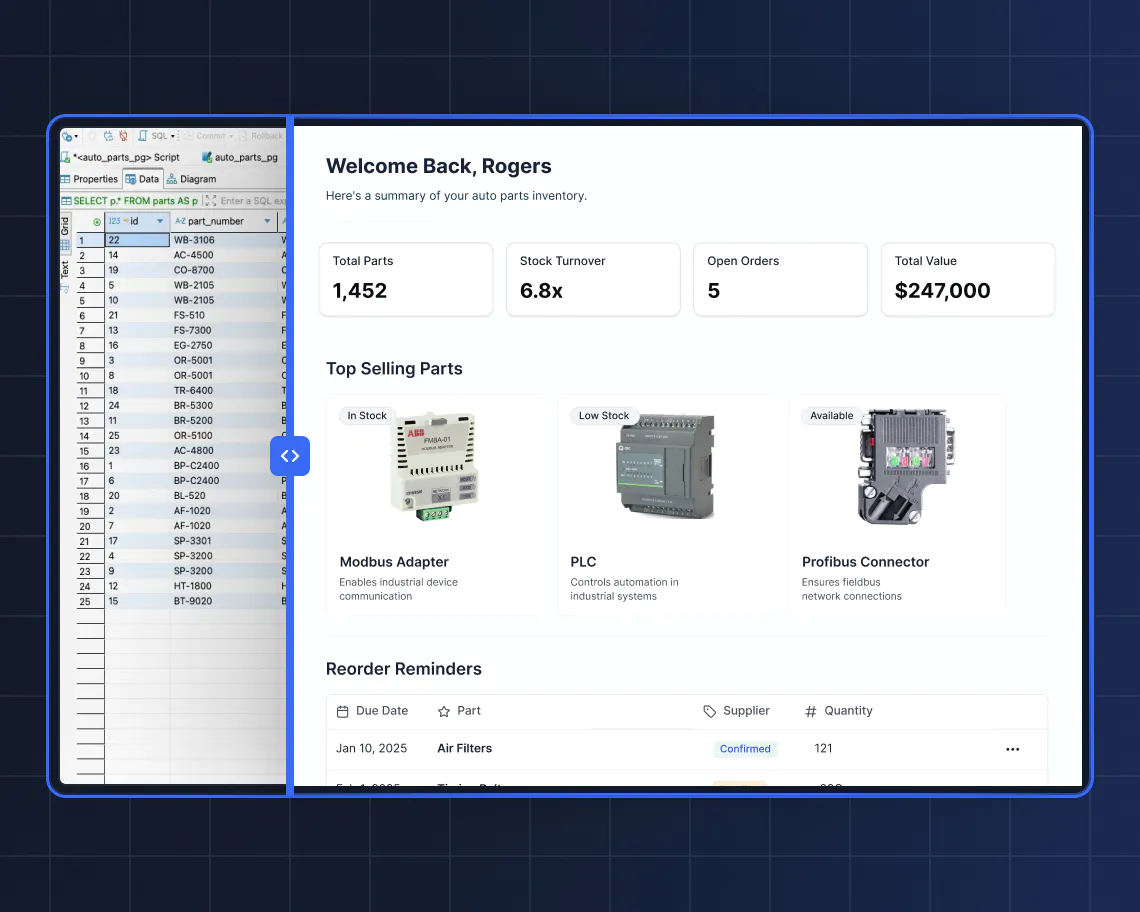
No-code platforms offer a quick setup, meaning you can get your operations running smoothly in less time than it takes to say "syntax error." You're saving time and cutting costs at once: there's no need for expensive development projects or an army of IT specialists.
The savings are not theoretical. MIT's Project Manus replaced a custom Ruby on Rails portal that cost over $100,000 to build and maintain with a Softr app built by a single person, now serving 2,800+ registered users. CareVista, a nursing recruitment company, avoided more than €50,000 in custom development costs by building its three-sided recruitment portals with no-code instead.
Efficiency and productivity boost
No-code tools aren't just easy to use, they're designed to streamline processes, remove bottlenecks, and automate tasks through workflow automation. This means your team can focus on what really matters: strategic decision-making and growth.
Again, real numbers help here. CareVista saves over 100 admin hours per month with its no-code portals. Minerva Network cut admin workload by 70% while increasing athlete registrations by 50%. Catamaran builder Outremer saves up to 6 hours per week just by automating photo documentation for its 570+ boat owners' portal.
Empowering non-technical teams
Think about the non-technical members of your team, the ones who shy away from anything remotely code-like. With no-code tools, they too can become builders. Imagine your HR team building an intranet or a custom onboarding app, or your marketing team developing a unique customer survey, all on their own. This empowerment democratizes technology in your organization and fosters a culture of innovation and ownership.
There's clearly latent demand for it: 41% of US employees say they'd use AI more at work if they had better access to the right tools (McKinsey), and 63% of people using AI-assisted building tools are non-developers (Vercel). Your team is likely ready; they just need the platform.
"I find Softr very intuitive and easy to navigate, which is great for someone who is not a programmer by nature. I also love the ability to control access globally, which is really important for data security and privacy." - Natalie S., Director of Operations (G2 review)
A full stack, not just a frontend
One thing worth clarifying for skeptical managers: modern no-code platforms are complete systems, not pretty layers on top of spreadsheets. Softr, for instance, gives you the interface builder for the app itself, native Softr Databases to store your operational data, and Softr Workflows to automate the logic, triggered directly by actions inside your app, like a button click on a purchase request.
If your data already lives elsewhere, that works too: Softr supports 17+ data sources, including Airtable, Google Sheets, HubSpot, SQL databases, and a REST API connector. You're not migrating everything on day one; you're putting a secure, structured app on top of what you already have.
Scalability and adaptability
Here's the icing on the cake. No-code platforms aren't rigid; they're designed to scale and adapt as your business grows and changes. Need to add a feature to your app? With a few clicks (or a sentence to the AI Co-Builder), you can update, modify, and expand your apps to meet evolving needs, without calling in developers or worrying about breaking existing systems. This flexibility is a boon in today's ever-changing business landscape.
Overcoming objections: common pushbacks and your counterarguments
Despite the compelling benefits, there may still be some pushback when pitching no-code. Let's address the two you'll hear most often.
Security concerns
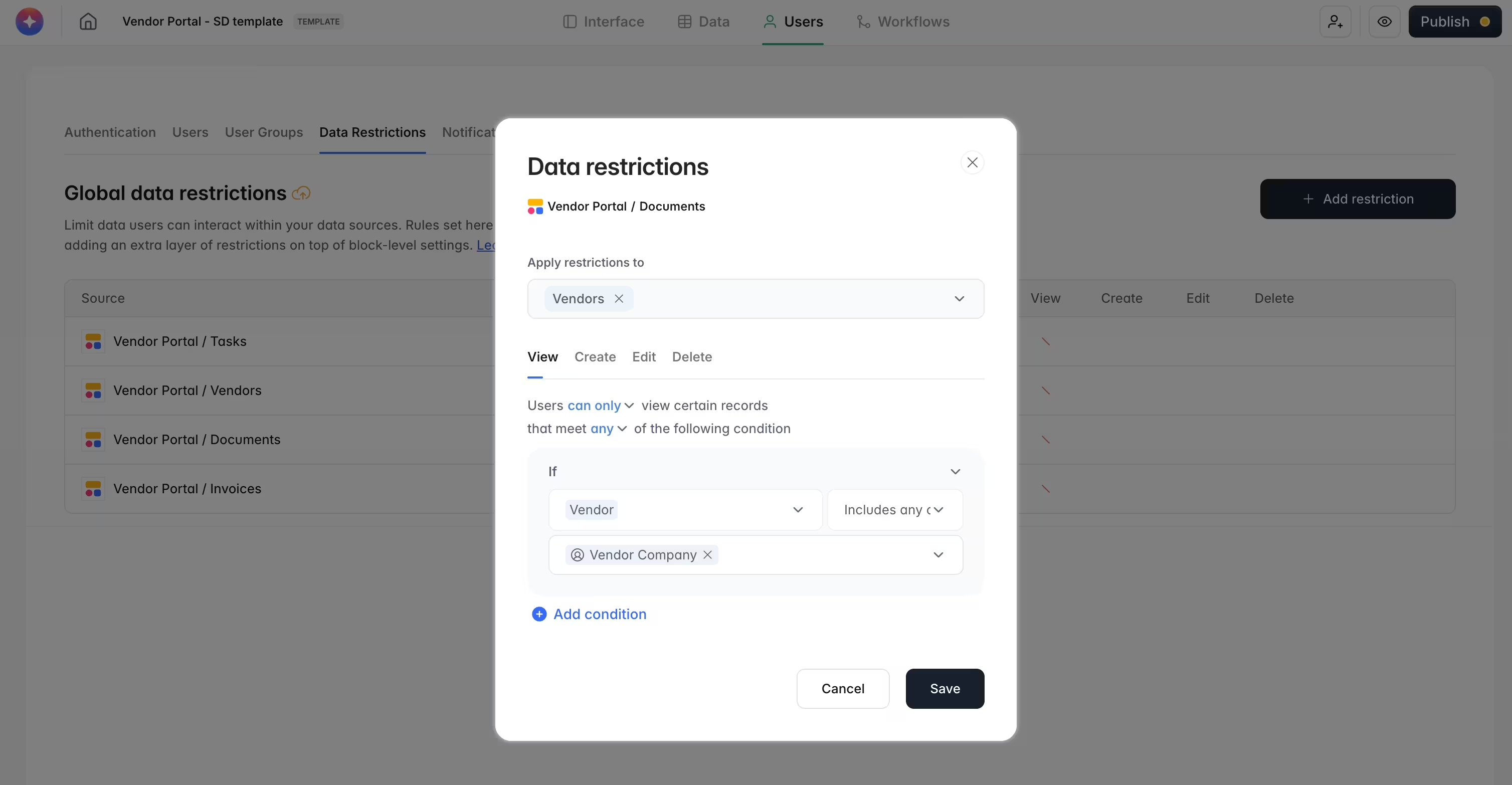
One common concern revolves around security, and it deserves a specific answer rather than reassurance. Reputable no-code platforms come with built-in security features, granular users and permissions, single sign-on, and compliance with industry standards.
In fact, a well-built no-code app is usually more secure than the spreadsheets it replaces. Spreadsheets only offer all-or-nothing file access, while a proper business app enforces permissions at the database level with row-level rules, so a vendor only ever sees their own records and a team member only sees their department's data. Because security lives in the data layer, users can't access unauthorized data even if a page is misconfigured.
Long-term viability
Another hesitation concerns the long-term viability of no-code tools. The reality is that no-code has moved well past the trend phase: teams at organizations like MIT run production portals serving thousands of users on these platforms daily. As AI capabilities get built deeper into these tools, they're becoming more capable and more integrated into mainstream operations, not less.
Next steps: rallying the troops and moving forward
So, you've made your case for no-code. What's next?
Making the case for your team
It's not only about convincing your bosses; your team needs to be on board too. Demonstrate the value of no-code tools and how they can make their lives easier. Share success stories, organize demos, and let them see the potential for themselves. A good starting point is showing them examples of internal tools similar teams have built.
Training for success
Switching to no-code does require a learning curve, but the good news is that most no-code tools are designed with user-friendliness in mind. Invest in training to ensure your team is equipped to leverage these tools effectively. Remember, the goal is to empower them, not overwhelm them. As the MIT Project Manus team put it, "the learning curve for Softr is approachable and not intimidating to users who have never coded."
A rolling stone gathers no moss
In the world of no-code, momentum is key. Encourage continuous learning and exploration. Let your team experiment, build, and iterate. The more they use these tools, the more comfortable they'll become, and the more innovative they'll be in leveraging them.
Remember, the shift to no-code goes beyond changing tools: it's about fostering a culture of innovation, efficiency, and empowerment, and equipping your team to face the future of operations confidently.
Make your first pilot your best argument
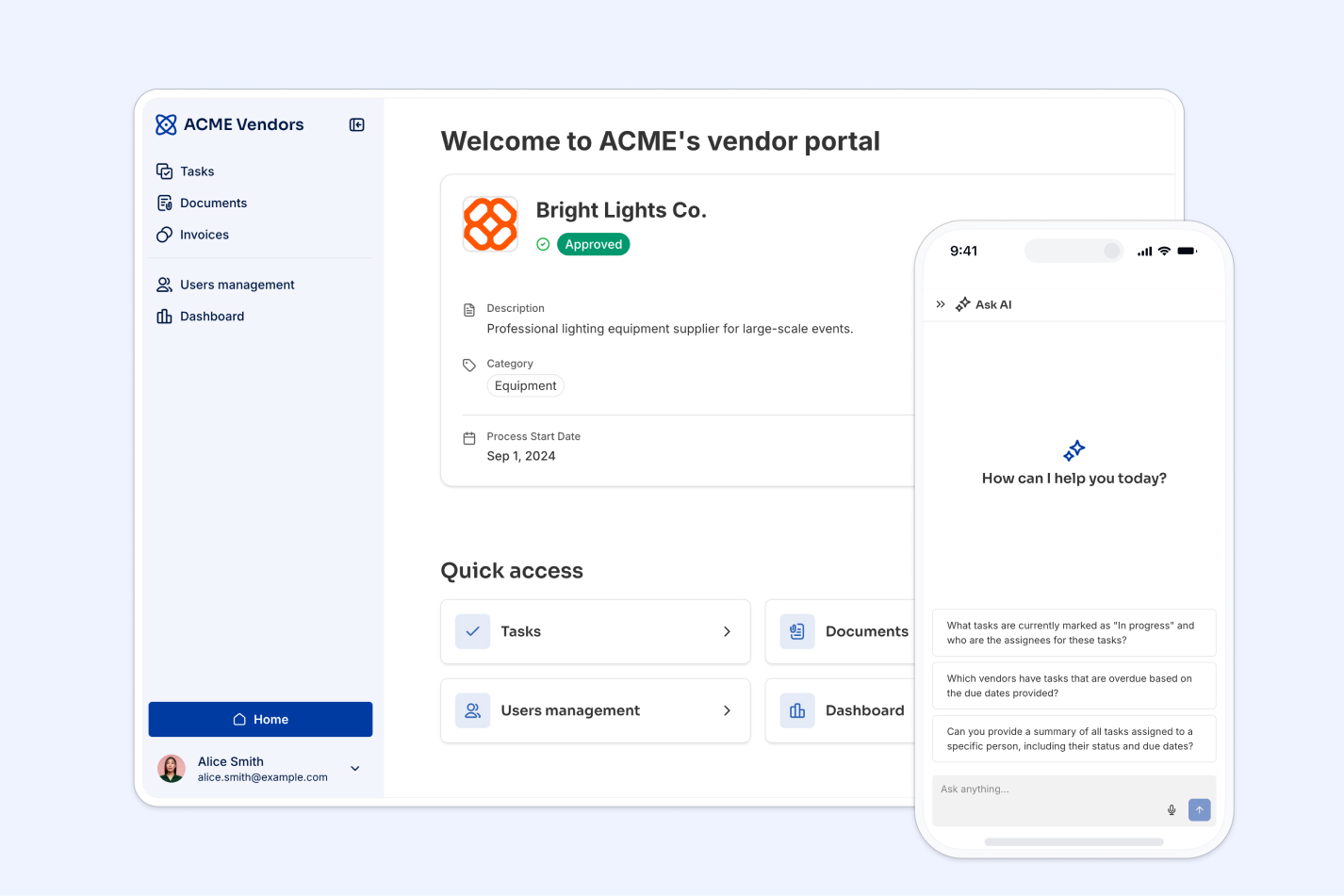
The strongest case for no-code is a working tool your manager can click through. Pick one process that's currently the operational backbone of a spreadsheet, rebuild it as a small internal tool, and measure what changes: hours saved, errors avoided, requests handled without IT.
If you want to move fast, describe that process to Softr's AI Co-Builder and let it generate the database, app, and workflows for you, then bring the results (not just the idea) to your next management meeting. Before you build, it's worth spending an hour to plan your tool so the pilot targets the right process and users.
Frequently asked questions
- How do I convince my manager to adopt no-code tools?
- Is no-code secure enough for business operations?
- How much money can no-code save compared to custom development?
- What should an operations team build first with no-code?
- Will my team need technical skills to use a no-code platform?