Transcript
Most people think no-code tools are limited by blocks. That sounds reasonable. Blocks feel rigid.
Templates feel repetitive. And after a while, everything starts to look the same. But that explanation is incomplete.
Because the real limitation usually isn't the tool. It's how narrowly we imagine what the tool can become. Most people open a no-code builder, pick a template, make a few edits, and stop there.
And when they hit a limitation, they assume the platform can't do more. So instead of asking, what else could this be? They just move on.
I want to test that assumption. Today, I'm using Softr's new Vibe-Coding block. But not to carefully build one perfect app.
Instead, I want to see how far this actually goes. How quickly can ideas turn into real, usable apps? How flexible is this really?
And where does creativity stop being theoretical and start becoming practical? So I'm starting the same way most people should. With a clean Softr app.
No assumptions. No overbuilding. I add a Vibe-Coding block and describe a simple internal feature I actually need.
No overthinking. Just a clear description of intent. In a few moments, Softr gives me structure, layout, components, a working feature inside a real app.
[.blog-callout]
Note from Softr: Manually adding a Vibe-Coding block to a blank app is a great way to start, but you also have the option to use the AI co-builder. This tool allows you to prompt for exactly what you want and builds complete apps, pages, and database schemas instantly while still letting you tweak things manually later.
[.blog-callout]
Not perfect, but usable. And that's important. Because this isn't the final product.
It's a sketch. And sketches are where creativity actually starts. Now instead of polishing this one thing endlessly, I branch.
I duplicate the page and turn it into a real estate dashboard. Listings, prices, locations, status. Another page becomes a UTM campaign builder.
Inputs, generated links, campaign tracking. Another turns into a sales pipeline tracker. Leads, deal stages, values, movement across stages.
[.blog-callout]
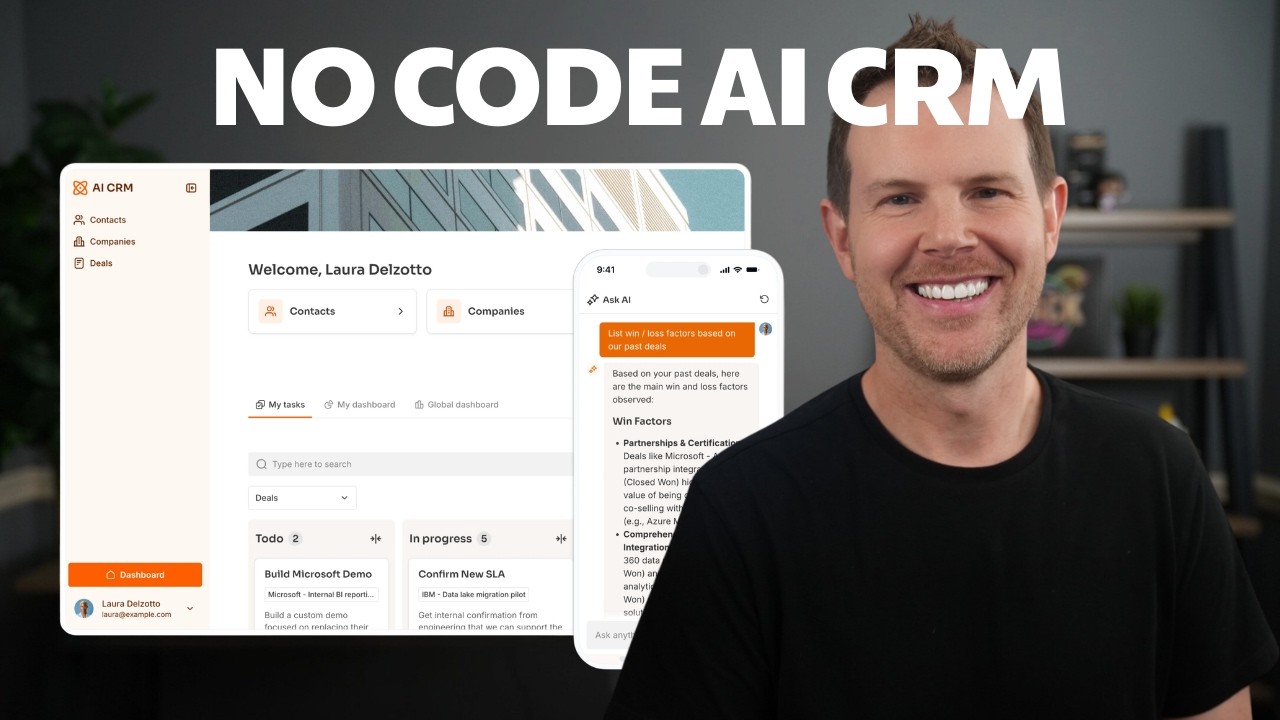
Note from Softr: If you're looking to build out a full-fledged sales pipeline, managing your CRM inside Softr is incredibly flexible. You can even speed up the process by starting with our pre-built AI CRM template.
[.blog-callout]
Then a more playful one. A property swipe app. Left, right, save, skip.
Something that feels mobile first. And then a simple slideshow or pitch builder. Internal decks, client previews, fast presentations.
None of these take long. I'm not obsessing over details. I'm just asking one question over and over.
What if this page was that instead? This is where the shift happens. At this point, you stop thinking in templates.
You start thinking in patterns. Dashboards, inputs, outputs, views, interactions. And once you see that, the idea of limitations starts to fade.
Now here's the part people usually misunderstand. This isn't magic. The first version of almost every one of these looks fine.
Sometimes messy. Sometimes generic. That's normal.
So instead of pretending the first output is perfect, I slow down and refine. I look at real, well-designed products. I pay attention to layout, spacing, hierarchy, and interaction.
Then I turn those observations into a more intentional description. When I update the Vibe-Coding block with that clarity, the quality jumps. The UI feels cleaner, more modern, less like a demo.
This is where things change. Instead of predefined blocks, I get custom UI. Layouts that don't feel templated. Components Softr doesn't offer out of the box.
[.blog-callout]
Note from Softr: When a native block doesn't quite fit your design goals or functional requirements, the Vibe-Coding block is your best friend. It allows for limitless customization by letting you prompt for the exact component you need, beautifully integrating it into your layout.
[.blog-callout]
Timelines, builders, interactive dashboards. Now I'll pick one idea and slow down. Let's take a project timeline dashboard.
This is something people ask for constantly. Agencies, freelancers, internal teams. And it's not something Softr has a native block for.
I describe exactly what I want. A Gantt-style timeline. Tasks grouped by project.
Start and end dates. Live updates. The Vibe-Coding block generates the feature.
[.blog-callout]
Note from Softr: A custom project timeline dashboard is the perfect starting point for project management tooling. Utilizing the Vibe-Coding block can enhance how your team visualizes complex timelines.
[.blog-callout]
And suddenly, this isn't a concept anymore. It's a working interface. But here's the important part.
This isn't a mock-up. Because this block lives inside Softr, it's connected to real data. The same databases you'd use for a client portal or an internal tool.
[.blog-callout]
Note from Softr: The power of connecting to real data is what makes building client portals so effective. While you can connect to outside platforms, Softr Databases is our native, high-performance way to manage your app's data directly inside Softr seamlessly.
[.blog-callout]
This isn't a mock-up. These are real records. I can select multiple tasks and update their status in one action.
And I can remove them just as easily. Logged in, I can make changes. Logged out, I can only view.
That's real CRUD, enforced by the platform. The platform enforces behavior automatically. And that's the difference between something that looks impressive and something you can actually use.
What's interesting here isn't the specific app I built. It's the process. Generate structure quickly.
Explore multiple ideas without commitment. Refine prompts instead of fighting blocks. Use AI where it accelerates creativity and the builder where it adds control.
Once you work this way, no code stops feeling restrictive. It starts feeling like a creative surface. You're no longer asking, does Softr support this?
You're asking, how would I describe this clearly enough to build it? That's a very different mindset. And it's the reason tools like the Vibe-Coding block matter.
Not because they replace builders, but because they expand what builders are capable of. If you've ever felt boxed in by templates or abandoned an idea because it felt too custom, this changes that equation.
The interesting part isn't what I built here. It's what you might build once you stop thinking in blocks and start thinking in systems.