Transcript
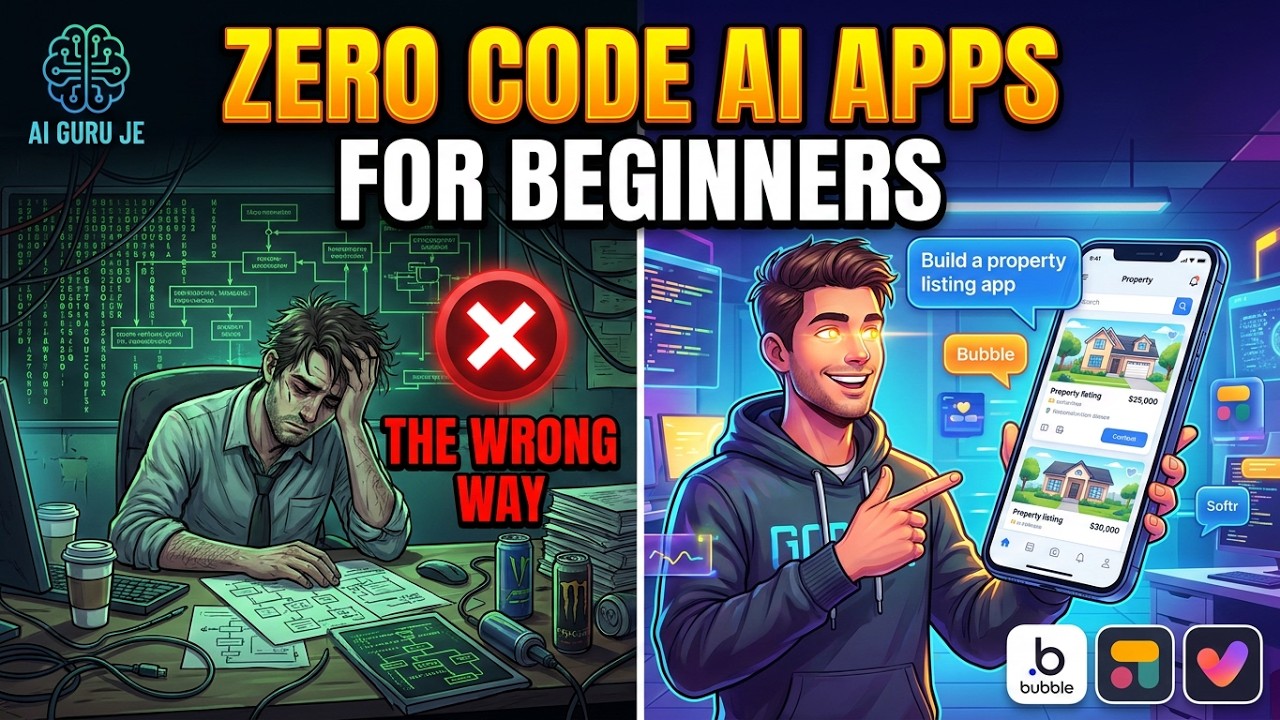
Right now, you can open a chat window, type a single sentence, and watch an AI generate a fully functional application in under five minutes. Getting an app off the ground used to be the hard part. Today, the real danger is success.
Escalate building an app, only to realize months later that the foundation cannot support your actual business. When you optimize purely for how fast you can launch, you often end up creating a structure that physically cannot handle real-world weight. We are going to cut through the marketing hype around AI app generation and analyze the three distinct tiers of modern app building.
This decision tree branches from your app idea into three paths: a personal prototype, an internal operations tool, or a commercial SaaS. Committing to the wrong path means learning an interface that can't support your final product, bringing your progress to a hard stop.
To avoid that kind of platform lock-in, you have to look at what each tool requires you to input and where its hard technical limits exist before you write a single line of code or prompt. Choosing your app stack comes down to trading unrestricted speed for necessary structural guardrails. The first tier is vibe coding.
This relies on generation platforms like Lovable or pairing Claude with an interface tool like Streamlit. This quadrant chart maps platform learning curve against app complexity and scalability. Lovable and Streamlit plot right here, in the extreme bottom left corner.
To build here, you type natural language prompts and upload raw knowledge bases. The initial output speed is immediate. The result is a fully functional prototype or a single-use chatbot that can reference your specific data in minutes.
But because the AI handles the construction out of sight, you assume complete responsibility for the underlying code architecture. If you publish that code directly to the web, you open yourself up to severe vulnerabilities. Bad actors could exploit database flaws to leak data or bypass payment flows to access premium features for free.
When the AI writes the backend, resolving those security holes or fixing AI hallucinations requires you to manually audit and rewrite the raw code yourself. Vibe coding provides an excellent engine for rapid ideation. Relying on it as the foundation for a secure, public-facing application introduces massive risks.
That leads us to the second tier, structured portals. This includes platforms like Softr, Glide, and Zapier interfaces. Looking back at our quadrant chart, these platforms sit right in the middle, representing a step up in both commitment and capability.
[.blog-callout]
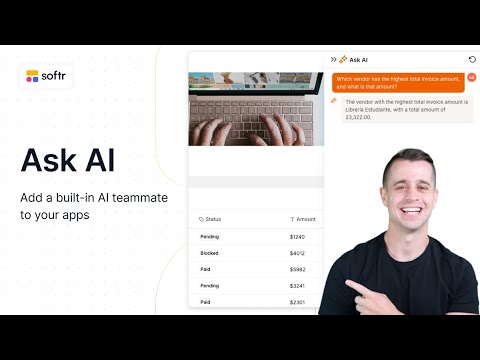
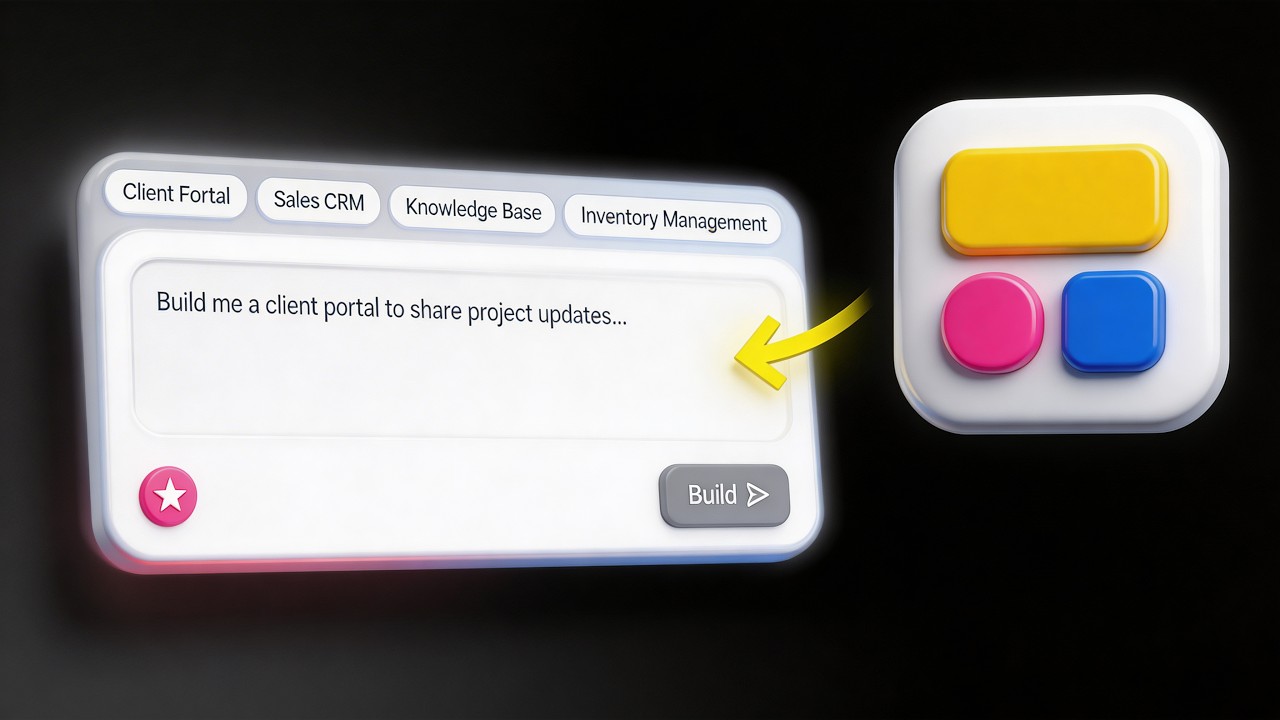
Note from Softr: You don't have to sacrifice AI speed when building an app in a structured environment. With the Softr AI co-builder, you can simply prompt for what you want and watch it instantly generate the pages and database schema, while still giving you a reliable foundation to tweak manually later.
[.blog-callout]
Instead of open-ended prompts, your input involves assembling pre-built visual blocks and connecting them to simple database sources like Airtable or Google Sheets.
[.blog-callout]
Note from Softr: While Softr seamlessly integrates with Airtable, Google Sheets, and over 17 external data sources, you also have the option to use Softr Databases. It is the powerful, native way to manage data directly within Softr for maximum performance.
[.blog-callout]
You get secure tools like internal CRMs, employee directories, and client portals.
[.blog-callout]
Note from Softr: These use cases are perfect for structured portals. You can easily start building client portals or a custom CRM using one of Softr's ready-made App templates to save even more time.
[.blog-callout]
The critical difference here is that user authentication and database security are managed entirely by the platform itself, completely removing the exposure risks found in tier one. In exchange for that security, you must accept rigid design templates. You forfeit pixel-perfect control over your user interface.
[.blog-callout]
Note from Softr: If a native block doesn't quite fit your vision, you aren't strictly limited to rigid templates! You can use the Vibe-Coding block to simply prompt for the exact custom component you want, and it will generate it while connecting to your database seamlessly.
[.blog-callout]
These platforms also scale poorly if you are trying to build massive consumer applications. Their pricing models are structured around logged-in users or data updates, which quickly become expensive if thousands of external people sign up. Structured portals are the optimal choice for operations optimization, where a reliable, secure connection strictly outweighs the need for unique aesthetics.
The final tier is full-stack low-code, encompassing systems like Bubble, pairing WeWeb with Xano, or using FlutterFlow. These platforms operate like heavy-duty industrial machinery. They give you the tools to wire intricate logic and custom features together piece-by-piece.
On our quadrant chart, Bubble, WeWeb, and FlutterFlow plot in the extreme top-right corner. They require the highest learning curve but offer the maximum level of scalability. Building in this tier requires you to spend months learning how to structure relational databases, configure API endpoints, and design visual programming logic.
[.blog-callout]
Note from Softr: You don't always need to jump to complex full-stack low-code just to handle intricate logic. Unlocking native Softr Workflows allows you to consolidate your tools, keeping your back-end logic and automations as close to your front-end design as possible without an extreme learning curve.
[.blog-callout]
By utilizing this modular approach, like decoupling a visual front-end in WeWeb from a back-end database in Xano, you prevent vendor lock-in and retain control over your data architecture. The outcome is a completely custom commercial SaaS product or a native application that you can publish directly to the iOS and Android app stores. The primary trade-off here is that you must strictly manage your application's compute resources.
Every action your users take costs server processing power, often measured by these platforms as workload units. If you build poorly optimized, over-engineered logic, those workload unit overages will result in massive, unexpected monthly scaling costs. Even with that complexity, Tier 3 provides the necessary control over back-end logic required for SaaS founders building a core commercial product.
The reality of app building in 2026 is that AI operates best as a co-pilot within a structured environment, rather than an unsupervised architect left to build on its own. This scorecard maps out the final recommendations for three specific builder profiles: the tinkerer, the optimizer, and the founder, evaluating them across custom UI, security, and launch speed.
If your goal is a rapid proof of concept or a personal portfolio that doesn't handle sensitive data, you fit the tinkerer profile. You should choose Tier 1 vibe coding for instant results. If you run a small business and need a secure client portal or a custom CRM, you are the optimizer.
Your best option is Tier 2 structured portals. Accepting rigid design templates is a highly favorable trade for guaranteeing operational peace of mind and keeping customer data secure. Finally, if you are building a commercial SaaS product or a multi-platform mobile app, you are the founder.
You must embrace the steep learning curve of Tier 3 full-stack low-code. As a founder, you cannot compromise on backend control, database ownership, or the scalability of your architecture. Match your tool to your ambition. Never optimize for the fastest build time if your ultimate goal is a secure, scalable business.