


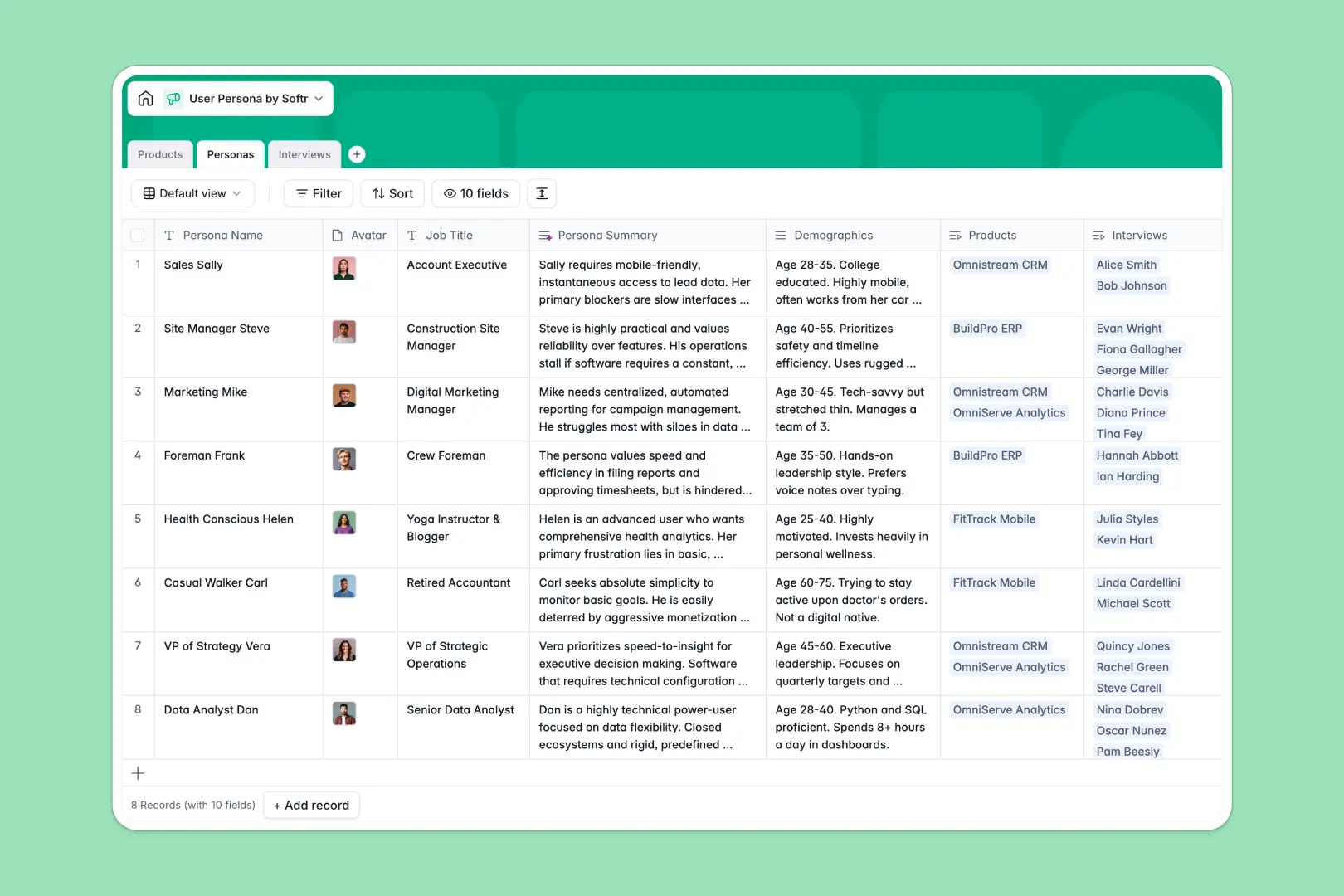
Your User Persona Database at a glance
This template centralizes your core buyers, products, and raw research data into a single organized system.
It works by natively connecting your product offerings to their target buyer personas, and linking those profiles directly to raw interview transcripts.
Because this system comes pre-configured with native AI fields, it automatically summarizes user goals, extracts key takeaways from conversations, and grades user sentiment on the fly.
Why managing user research in spreadsheets breaks down
Tracking long interview transcripts, user avatars, and evolving pain points across multiple spreadsheet tabs quickly becomes a mess.
What a structured database changes
A structured system ensures every piece of data is stored perfectly—dates remain dates, file attachments stay secure, and text stays formatted. You can link a specific customer interview directly to a persona and product without manually copying text across rows.
This is exactly why Softr Databases exist. They give you the flexibility of a spreadsheet, but the rigorous structure of a real backend, so your data stays clean as your research scales.
What you can do with this template
You can instantly map out your core buyers and back them up with real-world interview logs in one easy-to-read view.
Thanks to specialized Database AI agents, this template will literally read your interview transcripts to extract the top three takeaways and gauge overall customer sentiment automatically.
-
Products
Manage software offerings and track related user personas and categories
-
Personas
Define target users with AI-generated profile summaries of goals and needs
-
Interviews
Log user sessions with AI takeaways and automated sentiment analysis logs
Who is this User Persona database for
This template is designed for cross-functional teams that need to turn fragmented feedback into actionable product insights.
- Product Managers: Connect real user feedback directly back to your product development cycles.
- UX Researchers: Store interview transcripts, recordings, and extracted takeaways in a single searchable repository.
- Product Marketing: Easily reference buyer pain points and demographics to craft highly targeted messaging.
- Founders: Keep a clear, evolving picture of your target customer as you plan and ship new features.
How to take it further
Customizing the database is simple and happens instantly. You can easily modify your product categories, adjust the AI prompts to extract different themes, or add custom fields for specific demographics.
When you are ready to migrate, you can seamlessly import your existing qualitative data via a bulk CSV upload. Alternatively, you can connect via API to automatically push new feedback logs into the database from other tools.
Once your data is housed securely, you can build an app on top of this foundation to share insights across the company. This allows you to turn raw interview logs into an interactive, read-only internal portal.
By leveraging comprehensive users and permissions, you can control precisely what the engineering, sales, and marketing teams can view. Maintaining a beautifully structured database makes building these secure frontend experiences incredibly simple.
-
1
-
2
-
3
-
4
Frequently asked questions
-
What is a user persona database?
-
Why use a no-code database to build a user research system?
-
How can AI help managing data for user research?
-
Can I build an app with this user persona database?
-
Is this user persona database free?
-
How is a user persona database different from Google Sheets?
Start building today. It's free!
Build and launch your first app in under 30 minutes.