


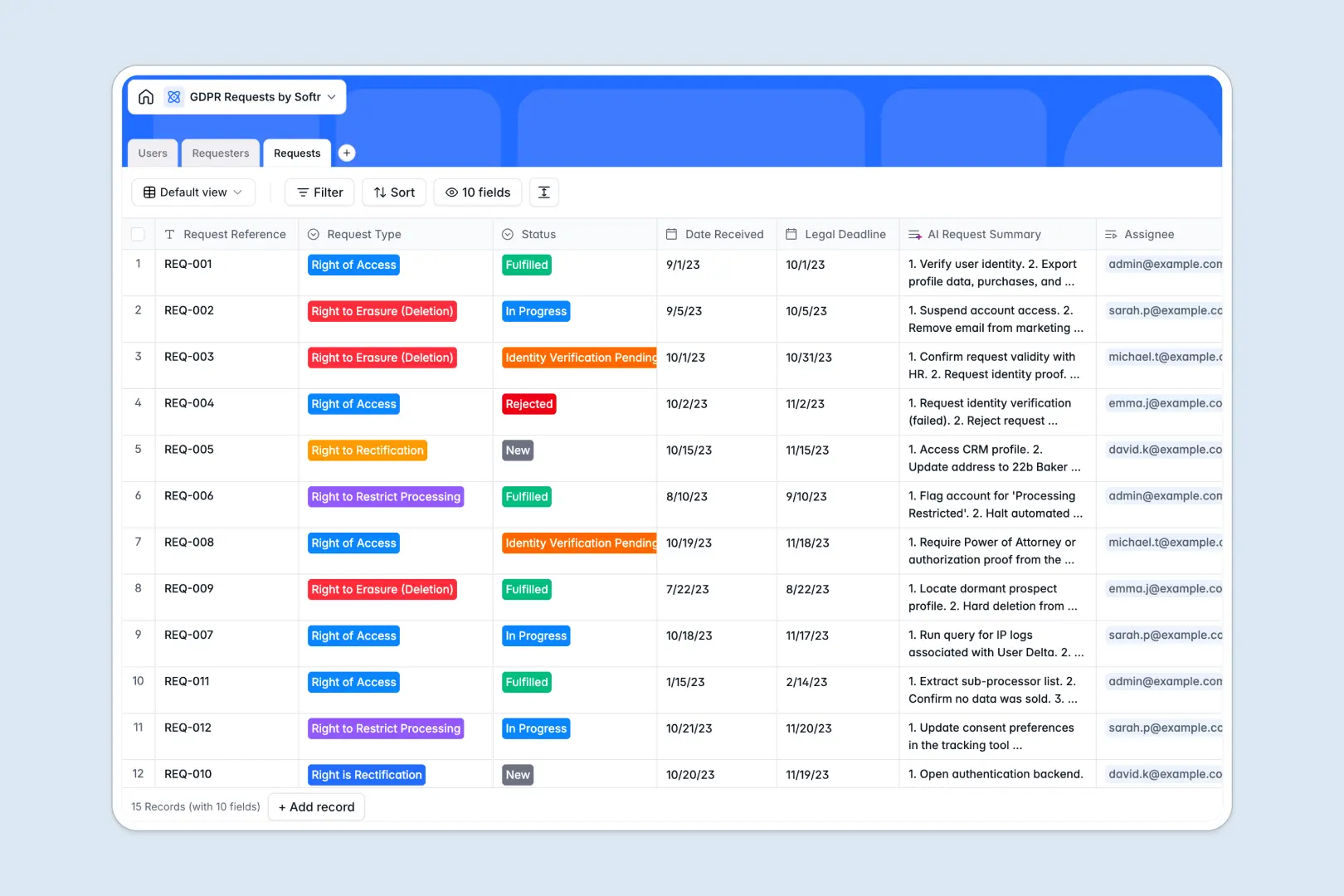
Your GDPR Requests Database at a glance
This template gives you a secure, centralized system to track every data subject request from submission to resolution. It ensures your privacy team never misses a strict legal deadline.
It organizes your data into three connected tables: internal Users, external Requesters, and the central Requests tracker. You can instantly see which team member is handling a specific right to erasure or access request.
Built-in AI automatically reads complex request descriptions and writes clear, actionable summaries for your team. This means your privacy agents can skip the reading and jump straight into fulfilling the request.
Why tracking gdpr requests spreadsheet style breaks down
Managing legal compliance in a spreadsheet is a massive risk. Deadlines get lost in noisy rows, unverified identity checkboxes are accidentally altered, and evidence files cannot be securely attached to records.
What a structured database changes
A true database enforces strict data types, ensuring dates remain dates and file attachments stay safely locked to their specific request record. It handles complex relationships effortlessly, allowing you to link a requester to multiple inquiries without fragile VLOOKUPs.
Everything stays clean, secure, and compliant, even as your volume of data subject interactions scales. This is exactly what Softr Databases are designed for.
What you can do with this template
You can confidently monitor the exact status of every inquiry, from "Identity Verification Pending" to "Fulfilled". Easily sort and filter your view by legal deadline to prioritize urgent inquiries instantly.
Using Database AI agents, this system can automatically summarize long, complex legal requests into clear, actionable steps. Your team can focus entirely on executing compliance workflows rather than manual data entry.
-
Users
Manage internal privacy staff roles, assignments, and access permissions
-
Requesters
Track external data subjects with identity verification and request history
-
Requests
Monitor GDPR actions and deadlines using AI to summarize actionable steps
Who is this GDPR Requests database for
This database is built for teams that need to maintain strict privacy compliance securely and efficiently.
- Data Protection Officers: Monitor overall compliance, audit request resolutions, and ensure legal deadlines are consistently met.
- Privacy & Legal Teams: Track individual subject rights efficiently with AI summarizing the actionable steps for every inquiry.
- Customer Support Leads: Easily log new data subject requests and route them automatically to the correct internal privacy agent.
How to take it further
Start by customizing the database to fit your exact legal workflows. You can effortlessly add new fields for specific internal notes or update the request types in the dropdown menus.
Once structured, you can easily import your historical compliance logs via CSV. You can also use the API to automatically sync new requests straight from your website's privacy form.
When your team is ready, you can transform this system into a secure internal application using our interface builder. Bringing your database into a front-end portal creates a production-ready compliance tool for your staff.
You can utilize users and permissions to guarantee that privacy agents only see the specific requests assigned directly to them. A tightly structured database makes building these secure custom tools completely effortless.
-
1
-
2
-
3
-
4
Frequently asked questions
-
What is a GDPR requests database?
-
Why use a no-code database to build a compliance tracker?
-
How can AI help manage data for GDPR requests?
-
Can I build an app with this GDPR requests database?
-
Is this GDPR requests template free?
-
How does this database differ from tracking GDPR requests in Google Sheets or Excel?
Start building today. It's free!
Build and launch your first app in under 30 minutes.