


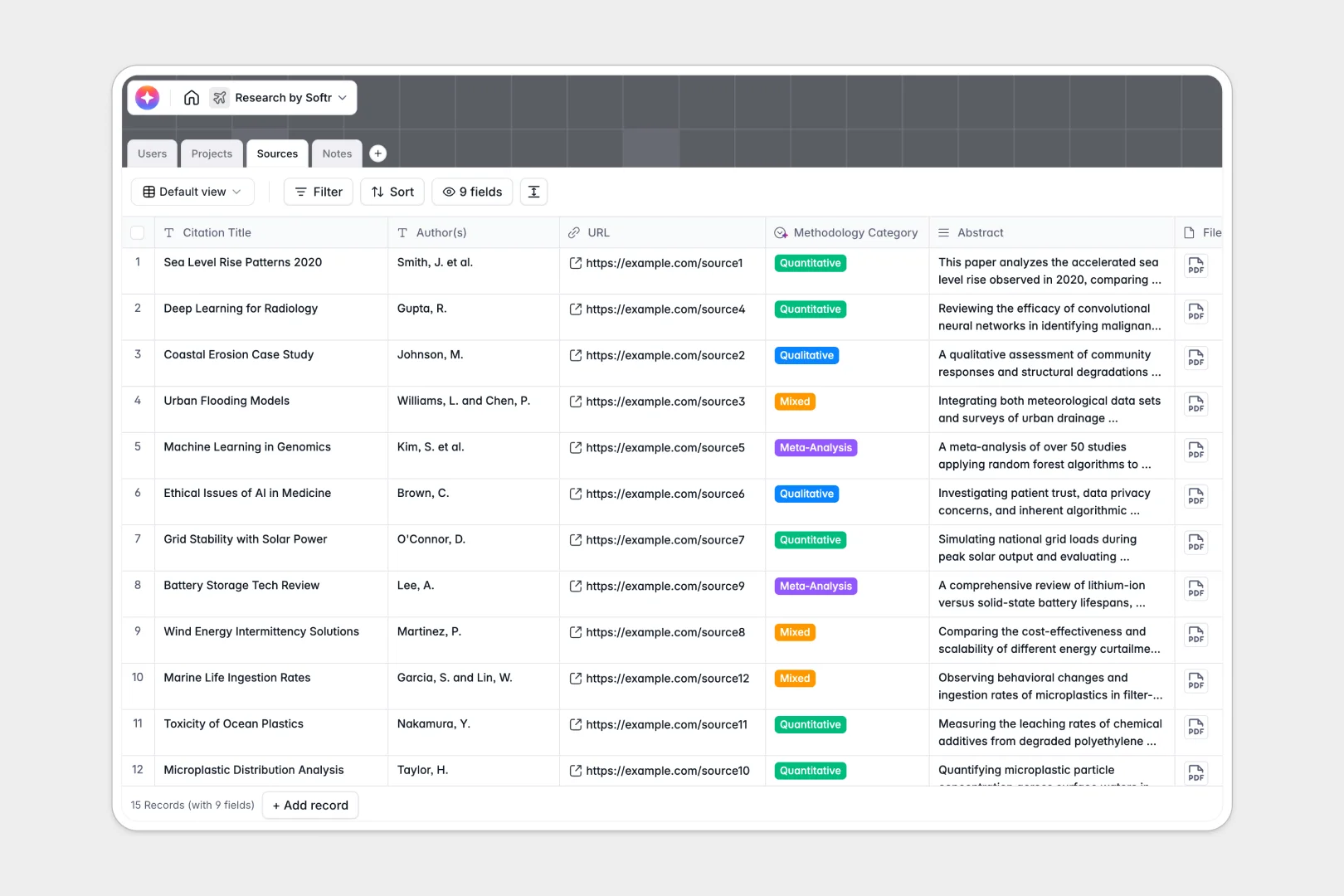
Your Research Database at a glance
Organize your studies, track reference materials, and log findings in a unified system. This gives your team a single source of truth from proposal to peer review.
The template links active projects to specific sources and detailed daily notes. This relational structure means every citation and log entry is automatically tied to the right researcher and study.
Built-in AI automatically summarizes detailed abstracts and categorizes research methodologies for you. It even reads your log entries to extract actionable next steps to keep investigations moving.
Why tracking research in spreadsheets breaks down
Managing literature reviews and field notes in rows and columns quickly becomes chaotic. When you attempt to manually link multiple citations and daily logs to a single study, data gets lost and workflows stall.
What a structured database changes
A proper database connects information naturally without relying on fragile VLOOKUPs. You can tie dozens of qualitative notes and file attachments directly to one shared project.
This ensures your citations stay organized, your PDFs remain attached to the right records, and nothing gets overwritten. This is exactly what Softr Databases are designed for.
What you can do with this template
Start tracking proposals, logging methodology notes, and building a centralized library of sources immediately. You can instantly see which assistant is assigned to which ongoing study in real time.
Because it includes AI capabilities natively, the system reads your source abstracts and categorizes them as qualitative, quantitative, or mixed data automatically. It allows your team to skip manual data entry and focus entirely on synthesis.
-
Users
Manage research staff with roles, contact details and professional assignments
-
Projects
Track research studies, grant status, timelines and lead investigator assignments
-
Sources
Store reference materials with AI-generated summaries and methodology extraction
-
Notes
Log findings with AI-powered next steps and actionable research follow-ups
Who is this Research Database for
This system is built for teams coordinating complex investigations and academic reviews.
- Academic Labs: Centralize peer-reviewed sources, track ongoing studies, and manage assistant logs.
- Corporate R&D: Keep qualitative and quantitative findings secure and clearly tied to product proposals.
- Market Researchers: Log daily insights and quickly synthesize large volumes of competitor abstracts.
How to take it further
Customize the structure to fit your exact discipline effortlessly. You can easily modify the methodology dropdowns or add new status stages for your specific peer review process.
Import your existing literature libraries seamlessly to get started fast. Upload a CSV of your current citations or use the API to sync new datasets instantly.
When your team is ready, you can build a secure external portal holding this data. You can easily create client dashboards or principal investigator views without writing code.
By configuring custom users and permissions, you ensure assistants only edit their own notes while admins oversee the whole project. Starting with a cleanly connected database makes building these robust applications incredibly fast.
-
1
-
2
-
3
-
4
Frequently asked questions
-
What is a research database?
-
Why use a no-code database to build a research tool?
-
How can AI help managing data for research?
-
Can I build an app with this research database?
-
Is this research database template free?
-
How is this database better than managing research in Excel or Google Sheets?
Start building today. It's free!
Build and launch your first app in under 30 minutes.