


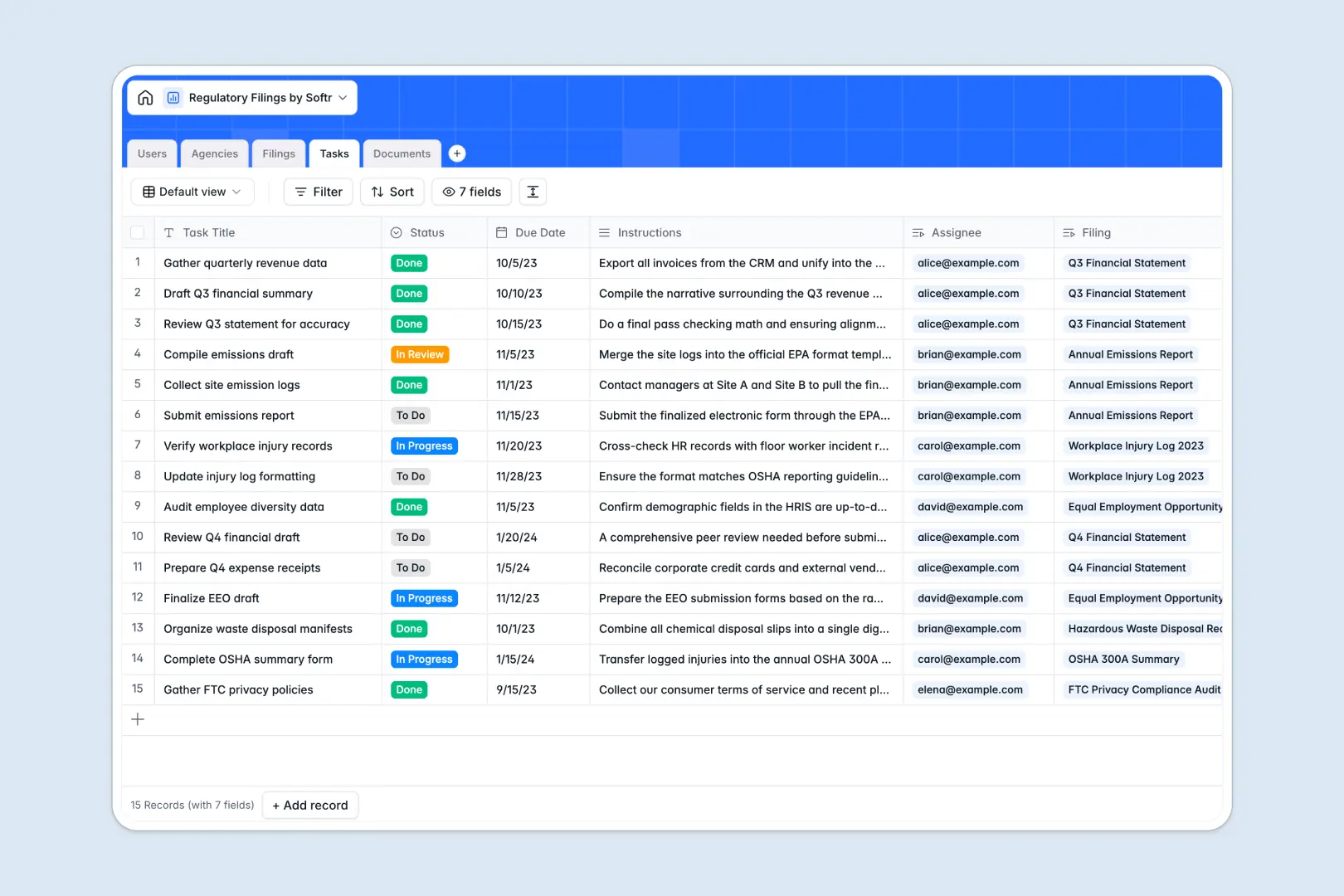
Your Regulatory Filings database at a glance
Centralize your compliance workflows to stop missing critical deadlines and losing track of supporting documents. This ready-to-use foundation keeps your organizational obligations perfectly organized.
Connect specific filings to regulatory agencies, assigned tasks, and responsible team members in one place. Every document and deadline is linked automatically, giving you clear visibility into your compliance pipeline.
Database AI agents automatically summarize long legal documents to highlight risks, classify filing types, and even search the web for agency requirements. This turns a static tracker into an active compliance assistant.
Why regulatory filings get messy in Excel
Tracking rigid compliance deadlines and managing multiple evidence documents in spreadsheets quickly turns into a liability. Cells get accidentally overwritten, versions get tangled, and crucial attachments live in scattered folders.
What a structured database changes
In a true database, every piece of information has strict rules. Dates stay as dates, file attachments live directly next to their records, and status updates are firmly controlled by predefined dropdowns.
Instead of fragile VLOOKUPs, you can link a specific task directly to a regulatory agency without any risk of breaking formulas. This is exactly what Softr Databases are designed for.
What you can do with this template
Automatically track multi-stage filing statuses from initial drafting to final acceptance. You can seamlessly assign actionable tasks to reviewers and compliance officers with clear due dates.
The system also keeps all finalized forms and evidence securely tied to their respective submissions. This ensures you are always audit-ready and never hunting for a lost internal memo.
-
Users
Manage system accounts including compliance officers and reviewers
-
Agencies
Track regulatory bodies with AI-powered overviews and constraints
-
Filings
Monitor reports using AI to classify submissions into categories
-
Tasks
Organize actionable items to complete specific regulatory deadlines
-
Documents
Store evidence and drafts with AI-generated risk and anomaly summaries
Who is this Regulatory Filings database for
This system is designed for operational teams that need strict control over their compliance and reporting obligations.
- Compliance Officers: Monitor upcoming deadlines and track the real-time status of every active submission.
- Legal Teams: Safely store draft forms, correspondence, and evidence tied directly to specific regulatory requirements.
- Operations Managers: Ensure environmental, health, and safety filings are processed efficiently and accurately.
- Executives: Gain immediate visibility into overall organizational compliance and agency relationships.
How to take it further
Easily customize this template to match your specific industry standards. You can adjust the filing status dropdowns, edit task criteria, or add new agency lookup fields with just a few clicks.
Bring your historical compliance data over instantly without manual data entry. Use a simple CSV upload or the API to seamlessly sync your past filings directly into the tables.
When your team grows, you can evolve this database into a secure compliance portal. Using a visual interface builder, you can create custom dashboards for different stakeholders.
By setting up granular users and permissions, external reviewers only see the drafts they need to approve, while admins retain full oversight. Starting with a structured database makes launching these custom compliance apps entirely effortless.
-
1
-
2
-
3
-
4
Frequently asked questions
-
What is a regulatory filings database?
-
Why use a no-code database to build a compliance tool?
-
How can AI help managing data for regulatory filings?
-
Can I build an app with this regulatory filings database?
-
Is this Regulatory Filings template free?
-
Why is a database better than Excel for regulatory filings?
Start building today. It's free!
Build and launch your first app in under 30 minutes.