


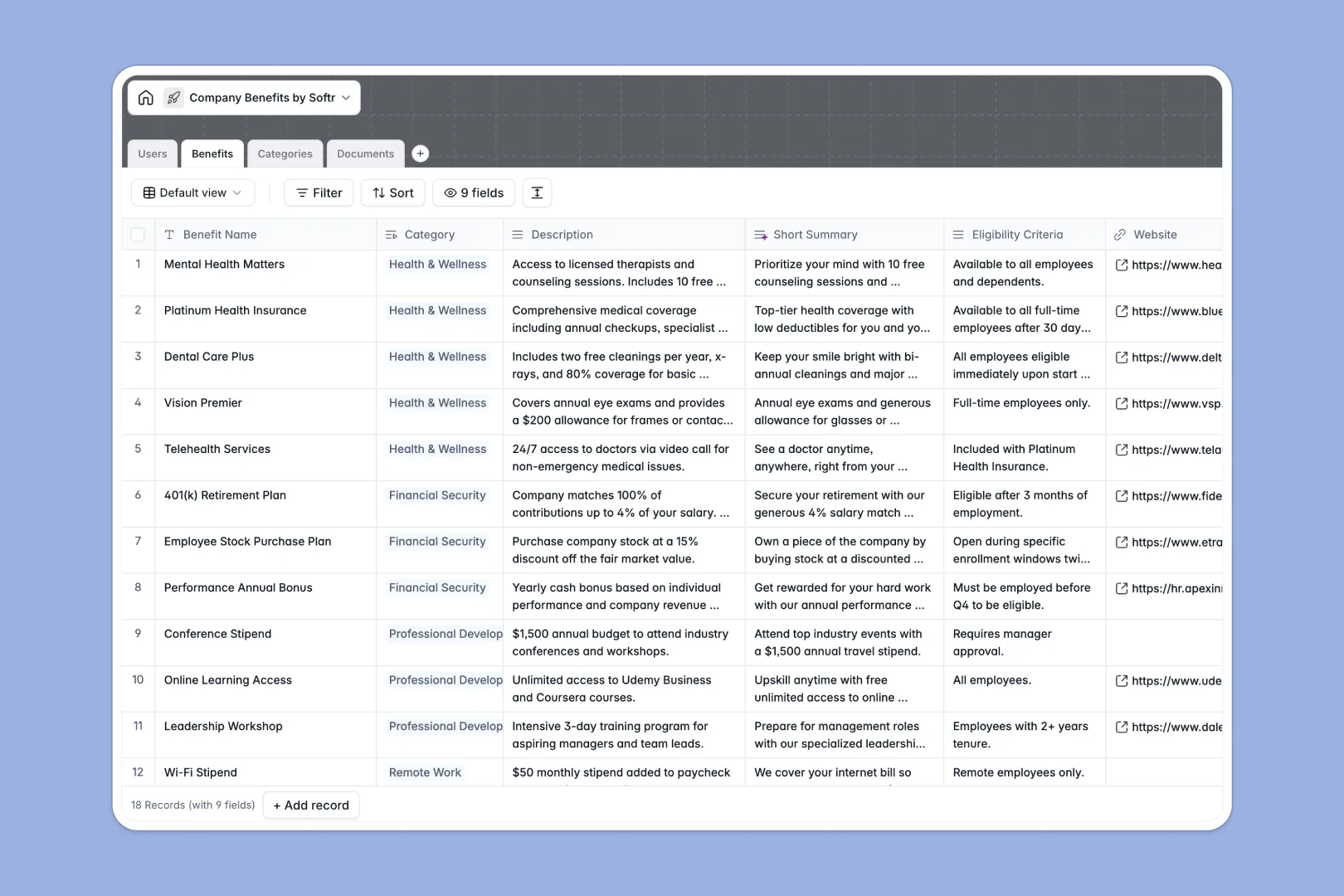
Your Company Benefits Database at a glance
This Company Benefits Database centralizes all your employee perks, insurance plans, and policy documents into a single source of truth. It brings strict order to how HR teams manage and communicate eligibility criteria across departments.
The template connects your Benefits directly to Categories and supporting Documents using smart relational tables. This means an employee's requested claim form is always automatically attached to the exact insurance policy it belongs to.
Built-in AI agents automatically summarize lengthy descriptions into quick pitches and generate accurate search keywords. This keeps the catalog extremely approachable for team members without adding manual work for HR.
Why managing company benefits in spreadsheets breaks down
Tracking insurance plans, changing perks, and scattered PDFs across complex spreadsheet tabs quickly becomes a mess for expanding HR teams.
What a structured database changes
A structured database ensures every policy stays perfectly organized by establishing rigid connections between perks and their claim forms. Instead of pasting long URLs or losing files in shared folders, everything stays cleanly and permanently routed.
This is exactly what Softr Databases are designed for. You get secure file attachments natively inside your tables, ensuring compliance documents are accessible directly next to the relevant provider details.
What you can do with this template
Keep your benefit catalogs and policy documents perfectly synchronized at scale. When a provider updates their terms, you only have to upload the new PDF document once for it to update everywhere automatically.
You can also let native AI agents perform the heavy lifting by auto-generating elevator pitches for new wellness perks. Employees can then search naturally using auto-generated keywords, finding exactly what they need instantly.
-
Users
Manage employee profiles, contact details, roles, and departmental access
-
Benefits
Catalog perks and insurance plans with AI-generated summaries and keywords
-
Categories
Organize benefits by type with descriptions generated by AI web search
-
Documents
Store and manage policy PDFs, claim forms, and benefit user guides
Who is this Company Benefits database for
This template guarantees a ready-to-use foundation for teams looking to cleanly structure their employee perks entirely.
- HR Managers: Manage insurance plans, compliance documents, and employee perks easily to eliminate repetitive staff questions.
- People Operations: Track department-specific eligibility and instantly categorize new wellness offerings as the company scales.
- Founders: Quickly deploy a highly professional, organized benefit directory for new hires without purchasing expensive HR software.
How to take it further
You can effortlessly customize this database to mirror your internal company policies. Quickly add new department dropdowns to the Users table or define custom select fields for highly specialized perk categories.
Bring your current benefits roster into the system without delays. You can seamlessly import existing data via CSV or connect an API to synchronize external provider details automatically into your workspace.
When your team is ready, you can build an app directly on top of this structured data. By setting up strict users and permissions, you can confidently deploy an internal portal where team members only see the benefits they are actively eligible for. A connected, perfectly structured database makes creating these custom interfaces incredibly fast.
-
1
-
2
-
3
-
4
Frequently asked questions
-
What is a company benefits database?
-
Why use a no-code database to build a company benefits tool?
-
How can AI help managing data for company benefits?
-
Can I build an app with this company benefits database?
-
Is this Company Benefits database free?
-
How does this template handle policy documents and claim forms?
Start building today. It's free!
Build and launch your first app in under 30 minutes.