v0 vs Lovable: Which AI builder should you choose? [2026]

[.blog-callout]
✨TL;DR:
- v0 primarily generates UI components: You’ll need to integrate the code into your project, set up your own back-end, and handle deployment separately.
- Lovable builds apps for basic use cases: It includes database setup, authentication, and hosting, but lacks a deep visual editor for customizing apps.
- Both have steep learning curves: v0 requires some React/Next.js knowledge. Lovable requires good prompt engineering and debugging skills.
- Neither is ideal for real business apps: Softr offers a powerful alternative for creating secure, production-ready business apps with AI, databases, workflows, and a visual builder to edit without coding.
[.blog-callout]
If you’ve been exploring AI coding tools to speed up development, you’ve probably heard about v0 and Lovable AI. They’re both popular vibe coding platforms where you describe what you want in plain English and get working code in minutes.
v0 (from Vercel) focuses on generating React UI components from prompts and screenshots. It’s designed for developers who need clean front-end code to drop into their Next.js projects. Lovable AI takes a broader approach, generating basic applications that include front-end, back-end, and hosting.
Given these different approaches, you’re likely wondering which one is best for what you’re trying to build. This guide will show you what each tool delivers, where they fall short, and why Softr offers a more reliable path for teams building real business apps.
v0 vs Lovable at a glance
| Feature | v0 | Lovable |
|---|---|---|
| Primary output | React components with Tailwind CSS | Full-stack web applications |
| Back-end included? | No (BYO) | Yes (Supabase back-end) |
| Hosting | Manual (Vercel or elsewhere) | Included with one-click publish |
| Visual editor | Yes (point-and-click + code) | Yes (point-and-click + code) |
| GitHub integration | Code export | Sync + export |
| Security scanning | Platform-level only | Automatic pre-publish scans |
| Team collaboration | Limited (higher tiers) | Real-time collaboration included |
| Starting price | $5/month (free credits) | $25/month (Pro plan) |
| Best for | Building in React/Next.js ecosystems | Prototypes, landing pages, calculators |
What is v0?
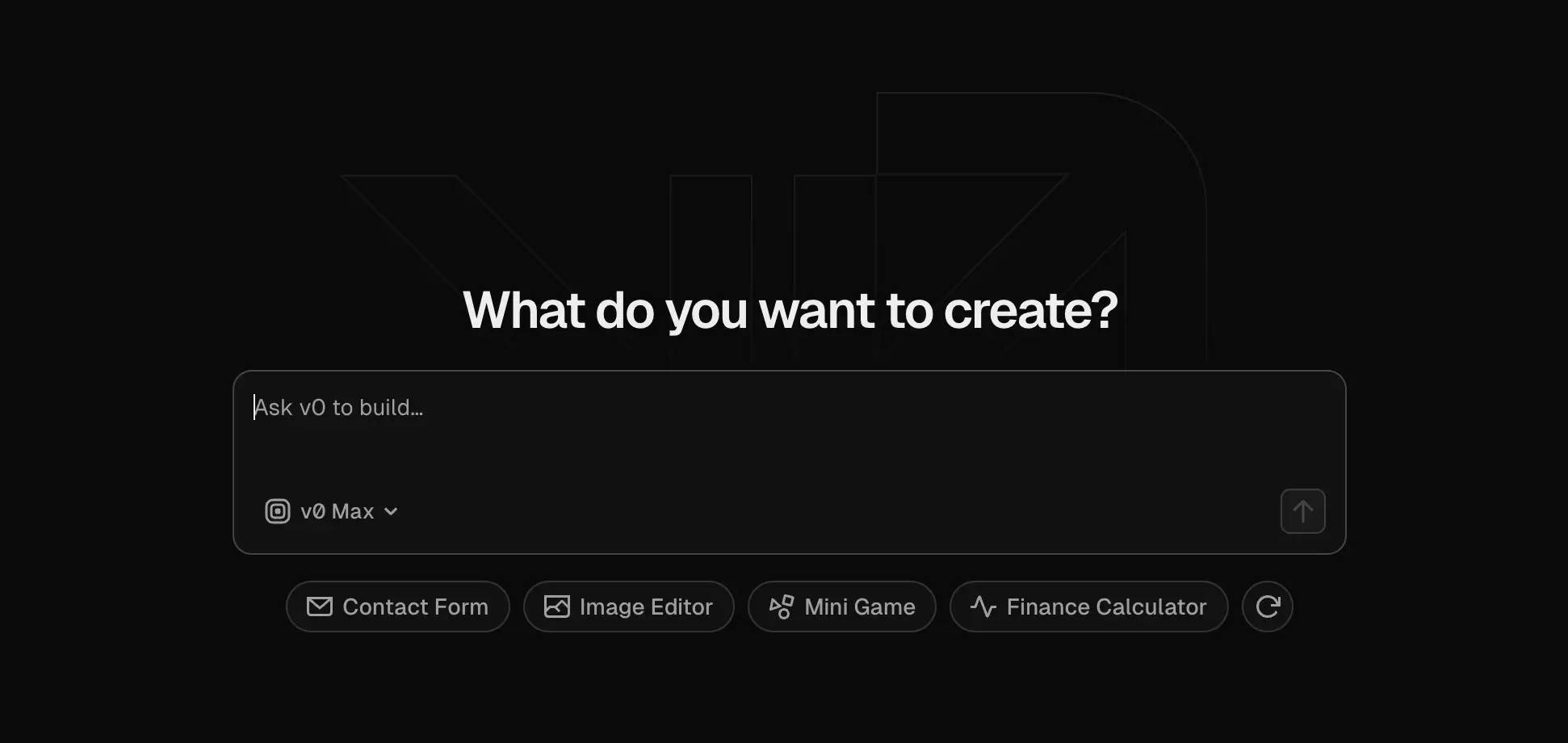
v0 is Vercel’s AI-powered UI generation tool that turns text prompts or screenshots into React components with Tailwind CSS styling. Think of it as a coding tool focused on front-end development. You describe the interface you need, and the AI model generates clean, production-ready code you can copy into VS Code or your preferred editor.
The tool recently evolved beyond simple component generation. It now functions as an AI agent with agentic capabilities, meaning it can research, reason, debug, and plan while building. You can even use it to create complete pages with some back-end logic. Still, at its core, v0 remains primarily a front-end UI generation tool.
Who is v0 best for?
v0 makes sense if you’re already working in the React/Next.js ecosystem and need to accelerate UI development, or if you want to integrate generated components into larger codebases. It’s a good option for front-end developers, product managers who prototype in code, and technical teams building on Vercel.
How v0 works
You start by describing what you want, either in text or by uploading a design screenshot. Then, v0’s AI model generates React code with Tailwind styling, often including shadcn/ui components. You can iterate through a chat interface, refining your approach with follow-up prompts. The tool also includes project context, so it remembers what you’re building.
If you’re satisfied with the output, you export the code to GitHub or copy it directly into your project. After that, you have to handle the rest: connecting to APIs, setting up state management, deploying to production, and managing back-end logic.
What is Lovable?
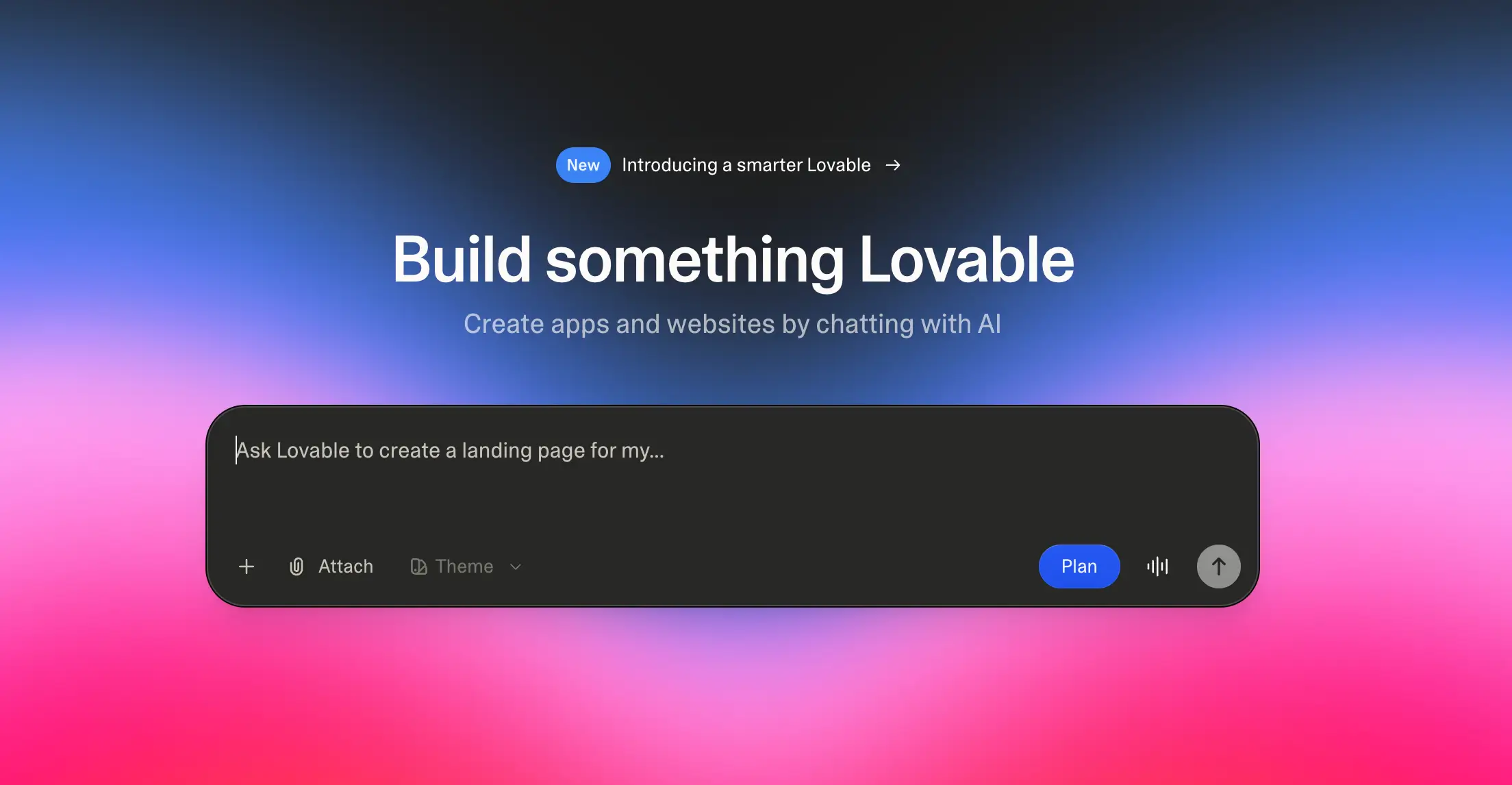
Lovable AI positions itself as an AI app builder that takes users from prompt to a deployed application. Unlike v0’s component-focused approach, Lovable generates the bulk of what you need for a working prototype: front-end UI, database schema, authentication, API routes, and hosting infrastructure.
Like v0, the platform uses a conversational interface where you describe your app idea in plain English, and Lovable builds it in real time. You can see your app take shape in a live preview and switch to code mode when (or if) you need deeper control. You can also make limited visual edits to text, style, and sizing.
Who is Lovable best for?
Lovable targets entrepreneurs, product managers, and solo developers who need to validate ideas quickly without assembling multiple tools. You’ll likely find it useful if you want to go from concept to demo in a short timeframe. Non-technical users and small teams can also use it for building MVPs, light internal tools, and client prototypes.
But despite the “no code” marketing, you’ll still need some web development skills when Lovable’s AI-generated code doesn’t work as expected.
How Lovable works
You describe your app using natural language, and Lovable generates the project structure, sets up a Supabase back-end with database tables, adds user authentication, creates the UI, and deploys everything to a live URL. The platform includes limited visual editing (for layouts, colors, and content) and code editing modes (for more granular tweaks).
When you make changes, they update automatically across all connected files. You can sync your project to GitHub, export the full codebase, or continue iterating within Lovable’s interface. The platform handles hosting, security scans, and deployment without additional configuration.
v0 vs Lovable: Features compared
Let’s look at how these vibe coding tools actually perform across the key areas that matter for app building.
Which is easier to use and set up?
Both AI builders promise to lower the barrier to building software, but they deliver on this promise differently.
v0 assumes you already know React. The learning curve isn’t about using v0 itself (the chat interface is simple), but about what to do with the React components it generates.
You need to understand component structure, props, state management, and how to integrate code into your existing project. For experienced React developers, this feels natural. For everyone else, it’s a steeper climb.
Lovable removes some barriers by generating basic applications instead of components, so non-technical users don’t need to know how to wire up a database or manually configure authentication.
However, when something breaks or doesn’t work as expected, debugging requires understanding the AI-generated code. Lovable tries to mitigate this problem with AI-driven fixes, but users report spending significant time refining prompts and troubleshooting issues.
Verdict: Lovable is easier to get started with if you’re new to app development. v0 is smoother if you already work in React daily. Neither is truly no-code for complex projects.
Which offers more features and flexibility?
v0 generates front-end code that you can customize freely once exported. Because it’s just code, you have complete control. You can refactor it, integrate it with any back-end, add custom logic, and deploy anywhere.
The tradeoff is that v0 doesn’t provide native back-end capabilities. You’ll have to handle database design, API development, authentication, and deployment infrastructure.
Lovable provides more key features out of the box. You get database management, user authentication, file uploads, hosting, and even payment integration through Stripe.
The visual editor lets you make minor layout changes without writing code. But this convenience comes with constraints: you’re working within Lovable’s architecture decisions, primarily centered around the Supabase back-end and React.
Verdict: v0 offers flexibility through simplicity, while Lovable offers flexibility through more features. Make your choice based on whether you prefer control or convenience.
Which has better AI and code generation capabilities?
v0 excels at generating clean, well-structured React components. According to reviews, the code quality is consistently high, following modern best practices for Tailwind and shadcn/ui patterns. The AI agent features help with debugging and refinement. However, v0 lags slightly in back-end logic and data structures since it’s not designed to build those parts.
Lovable generates more code across more domains (front-end, back-end, database schemas, API routes). This broader scope means it sometimes produces code that needs debugging, particularly when handling complex business logic or edge cases.
Per user reports, Lovable’s iteration quality varies. Simple requests work well, but complex multi-step changes might require several attempts and consume a significant amount of credits.
Verdict: v0 delivers more reliable code quality for its narrower scope. Lovable covers more ground but with less consistency.
Which is better for integrations?
v0 now offers integrations through the Vercel Marketplace. This means you can automatically provision databases (Supabase, Neon, AWS), authentication (Clerk), payments (Stripe), and caching (Upstash) directly from Vercel.
v0’s AI sets up these services and generates the integration code for you. This works well if you’re building something new and need standard infrastructure. It works against you if you have existing systems or need tools outside of the marketplace.
Lovable takes a different approach with three integration types. First, shared connectors add capabilities to your deployed app (Lovable Cloud, Supabase, Stripe, Shopify, ElevenLabs, Firecrawl, Perplexity).
Second, personal connectors (MCP servers) let Lovable access your Linear issues, Notion docs, Jira tickets, or Miro boards while building — meaning it can create apps based on your actual workflows rather than generic templates.
Third, you can integrate any API, authenticated or not, and Lovable handles the security setup automatically.
Verdict: Lovable wins on integration flexibility and breadth. v0 wins if you need multiple database options (Neon, AWS, Supabase) or are heavily invested in Vercel’s infrastructure ecosystem.
Which handles security better?
Both platforms take security seriously but approach it differently.
v0 treats all AI-generated code as potentially “adversarial.” Every piece of generated code undergoes security analysis before execution, runs in sandboxed environments, and faces comprehensive input validation. When deployed to Vercel, your code runs in isolated Functions with encrypted environment variables.
Lovable includes Security Checker 2.0, which automatically scans for exposed secrets and security vulnerabilities in real time. The platform evaluates every prompt against 20+ Lovable-specific policies. It also blocks malicious attempts before code generation even starts. This includes blocking malware, phishing sites, and impersonation attempts.
Verdict: Both platforms provide strong security, but with different areas of focus. v0 emphasizes secure deployment infrastructure and enterprise access controls. Lovable emphasizes proactive threat prevention at the prompt level and continuous scanning of generated apps.
Which is more affordable?
Pricing models differ significantly between these AI coding tools.
v0 uses a token-based credit system plus a monthly subscription.
- Free: $5 worth of credits monthly
- Premium: $20/month with $20 in credits
- Team: $30/user/month with $30 in credits
- Business: $100/user/month with $30 in credits
- Enterprise: Custom pricing
- Additional credits can be purchased as needed
As expected, complex prompts with large outputs consume more tokens.
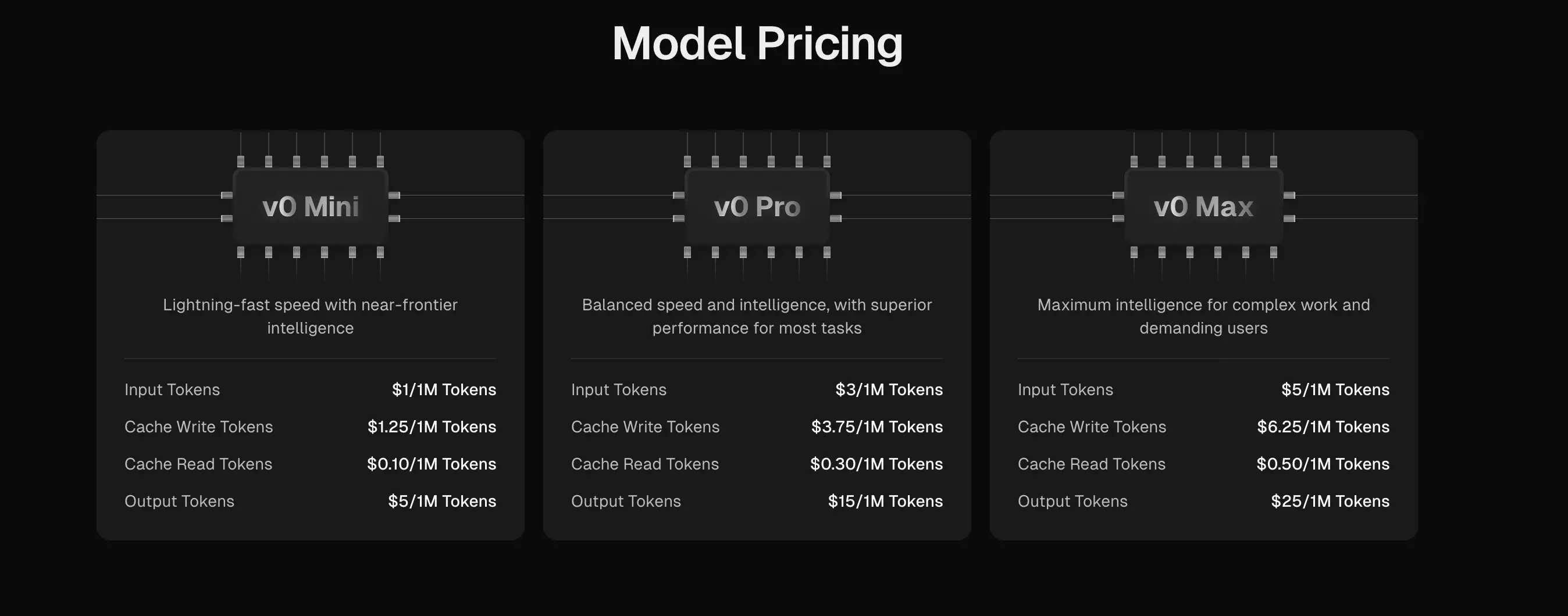
v0’s costs can escalate quickly if you iterate frequently. Users often burn through credits faster than expected, especially during active development.
Lovable uses a message-based credit system:
- Free: 5 messages per day (30/month max)
- Pro: $25/month for 100 messages
- Business: $50/user/month (teams, SSO, privacy controls)
- Enterprise: Custom pricing
Each “message” to the AI consumes credits based on complexity. According to my tests, building a freelance writer website used up all 5 credits, and I still couldn’t preview the site.
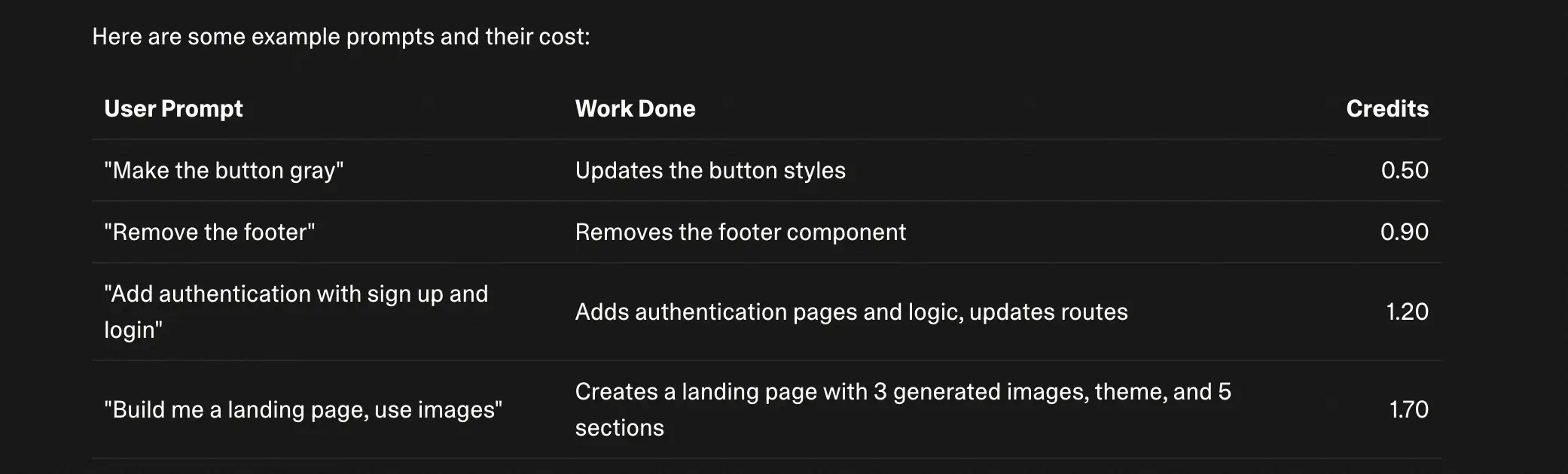
Verdict: v0 has a lower starting price, but both tools can get expensive during active development. Real costs depend heavily on usage patterns and iteration frequency.
Popular use cases for v0 vs Lovable
Best use cases for v0:
- Landing pages and marketing sites: v0 can generate hero sections, pricing tables, testimonial layouts, and other components for marketing pages. The code is clean, responsive, and ready to deploy.
- Dashboard and admin panel components: If you’re building internal tools, v0 can quickly generate data tables, charts, sidebar navigation, and control panels.
- Design system components: Teams maintaining design systems use v0 to accelerate component creation and generate consistent implementations of design patterns.
- Rapid UI prototyping: Product managers and designers use v0 to quickly visualize interfaces without building full functionality. The generated code becomes a communication tool between designers and developers.
Best use cases for Lovable:
- MVP validation: Entrepreneurs use Lovable to test product ideas with real users in days instead of weeks. I’ve read of cases where users build different MVPs over the course of a week to find product-market fit.
- Personal mini-apps: Personal users can build project trackers and workflow management tools tailored to their specific processes.
- Client presentations and demos: Agencies create functional prototypes for client pitches, showing working apps instead of static mockups.
- Simple SaaS products: Solo founders build and launch basic subscription products with authentication, payments, and core functionality.
v0 vs Lovable on Reddit and real user reviews
The consensus on v0 is positive for its intended use case. Developers on Reddit describe V0 as “excellent for exactly what it claims to be,” especially for UI/UX projects, but emphasize that it’s not a complete app builder.

Another user mentions that while v0 is worth it if you use it mainly for designs, it’s easy to burn through credits when building.

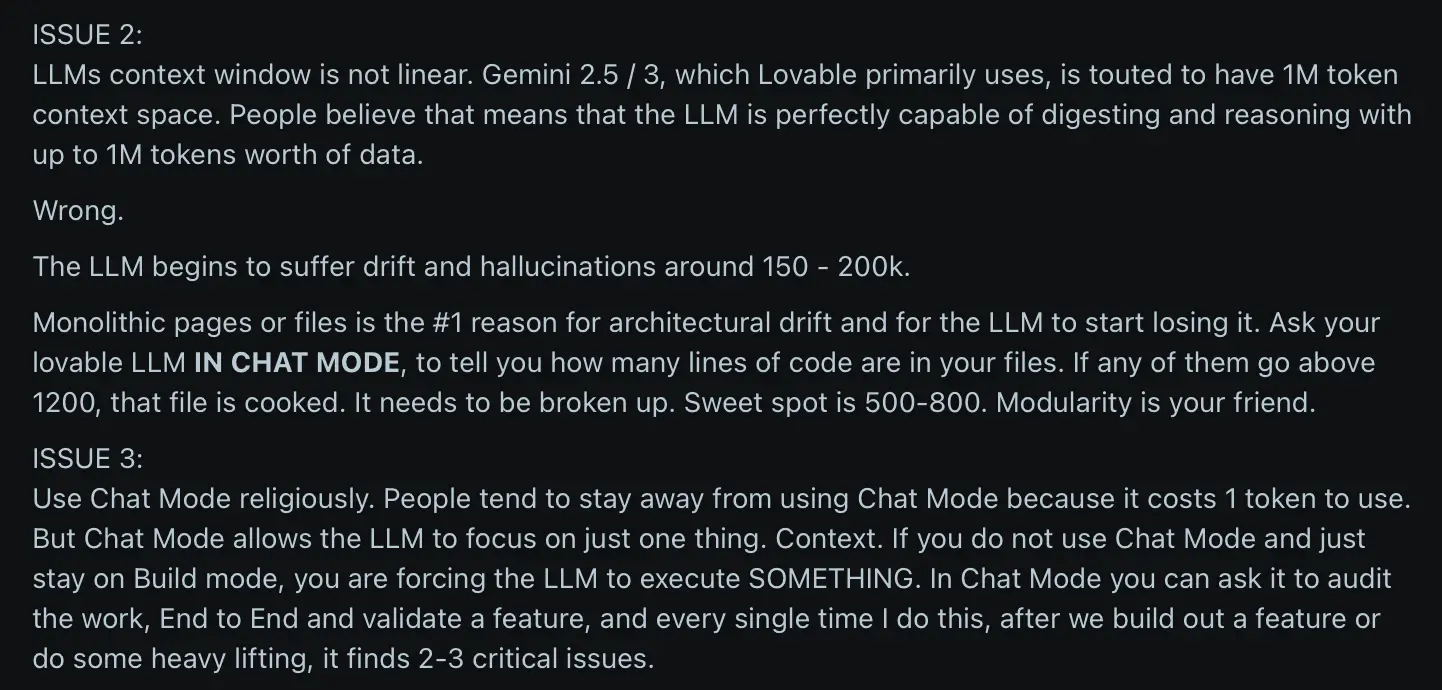
Looking at user reviews for Lovable across Reddit and G2, opinions are sharply divided between early-stage builders who love the speed and those who have been burned by long-term limitations. Users praise the platform’s speed for prototyping but warn about serious limitations for production apps.
One experienced developer offered detailed technical warnings: “LLMs context window is not linear. The LLM begins to suffer drift and hallucinations around 150-200k tokens. Monolithic pages or files are the #1 reason for architectural drift. If any of your files go above 1,200 lines, that file is cooked.”
On the positive side, users building simple apps or MVPs are generally satisfied with Lovable. So, the consensus seems clear: Lovable works great for quick MVPs and non-technical founders validating ideas. But if you’re building something complex or long-term, expect to hit walls — and either export early or budget significantly more credits than you’d initially think.
Meet Softr: The best v0 vs Lovable alternative for building secure, production-ready software to run your business on
Building AI prototypes or UI components quickly is different from running actual business operations on software you can rely on.
Both v0 and Lovable excel at speed. They help you visualize ideas quickly and generate code to explore concepts. But when it comes to building apps that teams depend on daily—client portals, CRMs, project trackers, inventory systems—you need a platform designed for secure business operations from the ground up.
That’s where Softr comes in.
Centralize and manage your data properly
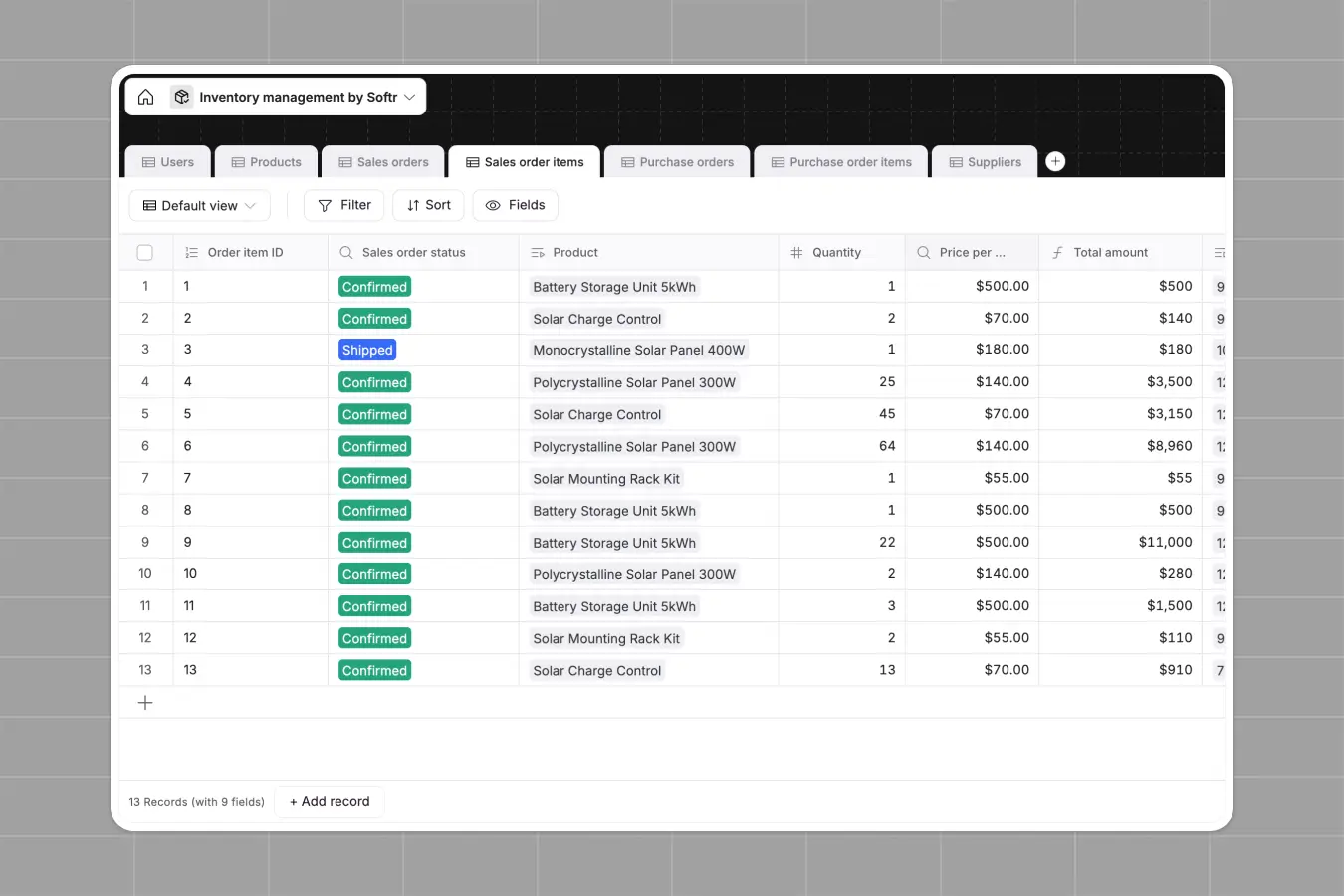
Softr is a full-stack platform with flexible data options:
- Softr Databases: Build and manage relational data natively inside Softr. Create linked records, lookup fields, formulas, and data workflows that power your apps. In Softr’s Business Plan, you can have up to 1M records, so your data can scale with your business.
- Connect to 21+ data sources: Pull data from Airtable, Google Sheets, Notion, HubSpot, monday.com, SQL databases, and more with real-time syncing. You can also control who can see and edit your data.
- Combine multiple sources: Build apps that unify data from your CRM, spreadsheets, and project management tools in one interface. Your team sees everything in one place without having to switch between tools.
These features matter because real businesses don’t keep all their data in one place. For instance, you might have your client information in HubSpot, project data in Airtable, and financial records in QuickBooks. Softr brings it all together without forcing migration. Or, if you’d rather consolidate your tech stack, you can store all your records in Softr Databases — so your back-end and front-end live on the same platform.
Control who sees what with enterprise-grade security
v0 and Lovable have workarounds that allow them to integrate with authentication services like Firebase or Supabase. However, they lack the granular, business-grade permissions required for apps that handle sensitive client or company data.
Softr has enterprise-grade user authentication, secure logins, role-based permissions, and SSO built in from the start. It’s SOC 2-verified and GDPR-compliant, and your data is protected on the server side, preventing exposure to unauthorized users.
Beyond simple logins, Softr lets you:
- Create custom user groups (clients, partners, team members, admins)
- Define exactly what each person can view, edit, or delete based on their role
- Set field and record-level permissions so clients only see their own projects
- Control page and block-level visibility with conditional rules
This isn’t an afterthought. It’s core to how Softr works, because business operations require sophisticated access control that AI-generated code can’t easily handle.
Automate workflows inside your apps
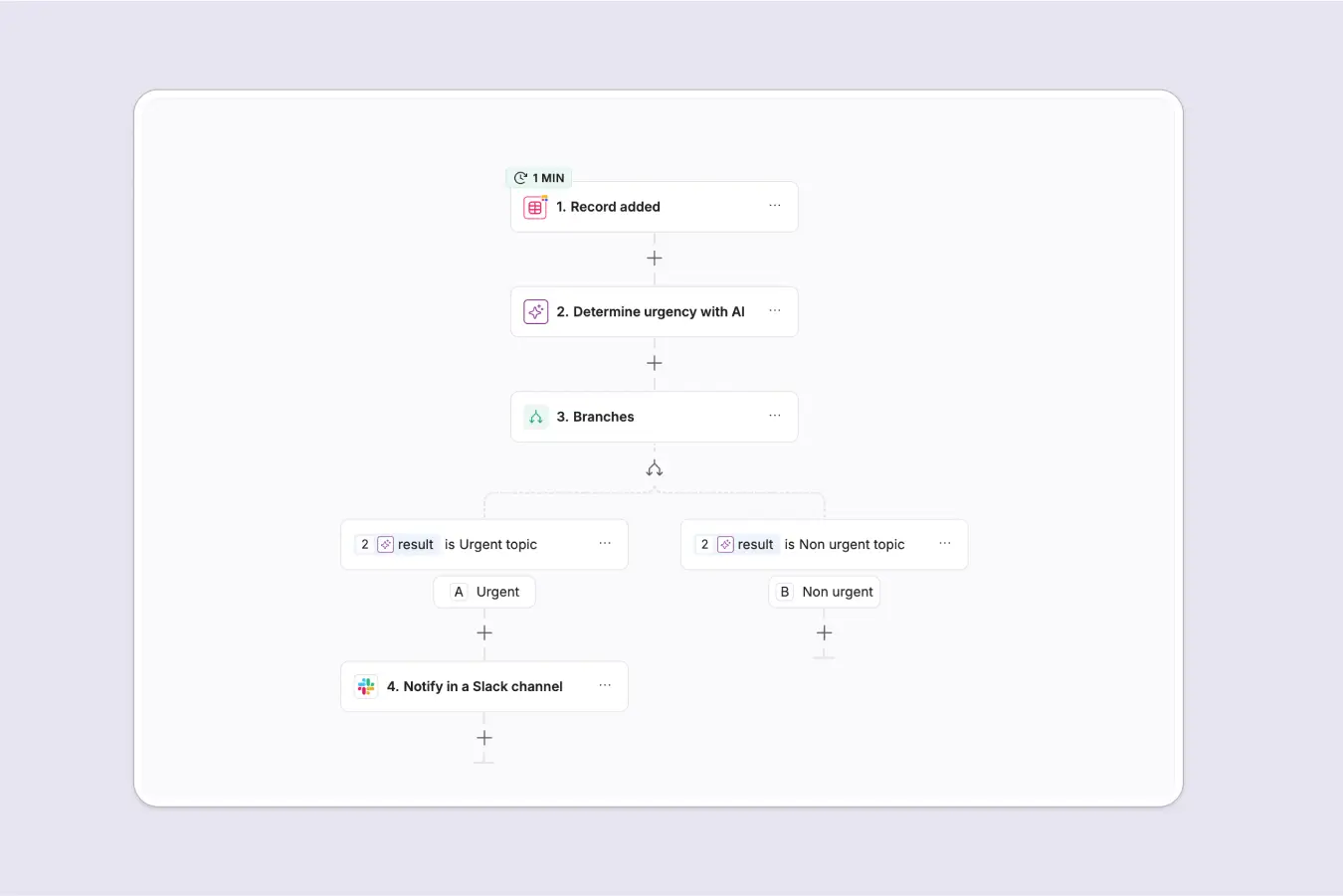
While v0 generates static UI, Lovable can generate the visual design of a form. However, it lacks built-in logic to handle submissions, conditional steps, or data routing. You’d need to integrate with external tools like Zapier or Make, adding another subscription and maintenance burden.
Softr includes workflows and AI automation natively. You can:
- Build multi-step forms with conditional logic between sections
- Trigger actions when users submit forms, update records, or complete tasks
- Send email notifications, update external systems, or modify data automatically
- Route form data directly to your database to trigger automations and Database AI Agents
- Personalize user experiences in real time based on app activity
Your operations run more smoothly when automated workflows live within your app rather than a separate platform.
Build production-ready business apps you can trust
Users without coding experience will have a hard time using v0 and Lovable to create production-ready apps.

And even with coding skills, the scope of these tools often ends when users get stuck in frustrating debugging loops.
Softr is an AI-powered platform that lets you build and run production-ready software you can depend on for everyday processes, with:
- Instant deployment with custom domains
- A true visual builder with no coding required
- SSL certificates and security configured automatically
- Guaranteed uptime and performance at scale
- No infrastructure management needed
Predictable pricing that prevents burning through credits
Lovable’s credit-based model creates unpredictable costs. Users often get stuck in troubleshooting loops while fixing AI-generated code, leading to rapid credit burn that can stall projects. And the same can be said of v0’s pricing.
Softr’s pricing is flat and transparent, so you won’t be surprised by sudden expenses. Here’s what it looks like:
- Free ($0/month): Unlimited apps, with access to Softr Workflows and Softr Databases, 5 app users, and 5,000 Softr Database records. Good for testing or simple internal projects.
- Basic ($19/month): Unlimited apps with 42+ integrations, Team: 5 + Client: 5 app users, and 50,000 records. Adds custom domain, Softr API & MCP, conditional section visibility, and 2 form-logic branches.
- Pro ($99/month): Unlimited apps with 45+ integrations and custom code, Team: 10 + Client: 50 app users, and 500,000 records. Includes custom code, calling external APIs, e-signature, removing Softr branding, conditional forms, and custom user groups (up to 3).
- Business ($329/month): Unlimited apps with 52+ integrations, Team: 30 + Client: 100 app users, custom user groups (up to 10), and 1M records. Adds two-factor authentication, domain-restricted signup, push notifications, installable mobile app (PWA), and global search.
- Enterprise (custom pricing, contact sales): Everything in Business plus SSO (SAML/OpenID), custom invoicing, dedicated success manager, and team training.
Support that helps
Softr is known for its speedy, responsive chat support, even on the Free plan. With over 1 million users building apps and an active community forum, you’re never stuck figuring things out alone.
Need help migrating from Lovable or v0? Softr’s team and expert partners can help you transition quickly and build apps that your team can rely on.
What you can build with Softr
Softr lets any user create the apps that make your business run:
- Client portals: Secure spaces where clients access projects, documents, invoices, and updates without switching tools
- Partner and vendor portals: Coordinate with external teams, track shipments, manage contracts, and share real-time data
- CRMs: Custom relationship management tools that fit your workflow, not generic software that forces you to adapt
- Project management apps: Track work across teams with views and permissions tailored to different roles
- Inventory systems: Manage stock, orders, and suppliers in one place with real-time updates
- Internal tools: Team wikis, employee directories, document hubs, approval workflows, and knowledge bases
And that’s just scratching the surface. You can use Softr AI to build fully custom apps based on your needs, or get started with 100+ functional app templates that include pre-built logic, permissions, and workflows — so you can launch in minutes.
v0 vs Lovable vs Softr: Which one should you choose?
When to choose v0
v0 is the better choice if you already have experience building with React/Next.js and need UI components to integrate into your codebase. v0 is also a great fit if you’re building within Vercel’s ecosystem and want tight platform integrations.
When to choose Lovable
Choose Lovable if you need to validate product ideas quickly with working prototypes. Just remember you’ll need to be comfortable debugging and iterating through AI-generated code.
When to choose Softr
Choose Softr if you need real business apps your team will use daily, not one-off projects. It’s the best choice for building secure apps on top of business data, no matter where it lives (Notion, HubSpot, Google Sheets, Softr Databases, and more). It also gives you granular, role-based control over permissions, so users only access the tools and data they need.
Build your business apps with the right tool
v0 and Lovable represent the current state of AI-assisted development and vibe coding. They make certain types of work, like UI generation and rapid prototyping, faster. But don’t confuse rapid generation with complete solutions.
Instead of generating code you need to manage, debug, and deploy manually, Softr offers a true full-stack platform where you can build, secure, and maintain custom business apps without writing code. Use Softr AI to make production-ready apps, then customize and edit with the intuitive drag-and-drop builder.
With Softr, you get to build the apps you need to actually run your business, whether you’re just starting out or scaling rapidly.
Try Softr for free to see how it works.
Frequently asked questions
What’s the main difference between v0 and Lovable?
Do I need coding skills to use v0 or Lovable?
Can I export my projects from v0 and Lovable?
Which is better for building a business app?
Is Softr better than v0 and Lovable?