[.blog-callout]
💡TL;DR:
- Replit is code-first, Lovable is design-first: Replit helps developers spin up small apps in the browser with AI support, while Lovable quickly generates UI mockups for demos and early exploration.
- Both are fast, neither is business-ready: Replit lacks relational databases, permissions, and automation; Lovable lacks backends, hosting, and secure logins.
- Costs add up quickly: Replit's credit system and Lovable's per-prompt pricing both scale unpredictably once you move beyond light prototyping.
- For business operators, the gap is clear: If you need CRMs, portals, or internal tools with structured data and secure access, platforms like Softr fill what Replit and Lovable leave out, giving business operators and ops teams AI apps they can actually run a business on.
[.blog-callout]
Replit vs Lovable is one of the most talked-about comparisons in AI vibe coding today. With a few prompts, you can spin up code, generate a UI, and test an idea in minutes. Perfect if you’re experimenting, learning, or just trying to see what’s possible.
But if you’re running a business, speed alone isn’t enough. You need tools that help you manage clients, track jobs, and keep daily operations on track—not just prototypes.
In this comparison, we’ll break down where Replit and Lovable make sense, where they fall short, and what to consider if you need apps your business can actually rely on. Note: If Lovable and Replit are the main tools you’re considering, this comparison will help. You can also explore a broader list of the best Replit alternatives and how they stack up.
Replit vs Lovable at a glance
Replit Agent is better suited for full-stack development, while Lovable AI fits the early ideation stage of design-heavy projects.
| Replit | Lovable | |
|---|---|---|
| Best for | Developers, students, and small teams who want to code, prototype, and deploy apps quickly in the browser. | Designers, product managers, and startup founders who need fast UI mockups and prototypes. |
| Prototyping | Generates working code and even full apps with Replit Agent. Good for quick demos or utilities. | Instantly creates UI mockups from prompts: faster for visual layouts and client-facing prototypes. |
| Data & backend | Includes a built-in SQL database but requires coding and lacks relational structure, permissions, and automation. External tools or custom code are still needed. | Not designed for ongoing workflows. No backend or automation—prototypes must be handed off to devs. |
| Collaboration | Multiplayer coding, live chat, and classroom-friendly team spaces but dev-centric. | Shared canvas for co-creating UI: strong for design discussions, weaker for technical handoff. |
| Integrations | Flexible via APIs, GitHub, and custom code but no one-click connectors for CRMs, ticketing, or accounting tools. | Integrates with GitHub, Supabase, and a few dev/AI tools (Stripe, Resend, OpenAI): no native business app connectors. |
| Deployment & hosting | Built-in deployment, custom domains, and autoscaling: apps can run live from the platform. | No deployment — prototypes must be exported and hosted elsewhere. |
| Production readiness | Can run small apps (like to-do lists, a calculator or chatbot), but scaling to larger systems (with advanced databases, permissions, or governance) still requires coding | Great for quick, polished outputs such as landing pages or forms, or prototypes, but not designed to support full production apps or long-term business systems. |
What is Replit?
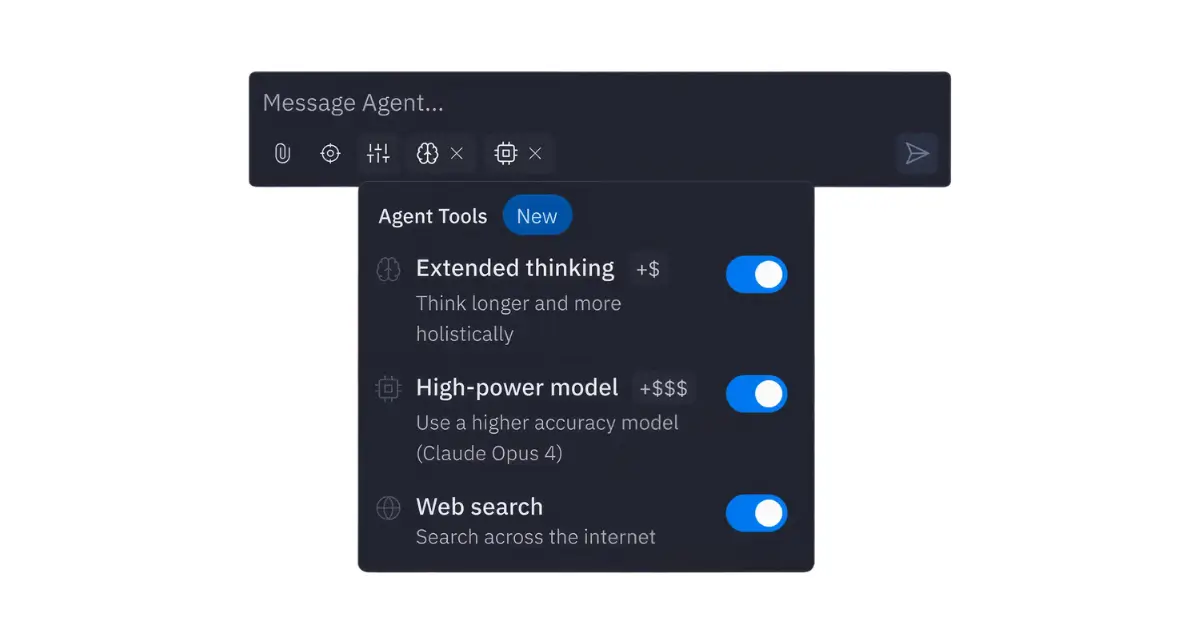
Replit is a cloud-based IDE (Integrated Development Environment) that runs in your browser. It combines coding, AI support, and lightweight deployment in one place, making it easy to go from idea to running code without installing complex software.
Replit stand-out features
1. Replit Agent
Replit Agent takes AI one step further by scaffolding small apps directly from text prompts. Ask it for a to-do list, blog app, or simple game, and it will generate the starter files, add dependencies, and set up basic docs.
It’s a fast way to experiment or share a quick demo without starting from scratch. That said, Agent outputs usually need debugging or custom edits, so it’s best thought of as a project starter kit, not a production-ready builder.
2. Instant deployment
One of Replit’s biggest draws is its built-in hosting.
You can take a project live on a custom domain in minutes, with autoscaling and HTTPS handled for you. This makes it easy to deploy small web apps, APIs, or chatbots for clients or teammates to test.
For larger, more complex apps, though, most teams still need external infrastructure: Replit’s hosting isn’t designed for long-term business-critical systems.
3. Multiplayer collaboration
Replit lets multiple people code together in real time, with live chat and shared editing. It’s a standout feature for classrooms, workshops, and hackathons where fast collaboration matters.
For short-term projects, it’s a smooth way to build with others. But it lacks the structure larger teams need: role-based permissions, governance, and workflow controls aren’t built in.
What Replit is best for
Replit shines when speed and accessibility matter. It’s a favorite for quick experiments, learning, and sharing lightweight apps without setup.
- Classrooms & learning: Students can code together instantly, with Replit Agent helping explain snippets and debug.
- Hackathons & workshops: Zero-install setup and multiplayer mode make it perfect for rapid collaboration.
- Client demos: Deploy a working prototype or proof of concept in minutes on a custom domain.
- Lightweight utilities: Host small apps like calculators, form handlers, or simple APIs.
- Creative coding: Experiment with games, generative art, or interactive storytelling projects.
Where Replit struggles is moving beyond these use cases. Most users see it as a fast way to experiment with code, but scaling into multi-user systems with structured data, permissions, and reliable automation usually requires other tools — especially since AI outputs can be buggy and need extra debugging.
Replit limitations
- Not built for multi-user business apps with permissions and workflows
- Built-in database is limited, no visual data modeling
- AI outputs are buggy and often need debugging
- Costs scale unpredictably with usage credits
[.blog-callout]
👉 Lack of scalability is why some teams outgrow vibe coding-style tools like Replit. For instance, theInterna — a recruitment platform connecting students and startups, needed structured permissions, conditional forms, and automated onboarding. They solved it by moving to Softr, a platform that could handle these workflows securely without code or any external services.
[.blog-callout]
Replit pricing
- Starter (Free): Daily Agent credits, a daily-capped Free Mode, a built-in database, and 1 published app that goes down after 30 days.
- Replit Core ($20/month or $18/month billed annually): $20 in monthly credits, a Free Mode allowance for everyday Agent work, Full build, Plan Mode, Connectors, unlimited published apps, and up to 5 collaborators. Extra usage is pay-as-you-go.
- Replit Pro ($100/month or $90/month billed annually): Everything in Core plus $100 in monthly credits (higher tiers go up to $2,050/month), up to 15 collaborators and 50 viewers, 10 parallel agents, two-month credit rollover, and priority support.
- Enterprise (Custom pricing): Everything in Pro plus SSO/SAML, SCIM, advanced privacy controls, unlimited seats, and dedicated support.
How much does Replit actually cost?
While Replit Core includes $20/month in credits, how far that goes depends on what you’re doing. Credits are consumed by Agent work in Power or Max Mode and by running hosted apps. Replit uses effort-based pricing, so complex requests cost more than small ones. Extra usage is billed pay-as-you-go, which can add up quickly.
Examples:
- Running a small web app 24/7 draws on the same $20 in credits you use to build, depending on traffic.
- A complex Agent request, like building a login flow and connecting a database, costs far more than a small fix, so a few heavy builds can use up the included credits.
- Debugging loops cost credits on every attempt, even when the Agent's earlier fix didn't work.
- Hosting multiple apps while building with Agent often pushes teams onto pay-as-you-go charges.
That’s why many users report that $20/month rarely covers a full month of active development. Free Mode helps with everyday work, but heavier builds still draw on credits. Costs can be unpredictable compared to flat-priced no-code platforms like Softr, where usage doesn’t eat into credits.
For business operators, Replit is most useful as a quick way to experiment and share code snippets. However, it lacks the relational data, user management, and workflow features needed to support structured, ongoing business processes.
What is Lovable?
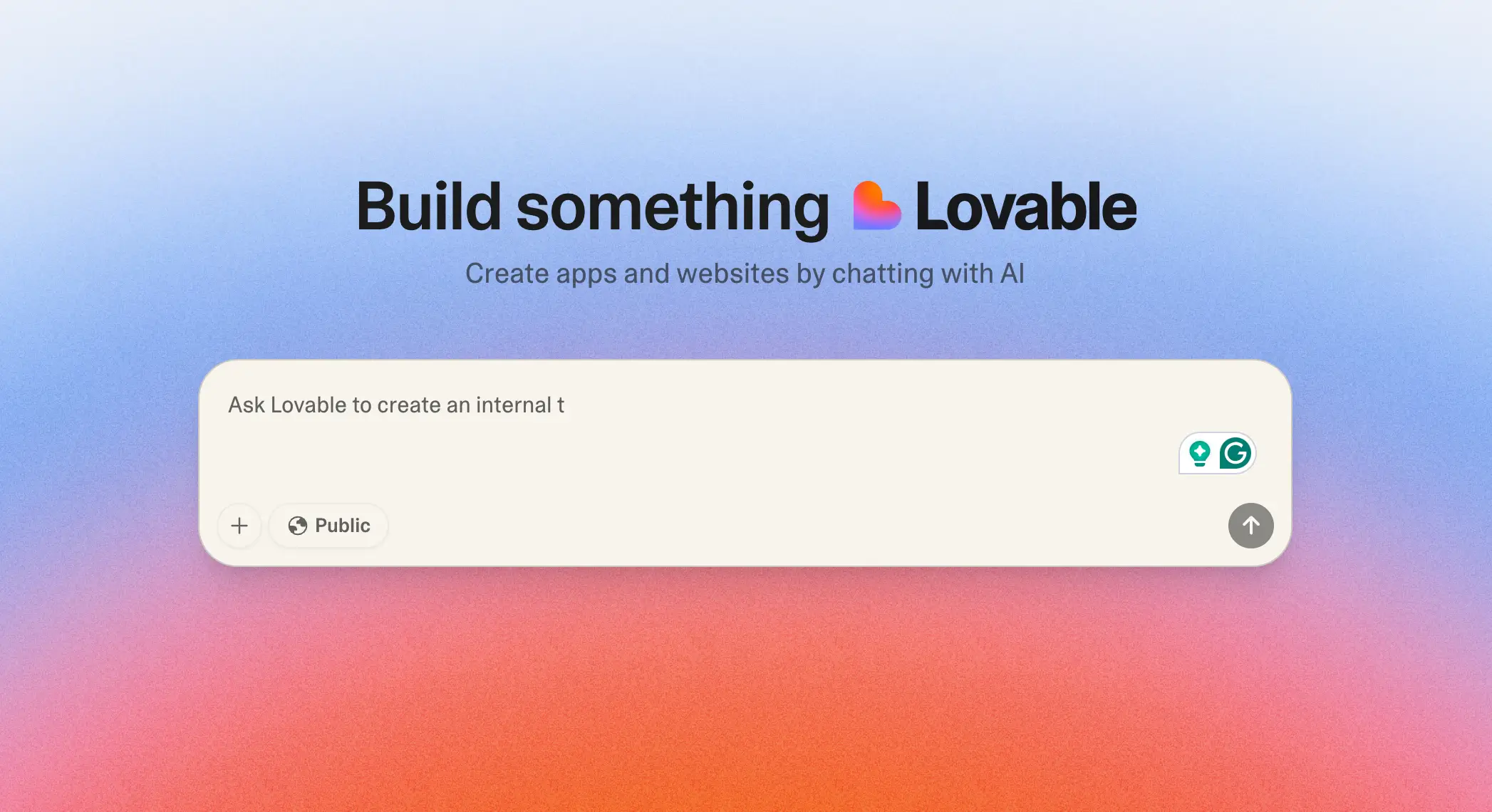
Lovable is an AI-powered design and app-building tool that generates user interfaces and front-end code from text prompts. It works like a collaborative visual canvas where teams can sketch, tweak, and refine layouts before handing them off to developers. Unlike Replit, Lovable focuses on front-end UI design rather than backend logic or production hosting.
Lovable stand-out features
1. Prompt-based UI creation
Lovable lets you generate layouts with natural language prompts and refine them instantly.
You can go from a rough idea (“a dashboard with charts and filters”) to a working front-end scaffold in minutes. This makes it ideal for brainstorming flows or creating quick client-facing mockups. It’s a huge time-saver for early brainstorming or client workshops. But the outputs aren’t production-ready — designs often need cleanup or refactoring before they can be shipped.
2. Collaborative canvas
Built for team input, Lovable offers a shared visual workspace where product managers, designers, and engineers can co-create. Think of it as a Figma-style environment with live editing, but where the output is real front-end code you can later export.
This makes it great for alignment sessions and quick feedback loops. Still, while collaboration is smooth, the handoff to developers can be messy if the code isn’t structured the way a team needs.
3. React/TypeScript output
Every design you create exports as structured React/TypeScript code.
That makes it much easier for developers to extend a prototype compared to static mockups. Still, you’ll need an engineering team to connect it with databases and APIs before it’s production-ready.
The code is organized, but rarely clean enough to ship as-is. Most teams will want to refactor and add backend infrastructure for data, authentication, and workflow logic before going live.
4. Integrations & exports
Lovable connects with GitHub and Supabase, and also supports services like Stripe for payments, Resend for emails, and OpenAI/Anthropic for AI features. These integrations make it possible to demo richer flows during prototyping.
But there’s no built-in hosting, so every project has to be exported and deployed elsewhere. In practice, Lovable is designed for handoff to developers, not for running production apps end-to-end.
What Lovable is best for
Lovable shines in the early design and prototyping phase, where speed and collaboration matter most.
- Prototypes: Founders and teams can validate ideas quickly with working front-end mockups.
- Client presentations: Share interactive flows to test ideas with stakeholders before investing in code.
- Product exploration: Compare layouts and user journeys to guide early design decisions.
- Internal demos: Build quick dashboards or simple utilities that developers can later extend.
In short: it’s best for visual prototypes and collaborative exploration. Teams use it to align quickly, but still need developers and infrastructure to take things further.
Lovable limitations
- No backend, authentication, or workflow support
- No hosting — everything must be exported
- Limited business integrations beyond GitHub/Supabase
- Best for prototypes, not production apps
Lovable pricing
- Free: 5 daily credits (up to 30/month), public projects, unlimited collaborators.
- Pro ($25/month or $21 billed annually): 100 monthly credits, 5 daily credits (up to 150/month), private projects, user roles & permissions, custom domains, credit rollovers, remove Lovable badge.
- Business ($50/month or $42 billed annually): All Pro features + SSO, personal projects, opt-out of data training, design templates.
- Enterprise (Custom): Dedicated support, onboarding services, custom integrations, and group-based access control.
How much does Lovable actually cost?
Lovable uses a clear credit-based pricing model—each AI prompt or message costs 1 credit.
Here’s how that plays out in practice:
- Free Plan gets you 5 credits per day (capped at 30–50 monthly), making it great for testing concept ideas or playing around.
- Pro Plan ($25/month) starts with 100 monthly credits, plus the daily credits—typically giving you around 130 total prompts per month.
In everyday use:
- A single design tweak like “make the footer smaller” might cost under 1 credit, but a more elaborate instruction like “build a landing page with images” could use 2 credits or more .
- Users report that 30–40% of usage is spent on bug fixes and tweaks when AI-generated code breaks, which can drain credits faster than expected
For operators, Lovable is most useful as a design-first tool to shape and test ideas, but it lacks the backend, workflows, and integrations needed to support ongoing business processes.
Replit vs Lovable: Pricing comparison
Both Replit and Lovable offer free plans, but their paid tiers scale differently depending on whether your focus is coding and deployment (Replit) or UI prototyping and collaboration (Lovable).
Key differences
- Free plans: Replit’s free tier includes up to 10 development apps and limited Agent access. Lovable’s free plan is capped at 5 daily credits (around 30–50 per month), which limits heavier prototyping.
- Scaling costs: Replit scales by usage credits, plan tier, and deployment features — meaning costs can rise quickly with AI/hosting usage. Lovable scales by credits and project permissions, so frequent design iterations may burn through credits faster than expected.
- Team features: Replit Pro ($100/month) covers up to 15 collaborators with pooled credits, role-based access, and priority support. Lovable’s Business plan ($50) emphasizes SSO, project privacy, and design collaboration at scale.
- Enterprise focus: Replit leans on deployment security (SSO, SCIM, privacy controls), while Lovable emphasizes custom design systems, onboarding support, and large-team collaboration.
Replit vs Lovable on Reddit
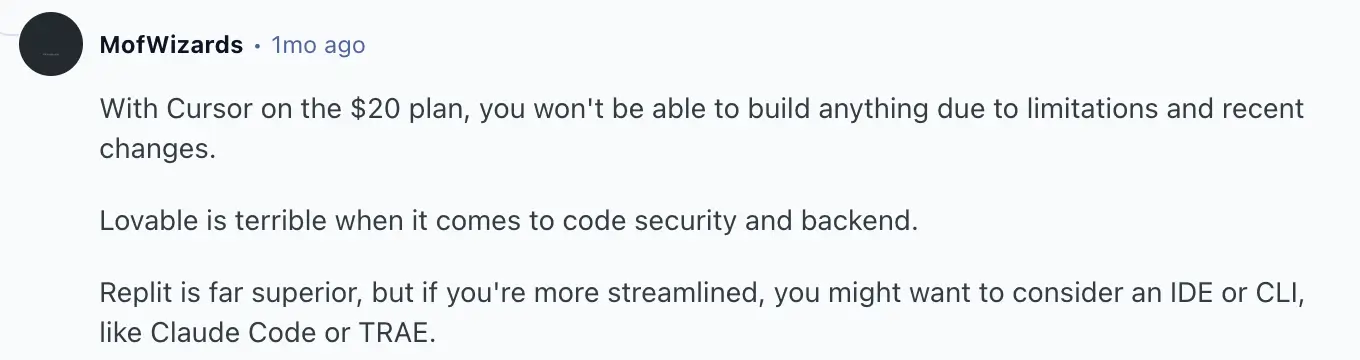
In discussions across Reddit, there isn’t a single “winner” between Replit and Lovable — it depends on whether you’re coding-first or design-first.
One Redditor summed it up:
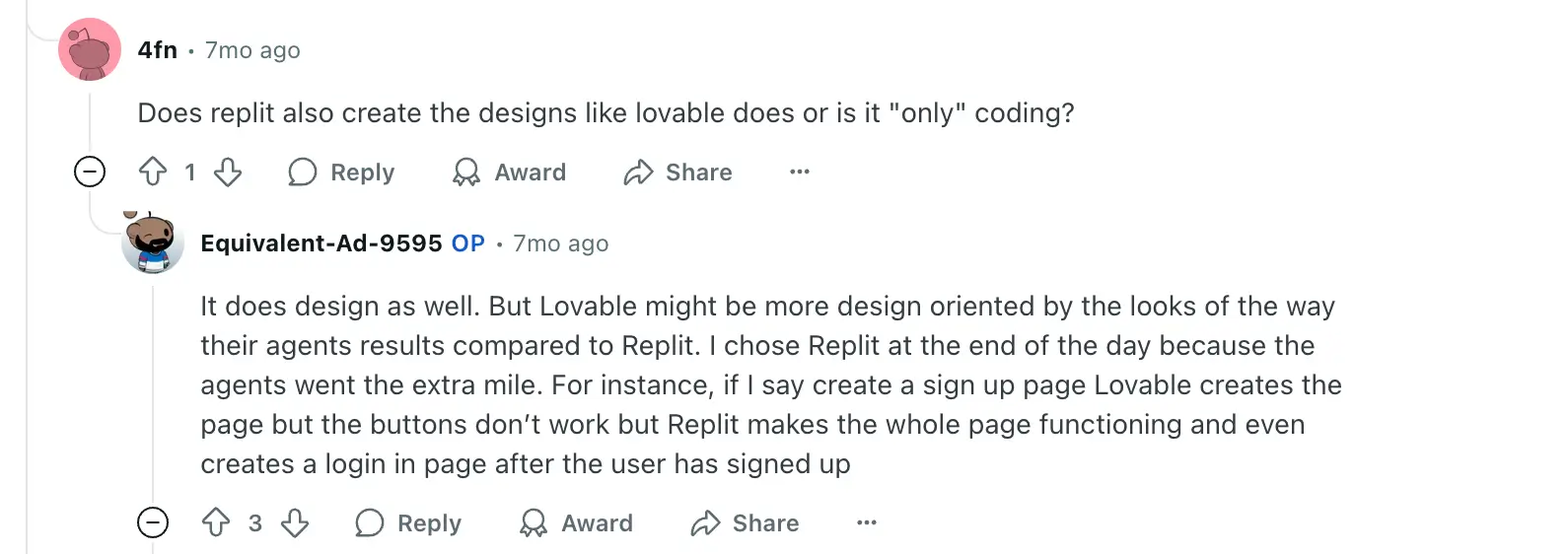
Another contrasted it with Lovable:

Others pointed out that there’s a time and place for alternative tools as well:
Replit vs Lovable Summary
Replit and Lovable both help you move quickly from idea to something tangible, but they serve different needs.
- Replit is built around coding. It’s strong for developers, students, or small teams who want toexperiment in the browser and deploy lightweight apps. Where it falls short is in business readiness — it doesn’t include permissions or workflow automation, so long-term use requires extra setup and technical skills.
- Lovable is built around design. It turns prompts into working interface mockups that teams can share and refine together, which makes it great for early product exploration or client demos. The trade-off is that Lovable is best for prototypes — you’ll still need developers, a backend, and other tools to bring ideas into production.
Both Replit and Lovable shine for early-stage building—whether that’s writing code or creating UI prototypes. But if your goal is to run day-to-day operations, manage clients, or scale beyond prototypes, neither is built with those workflows in mind. That’s where alternatives like Softr come in.
Softr — the best Replit vs Lovable alternative for building full-stack business apps with AI
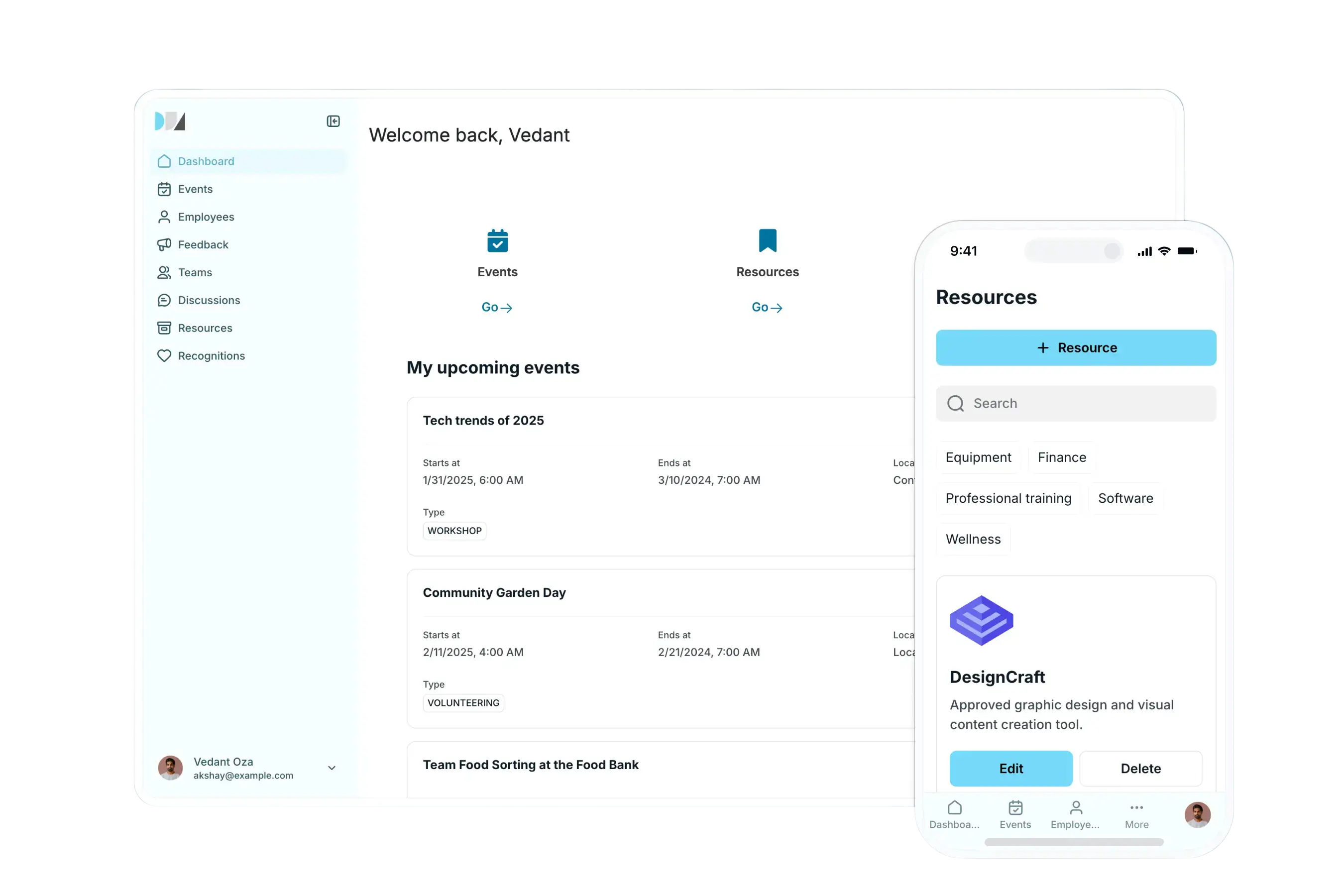
Replit and Lovable are great for experimenting, whether that’s testing code or spinning up a quick UI. But if your goal is to run a business, you need more than prototypes.
Prototyping sparks ideas. Running operations requires tools that keep clients organized, projects on track, and data secure.
This is where full-stack platforms like Softr come in. Softr combines a built-in database, 17+ native data source integrations, granular permissions, workflow automation, and an AI Co-Builder into one platform — so business operators and department heads can build apps they can actually rely on. You can also build and edit these apps from Claude, ChatGPT, or Cursor through the Softr MCP.
Built-in database, 21+ native integrations, plus RestAPI
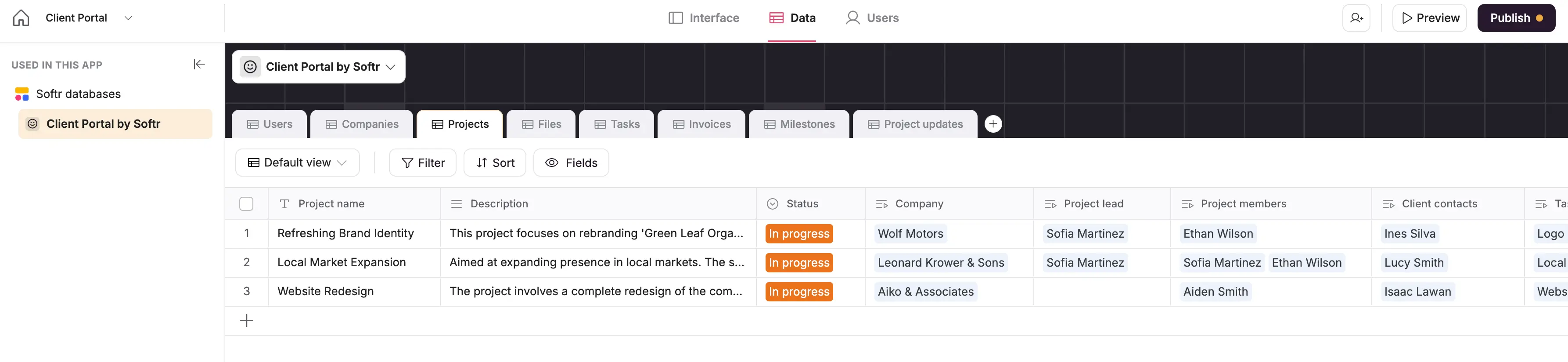
Softr comes with its own native relational database, and integrates with 21+ data sources, including Airtable, Google Sheets, Hubspot, Notion, monday.com, SQL databases, Supabase, and more, with real-time, two-way sync. It also comes with a REST API connector, so you can pull in data from almost any external service.
Replit has a basic SQL database, but you need to write queries and wire everything manually.
Lovable doesn’t include a backend at all: you’ll need external services for even the simplest data needs.
User management & authentication
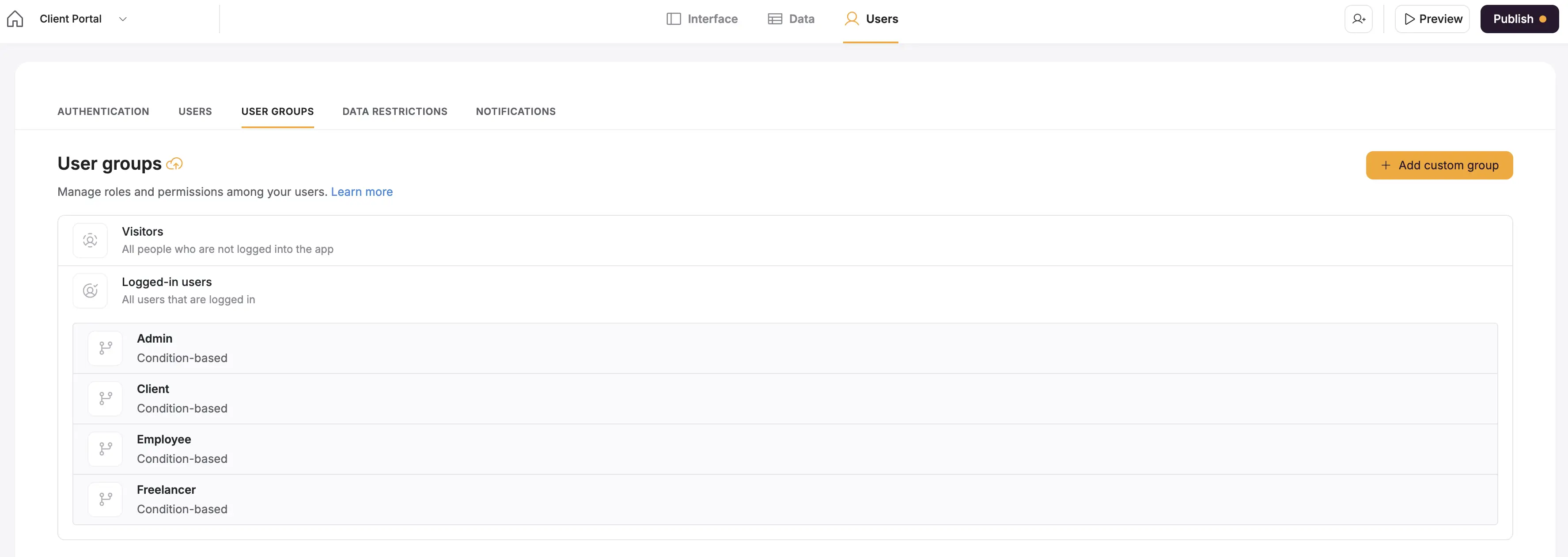
Softr has authentication, end-user logins, and SSO built in. You can create signup and login flows out of the box, manage users directly in your app, and connect to providers like Google or Microsoft for single sign-on.
This makes it easy to onboard clients, partners, or employees securely without adding any external services or writing code.
Replit doesn’t include end-user authentication. Developers need to wire in external libraries or services (like Firebase Auth), configure databases to store user credentials, and maintain the setup themselves. That makes it viable for developers, but not something a non-technical team can manage.
Lovable doesn’t support authentication at all, since it only outputs front-end scaffolds. There’s no concept of logins or secure access — any “app” you build in Lovable has to be exported and then integrated with a backend system that handles auth.
Granular permissions & conditional visibility
Softr gives you fine-grained control over who sees and does what in your app. You can assign roles (like “admin,” “manager,” or “client”), restrict access at the page, block, or even field level, and use conditional visibility to dynamically show or hide content based on user attributes or logic.
This ensures every user only sees the data and actions relevant to them — not your entire dataset.
This matters a lot for data security. Without these guardrails, sensitive information (like client details, invoices, or HR records) can easily be exposed to the wrong people. Neither Replit nor Lovable have built-in permissions, so non-developers using those platforms risk exposing sensitive data. Softr prevents that by default, giving SMBs the same controls you’d expect in enterprise software.
Enterprise-grade security & governance
Softr provides secure hosting, SSL, SSO/SAML, and SOC 2 compliance, making it safe for sensitive business apps.
Replit offers developer-centric hosting but little in terms of governance or compliance. Lovable doesn’t provide hosting at all — prototypes must be exported and deployed elsewhere.
Predictable pricing
Softr’s pricing is flat and predictable. Every plan includes a monthly AI credit allowance, so you can try the AI Co-builder and Vibe Coding block at no cost.
- Free: Unlimited apps, with access to Softr Workflows and Softr Databases, 5 app users, 5 AI credits, and 5,000 database records
- Basic: $19/month for unlimited apps with 42+ integrations, Team: 5 + Client: 5 app users, 10 AI credits, and 50K records
- Pro: $99/month for unlimited apps with 45+ integrations and custom code, Team: 10 + Client: 50 app users, 50 AI credits, and 500K records
- Business: $329/month for unlimited apps with 52+ integrations, Team: 30 + Client: 100 app users, 100 AI credits, and 1M records
- Enterprise: enterprise pricing, contact sales
What Softr is best for

Softr is the best alternative for companies who need secure, production-ready apps that for their day-to-day operations — the areas where Replit and Lovable fall short. You can build each of these types of software in minutes with AI: already connected, secure, and ready for real users.
- Portals: Give customers or partners a branded, secure space to submit requests, track progress, and access documents. Replit requires custom code for permissions and data security, while Lovable can't handle authentication or backend logic at all.
- Internal tools: Build CRMs, project trackers, or inventory systems that keep teams aligned without relying on spreadsheets. Lovable only produces front-end scaffolds, and Replit demands developer time to wire up databases and workflows.
- Knowledge bases & directories: Organize company knowledge or resources into searchable, easy-to-use apps. Neither Replit nor Lovable provide user roles, structured data relationships, or governance out of the box.
- Workflow automation: Set up approvals, notifications, and role-based access so processes run smoothly without custom code using Softr Workflows. Replit doesn't offer built-in automations, and Lovable is limited to design mockups without operational logic.
In short: Softr is the best AI platform for building scalable apps for businesses. Where Replit and Lovable spark ideas, Softr delivers the guardrails — structured data, user permissions, and automations — that business operators and ops teams need to build apps they can actually run a business on.
Replit, Lovable, or Softr
Replit and Lovable make sense if your focus is on exploring ideas in software building. They’re quick, flexible, and useful for learning or sharing early concepts. But they’re not designed to support the ongoing processes that small and mid-sized businesses rely on.
If you need apps that bring together data, users, and workflows all in one reliable place, Softr is the alternative.
Softr gives you everything needed to move beyond experiments and create production-ready apps from CRMs to client portals to internal dashboards without relying on developers.
Move past prototypes. Try Softr for free to start building fully-functional tools for your business.
Frequently asked questions
Is Lovable AI worth it?
What is Replit best used for?
What is Lovable best used for?