In today's business landscape, traditional programming and no-code development have long competed in the tech industry. The conventional method of coding gained ground decades ago, but in 2026 the no-code movement (now AI-native) increasingly shapes the future direction of business software.
Both markets have shown no signs of slowing down. The proof is in their growth:
- The programming language market could grow from $ 170.92 billion in 2022 to $ 343.82 billion, projected to expand at a compound annual growth rate (CAGR).
- The no-code development platform market is forecasted to reach $68.03 billion by 2030 from $12.13 billion in 2021 at a 24.1% CAGR.
According to Gartner, low-code/no-code platforms will account for nearly 65% of all app development by 2024. As such, businesses can no longer ignore the benefits of the no-code movement. But many companies still hesitate to give up the advantages of traditional coding. The good news in 2026 is that the trade-off has narrowed dramatically: AI-native no-code platforms now ship production-ready software, secure from day one, without a developer handoff or a maintenance burden.
Skillset and accessibility
Traditional coding has long required a team of developers and coders to build websites and apps. These professionals must have a background in information technology (IT) and programming. Only technical experts can perform this coding development approach. 23% of business owners mention that a majority mentioned that the candidates who applied for the positions lacked the necessary technical skills.
Morgan Taylor, Co-Founder of Jolly SEO, highlighted the no-code movement benefits. “This movement reduces the entry barriers to building sites and creating apps. It doesn’t require technical skills, such as basic programming. Any user can develop and customize apps.”
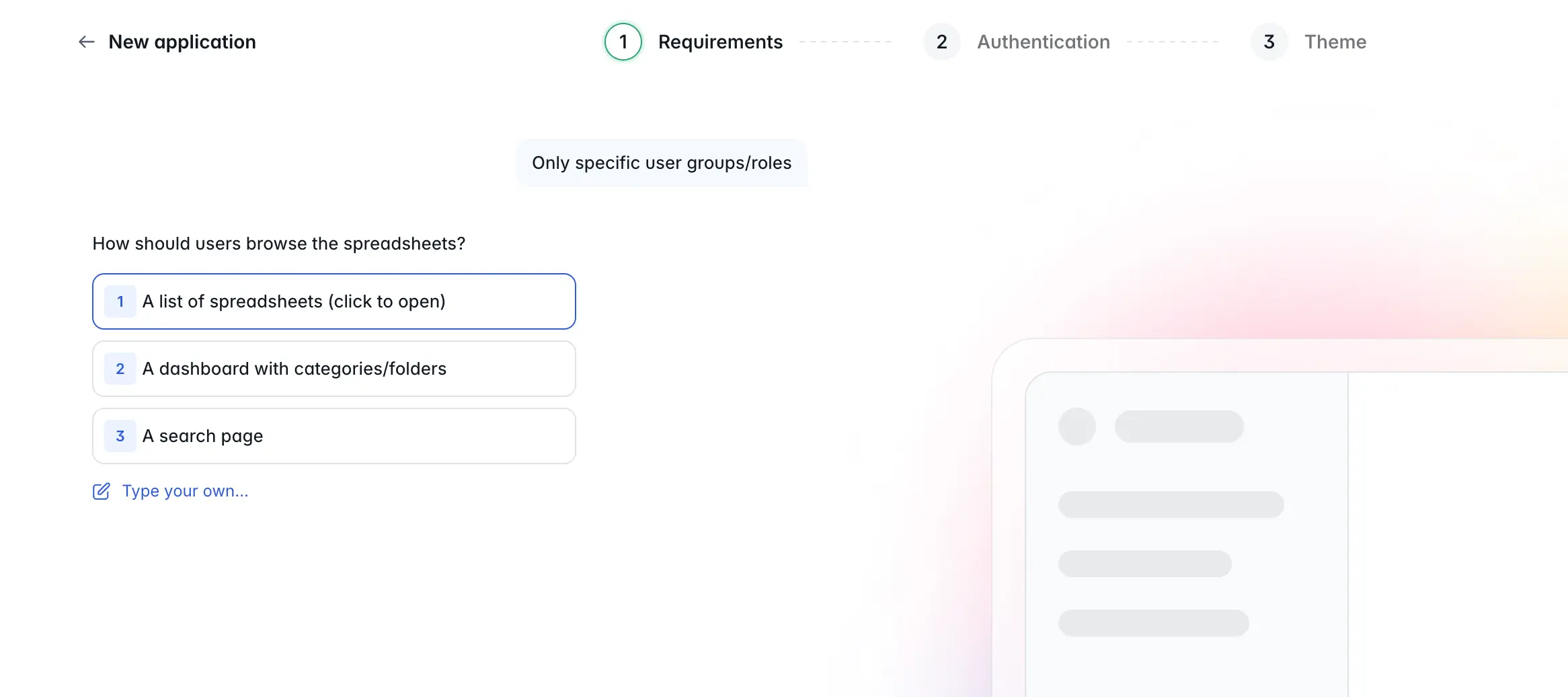
The 2026 version of this goes further. With an AI-native platform, business operators describe what they need in plain language and the AI Co-Builder generates a complete, working application: database tables with relationships, pages, blocks, and user permissions. AI is the fastest path, but it is not the only one. Builders can also start from a pre-built template or build from scratch, then move freely between AI-assisted and hands-on editing.
Efficiency and accuracy
Time is a determining factor in comparing traditional programming and no-code development. Conventional coding is quite complex, which can take time and might be prone to errors. It usually takes weeks or months for developers and coders to build apps and sites. And they might even encounter some bugs along the way.
Gerald Lombardo, Head of Growth at Popl, capitalizes on the efficiency and accuracy of the no-code movement “It's incredibly amazing how no-code platforms allow users to create apps and design sites in just a few hours. You need not worry about project delays and the need for debugging."
Flexibility and scalability
Flexibility and scalability play a crucial role in today's business landscape, which applies to coding development as well. Traditional programming allows companies to pursue complex projects and develop complicated apps. However, this approach isn't necessarily flexible and scalable, which can be a major disadvantage.
Coty Perry, CMO at Anglers, recommends leveraging the no-code movement due to its flexibility and scalability. “Some might have apprehensions that this development approach is only good for simple apps. However, you can employ various no-code platforms to develop simple to complex applications. Just be wary of some restrictive platforms with limited capabilities.”
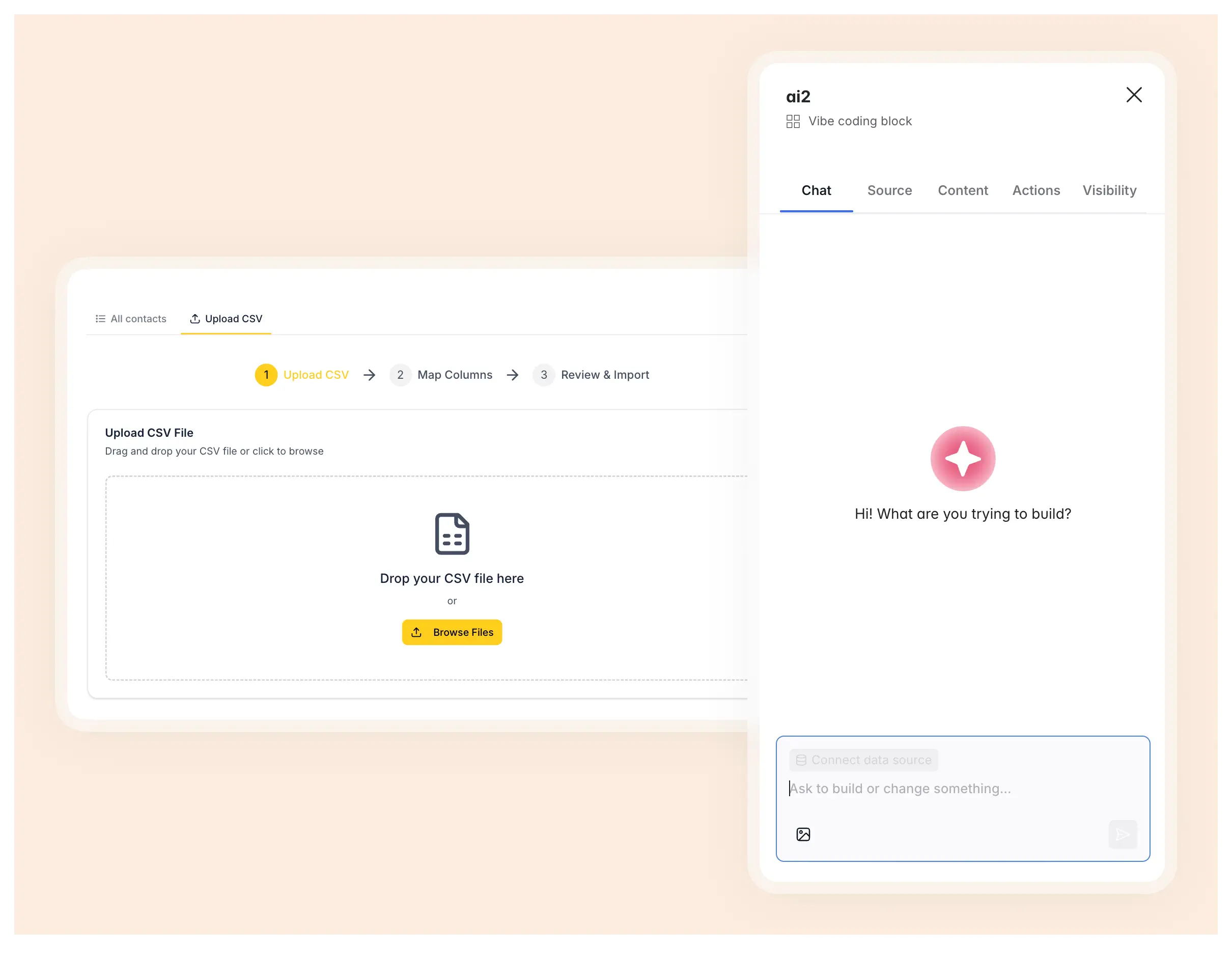
The old objection that no-code can't handle custom requirements no longer holds. Pre-built blocks cover roughly 80% of any business app, and for the custom 20%, the Vibe Coding block lets you generate bespoke components (a Gantt chart, a pricing calculator, a custom importer) from a plain-language prompt. Because that AI-generated code is isolated to a single block, it inherits the app's theme, data, and permissions without ever putting the rest of the app at risk. You get the limitless flexibility of custom development without the maintenance burden.
Integration and security
When considering the scalability of site and app development, you must factor in the integration and security. As mentioned, traditional coding isn't necessarily flexible, so integrating it with other platforms can be challenging. However, it's commendable for its security features built by expert developers and programmers.
Volodymyr Shchegel, VP of Engineering at Clario, underscores the integration features of no-code development. “It provides a wide range of built-in templates and useful tools that you can use to develop apps. It also allows you to easily and seamlessly integrate apps with other platforms. However, beware of their security features so you won’t compromise your business data and customer information.”
The security concern Volodymyr raises is exactly where the modern generation of no-code has matured. On a platform like Softr, every app ships with authentication, granular role-based permissions, and enterprise-grade security (SOC 2 Type II, EU data hosting) built in from day one. This is a meaningful contrast with fragile vibe-coded apps, where AI generates untested code and authentication flows that often break the moment a real user logs in. On the data side, you start with Softr Databases, a native relational database built for business data, then connect to 21+ external sources such as Airtable, Google Sheets, and HubSpot when you need them. For automation, Softr Workflows are triggered directly by interface actions, with native integrations to tools like Make, Zapier, and n8n when external orchestration is required.
Testing, deployment, and maintenance
Traditional programming requires robust testing, proper deployment, and regular maintenance. Developers and coders must conduct pilot testing before launching the apps or sites. And once these platforms are up and running, users must constantly update and maintain them.

Mark Pierce, CEO of Cloud Peak Law Group, commends the technological advancement of no-code development. “First, it has zero-to-minimal testing requirements, as any user can simply build sites and develop apps. Also, it has faster and easier deployment making apps readily available. Lastly, you need not worry about maintaining them in the long run.”
This is the production-ready advantage in practice. Because a Softr app composes pre-tested components rather than generating raw code, there is nothing to test, deploy, or patch yourself. The platform keeps the underlying stack secure and up to date, and you can add a field, change a permission, or update a workflow without re-prompting or risking what already works. That removes the developer handoff and the ongoing maintenance burden that make traditional development expensive long after launch.
"Softr allows me to deliver business apps in a few days where a custom stack would take weeks. Softr solves three very concrete problems for my clients: the dispersion of data across tools, the prohibitive cost of custom development for internal tools, and the dependency on a developer for every change." — G2 review
Cost savings
Cost savings is a top consideration, helping businesses and users decide which site and app development approach to use. Traditional coding involves a complex project comprising a team of developers and programmers carrying out tasks for weeks or months. This coding approach can be costly, albeit beneficial for building sites and developing apps.
Tom Golubovich, Head of Marketing & Media Relations at Ninja Transfers, suggests taking advantage of the no-code movement. “What’s good about using no-code platforms is their cost-savings benefit. You don’t need to spend on hiring experts, app testing, deployment, and maintenance in the long run. By leveraging the no-code platforms, you can save money for your business long-term.”
The savings can be dramatic. MIT's Project Manus replaced a custom Ruby on Rails application that cost $100K+ to build and maintain with a Softr-built makerspace portal serving 2,800+ users, built by a single person and now updatable by the wider community. That is the production-ready no-code alternative to traditional development: comparable capability, a fraction of the cost, and no developer on retainer for every change.
Overall quality
There’s no denying the competition between traditional coding and the no-code movement in business. However, companies and users must not ignore the pros and cons of both development approaches and see which works for their projects.
Traditional programming has long established itself in the tech industry. It’s proven effective in developing apps and building sites, albeit it requires a complex project. However, you must be wary of some potential drawbacks, such as technical requirements, integration issues, and monetary investments.
On the other hand, no-code development offers several benefits that businesses and users can capitalize on. Building apps this way is simple, fast, and increasingly powerful. In 2026, the gap that once justified custom development has largely closed: AI-native platforms like Softr deliver production-ready software that is secure from day one, with the Vibe Coding block covering the custom 20% and no developer handoff or maintenance burden to carry. For most internal tools and client portals, that makes no-code not just a cheaper option, but the better one.
Build production-ready software with Softr
The trade-off between custom code and no-code has closed. Softr gives you AI-native app building, a native relational database, granular permissions, and enterprise-grade security from day one, without a developer handoff or maintenance burden.
Describe what you need and let the AI Co-Builder generate your first app for free.